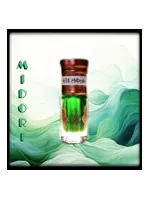
Midori
Oil
Mellifluence Perfume
Statement
Note profile
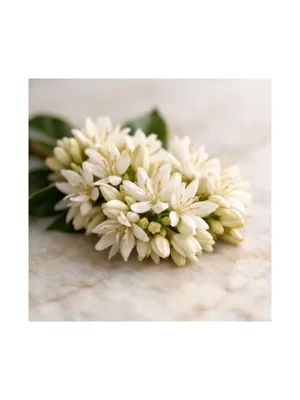
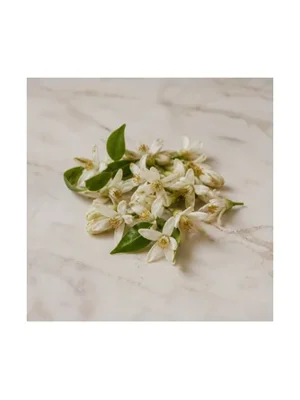
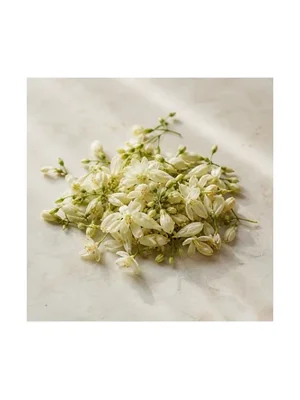
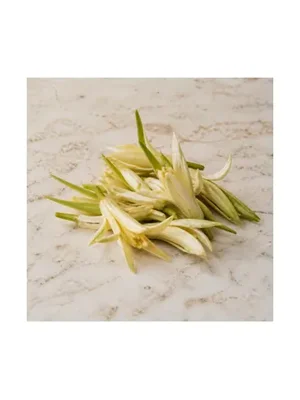
Kewra is distilled from the male flowers of the screwpine, mainly in the Ganjam district of Odisha in eastern India. It is traditionally made as an attar in a sandalwood base. It smells sharp and diffusive at first, then sweet, honeyed and heady, with a green, hyacinth-like floral core. It is a signature of Indian attar perfumery.
Sharp and penetrating at first, then sweet, honeyed and heady. The floral core is green and hyacinth-like, with a rosy, slightly fruity side and a faint waxy edge. In the attar, a soft sandalwood warmth sits underneath. It carries a white floral heart, with a hint of jasmine, under the hyacinth.
Read off the wheel, not a label applied to the note.
Tap a perfume to see where Kewra sits in it. The rest of the picture goes grey
Perfumers can build Kewra from materials such as:
Smell words come from published sources.
A given perfume with this note may use some of these, or something else.
Distilled from the male flowers of Pandanus odorifer (syn. P. odoratissimus), the screwpine, chiefly in Ganjam district, Odisha, in eastern India. The flower spikes are water-distilled in village copper stills. The attar catches the vapour in sandalwood oil. The pure oil is rooh kewra. Kewra water, the hydrosol, flavours Indian sweets and syrups. The main odorant is phenylethyl methyl ether, followed by terpinen-4-ol.
A signature note of Indian attar perfumery. The attar scents clothes, cosmetics, soaps, hair oils and incense sticks, and blends with most floral perfumes. It is very diffusive, so it is used at low doses. It is seldom used in Western fine fragrance.
Perfumers known for using Kewra include
Kedra Hart
A selection of reviewed perfumes where Kewra appears prominently.
Get the verdict in your inbox
New finds, honest verdicts, and price drops.
No spam. Unsubscribe anytime. See our privacy policy.
Are you sure?