How long a perfume lasts depends first on the perfume: in our ratings, concentration and base notes line up clearly with longevity, and technique works on top of that. After that, moisturising your skin first has the most expert backing, and olfactory fatigue may explain some "it has disappeared" complaints. This guide sorts the habits by how much backing they have, with our own longevity data from 47,685 perfumes.
What helps, and what backs it
| Do this | Why it works | What backs it |
|---|---|---|
| Choose by concentration and base notes | Higher concentrations and heavy bases (oud, labdanum, benzoin) line up with longer-rated perfumes | Our data, below |
| Moisturise skin before spraying | Moisture and natural skin oils give scent a surface to cling to, so it evaporates more slowly | Named industry experts, no controlled test found |
| Petroleum jelly on pulse points first | A thin occlusive layer slows evaporation | A retailer's fragrance director, little research |
| Spray clothes and hair as well as skin | Fabric does not wash or shed like skin | Common advice, no test found |
| Layer with a matching body product | More of the same scent over a larger area | Brands sell matching lotions and washes |
| Do not rub your wrists together | Often said to break down top notes | Common advice, no test found |
| Step away and re-smell | Your nose adapts to a constant smell | Olfactory fatigue is well documented |
The real fix: what you bought
Our perfume pages carry a longevity rating, drawn from wearer reports and read on 27 October 2026. Across every perfume we list, the share rated long-lasting rises with concentration.
| Concentration | Perfumes rated | Rated long-lasting or better |
|---|---|---|
| Extrait de Parfum | 3,522 | 52% |
| Parfum | 1,373 | 38% |
| Eau de Parfum | 27,890 | 28% |
| Eau de Toilette | 11,452 | 15% |
| Cologne | 1,617 | 5% |
| Body spray | 944 | 2% |
Wikipedia's entry on perfume gives the usual aromatic-compound ranges, with the caveat that sources differ: Eau de Toilette 5 to 15%, Eau de Parfum 15 to 20%, Parfum 15 to 30%. The ladder is not automatic, though. Of 317 matched pairs where the same perfume is listed as both Eau de Toilette and Eau de Parfum, the Eau de Parfum is rated longer in 133, the same in 166 and shorter in 18.
Notes line up with longevity too. Of the 1,840 perfumes with oud in the base, 52% are rated long-lasting or better. For labdanum it is 43% and for benzoin 37%. Against that, 24% of perfumes with musk in the base and 25% of those with cedar are, and of the 3,769 with grapefruit in the top notes only 20% are. So on our ratings, perfumes with grapefruit in the top notes are rated long-lasting far less often than those with oud in the base.
| Perfume | Concentration | Longevity (our data) |
|---|---|---|
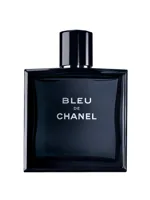 Bleu de Chanel |
Eau de Toilette | Moderate |
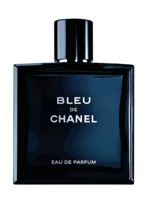 Bleu de Chanel |
Eau de Parfum | Long-lasting |
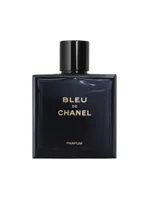 Bleu de Chanel |
Parfum | Long-lasting |
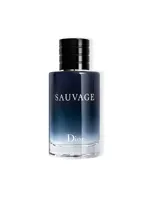 Sauvage |
Eau de Toilette | Long-lasting |
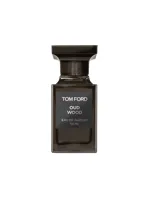 Oud Wood |
Eau de Parfum | Long-lasting |
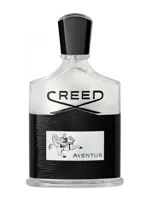 Aventus |
Eau de Parfum | Long-lasting |
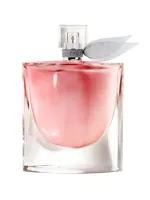 La Vie Est Belle |
Eau de Parfum | Very long-lasting |
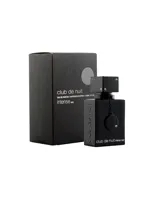 Club de Nuit Intense Man |
Eau de Parfum | Very long-lasting |
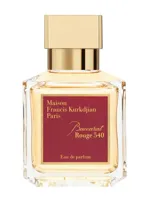 Baccarat Rouge 540 |
Eau de Parfum | Very long-lasting |
Chanel's Bleu de Chanel gains a step from Eau de Toilette to Eau de Parfum, the ladder we cover in Eau de Parfum vs Eau de Toilette. Dior's Sauvage Eau de Toilette is already rated long-lasting, so a lower concentration does not always mean shorter wear. Armaf's Club de Nuit Intense Man earns the same rating as Maison Francis Kurkdjian's Baccarat Rouge 540. Our how long does perfume last guide covers realistic wear by concentration.
The techniques that earn their place
Moisturised skin holds scent, dry skin does not
Michelle Feeney, founder of Floral Street, tells Woman and Home to moisturise the skin well before applying perfume, because it helps longevity, especially in winter. Chelsey Saunders, a retailer's Director of Fragrance, tells the same magazine that moisture and the skin's natural oils act as a binder, a surface for scent to cling to, and that dry skin lacks this lipid barrier so perfume evaporates faster. Both recommend a fragrance-free moisturiser unless your scent has a matching lotion. We found no controlled test, but it costs little and has the most expert backing of the techniques here.
Where you spray
Pulse points such as the wrists, neck and inside of the elbows are the usual places. Skin is washed and turns over, whereas a jumper, scarf or the ends of your hair do not, so spraying them as well gives a slower second source. This is common advice rather than a tested result. Check the fabric first and avoid silk or anything pale that alcohol could mark.
Do not rub your wrists together
The advice is everywhere, and Woman and Home repeats it, but we found no test behind it. Letting the spray dry untouched costs nothing, so it is harmless to follow.
Layer with a matching body product
If a brand sells a shower gel, lotion or oil in the same fragrance, it is simply more of the same scent over a larger surface. Woman and Home notes that Chanel, Jo Malone and Le Labo all sell such products.
Spray before you dress
Spraying bare skin before you dress lets fragrance settle into fabric as you move, and avoids alcohol marks on delicate material. For clothing, a light spray inside a collar or cuff, held a little away, adds a second release point without soaking the fabric.
The vaseline trick, and other minor hacks
Saunders says that even a thin layer of petroleum jelly such as Vaseline before spraying can make a fragrance last longer. It forms an occlusive layer that slows evaporation, on the same principle as moisturising. There is little research behind it. Use a thin layer of an unscented one.
Sometimes it is your nose, not the fragrance
Wikipedia defines olfactory fatigue as the temporary, normal inability to distinguish a particular odour after prolonged exposure, with sensitivity restored with time once you leave it. You can still be wearing the same molecules while your brain stops flagging them, the way you stop noticing your own home's smell while a visitor notices it at once.
The practical effect is that wearers reapply, or write off a fragrance as weak, when someone beside them can smell it clearly. Do not trust your own nose mid-wear. Step away, let your nose reset, or ask someone else. Not every complaint is imagined, but rule out your nose before you rule out the bottle.
Putting it together
Start with the fragrance, not the ritual. Check the concentration on the bottle and, where you can, the longevity rating on the perfume's own page before you buy. Once you own it, moisturise bare skin first, spray pulse points plus a layer of clothing or hair, let it dry without rubbing, and dress after rather than before. If you want more from a scent you already love, a matching body product is another option.
Common questions
Can Vaseline help perfume last longer?
It can. Chelsey Saunders, a retailer's Director of Fragrance, says a thin layer of petroleum jelly before spraying can help, though little research backs it.
Why does perfume not last on me?
Four common reasons. The perfume may be a lower concentration or have citrus top notes: only 15% of Eau de Toilettes and 5% of colognes are rated long-lasting or better in our data. Your skin may be dry. You may be spraying only skin. Or your nose has adapted and others can still smell it.
Where should I spray perfume to make it last longer?
Pulse points for warmth, plus a light spray on clothing or the ends of your hair for a slower second source, after checking the fabric.
How do I tell if my perfume has faded, or if it is just my nose?
Step away from the scent for a while, then smell your wrist again, or ask someone who has not been near you all day.
How we know
The concentration, note and pair figures come from the longevity ratings on our perfume pages, compiled from wearer reports and read on 27 October 2026, so they describe wearer opinion rather than laboratory tests. The expert advice is quoted from the linked articles, and where we found no test we say so. For how our ratings are built, see our methodology.