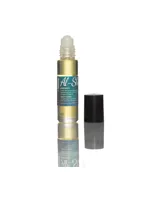
Al Sharq
Oil
Al Aneeq
Favourite
Note profile
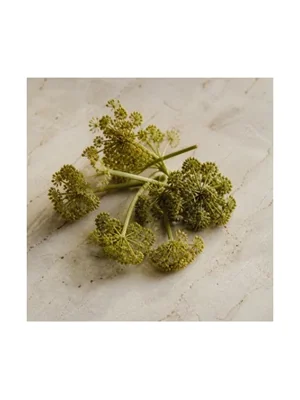
The flowering umbel of Angelica archangelica, a different organ from the root and seed the published `angelica` note is built from. Two independent, non-perfumery sources describe the flower's own smell the same way: anise and juniper, floral and aromatic, a bit strong. That is a real, sourced departure from the root's earthy, ambrette-celery profile, though neither source is written for a fragrance audience and no perfumery house extracts the flower on its own.
Angelica flower smells floral and aromatic, with a herbaceous edge and a spicy anise and juniper character running through it, giving it a bit of a bite. Green, stem-like freshness sits alongside the flower, and a faint clean musk with a touch of animal warmth lies underneath.
Read off the wheel, not a label applied to the note.
Tap a perfume to see where Angelica Flower sits in it. The rest of the picture goes grey

Angelica archangelica flowers in large globular umbels of small yellowish-white to greenish blooms, usually in its second year. No essential oil, absolute or CO2 is documented for the flower alone - it is eaten as a foraged and candied culinary herb (breaded and fried unopened, or candied like the stems), not distilled or solvent-extracted the way the root is. The plant is native to northern Europe and parts of Asia and cultivated in France and Scandinavia mainly for its root.
Attested once on Parfumo, by a single brand, and not found on Fragrantica. Use with the same caution as any single-community-source material: as a lighter, anise-and-floral top accent rather than the heavier root's fixative musk, since the root and flower share only their juniper/musk base and diverge on everything else the sources describe.
A selection of reviewed perfumes where Angelica Flower appears prominently.
Get the verdict in your inbox
New finds, honest verdicts, and price drops.
No spam. Unsubscribe anytime. See our privacy policy.
Are you sure?