
Which Perfume Strength for Each Season?
Wear a lighter strength in the heat and a richer one in the cold: Eau Fraiche or Eau de Toilette (EDT) in summer, EDT in spring, Eau de Parfum (EDP) in autumn, and EDP or Parfum in winter. Heat lifts a perfume off your skin faster, and cold holds it close. The sections below take each season in turn, then show how to adjust for your climate.
In this guide
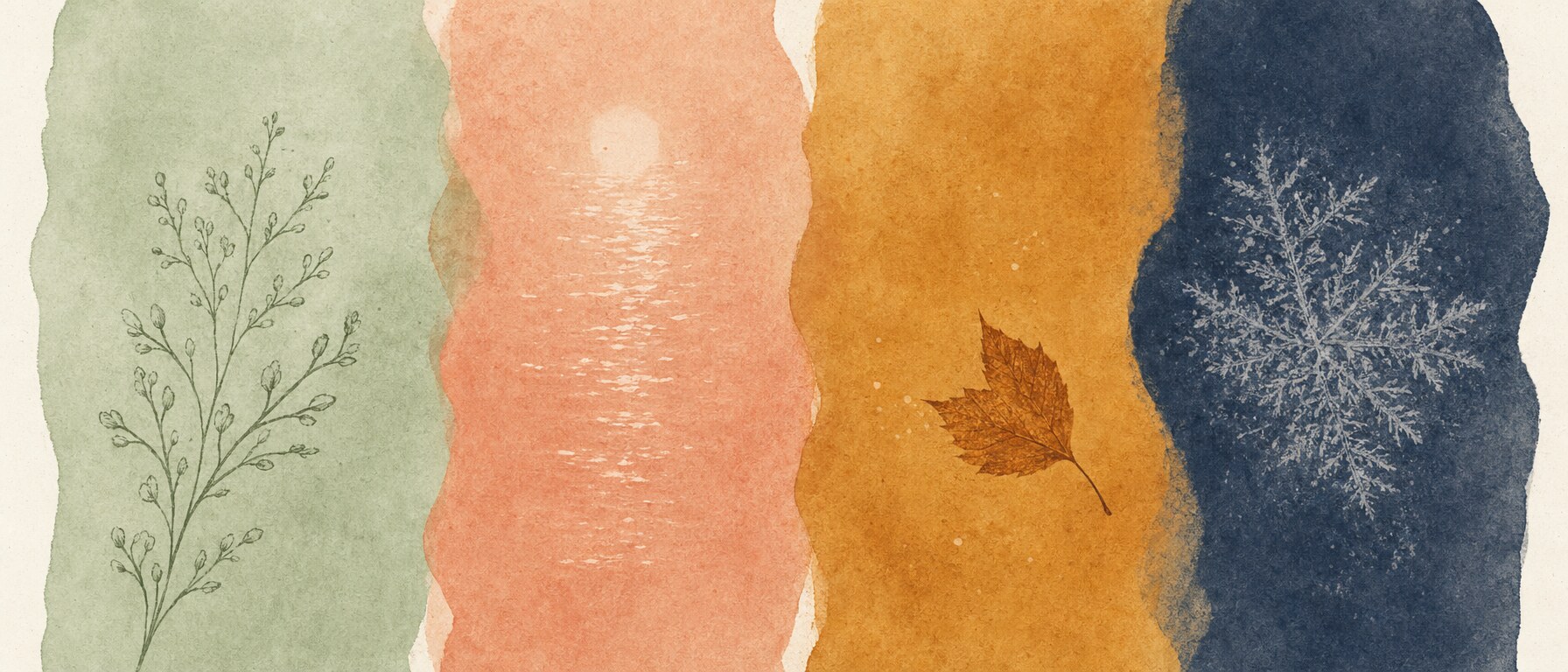
Why does the season change the result?
The perfume that gets you compliments in December can fall flat in July. Same bottle, same sprays, same skin, different result. Temperature and humidity change how fragrance behaves on your body.
Heat amplifies. Warmth speeds up evaporation, so fragrance molecules lift off faster and spread further - boosting projection and sillage. That enveloping oud EDP from January? In August it becomes a wall of scent that fills the room. Cold mutes. It suppresses evaporation and pulls your scent bubble closer to skin. A breezy EDT that was perfect for spring barely registers in February. Humidity matters too - damp air carries scent more effectively, which is why fragrance blooms on muggy evenings.
What strength suits spring?
Temperatures are climbing but are not hot yet, so you have a comfortable middle ground where fragrances perform well without being overpowering.
Best concentrations: EDT is the sweet spot. A lighter EDP works too if the fragrance skews fresh or floral. Go for notes that feel crisp and optimistic:
- Lily of the valley, peony, fresh-cut grass
- Bergamot, white tea, light green notes
- Anything that makes people think "that is nice" rather than "what is that?"
The classic spring mistake is carrying winter habits too long. If you are still reaching for Parfum-strength oud in April, scale back the concentration or reduce your spray count.
What strength suits summer?
Heat amplifies everything, so whatever you spray becomes louder and more assertive than at any other time of year. That applies to every aspect of the fragrance - including the bits that might be too much in close quarters.
Best concentrations: Eau Fraiche (1-3% oil) is ideal - refreshing, close to skin, no broadcasting. EDT is the other solid choice. Avoid Parfum and heavier EDPs unless you are outdoors where scent has room to disperse. Note families that excel:
- Citrus - lemon, lime, bergamot, grapefruit
- Aquatics and marines
- Light woods - bamboo, driftwood
- Anything clean and transparent
One catch: heat also burns through fragrance faster. If your scent barely lasts past lunch, that is normal. Carry a small decant for a midday refresh rather than over-spraying in the morning.
What strength suits autumn?
Autumn is the easiest season to wear a complicated fragrance in. Temperatures drop far enough that a rich scent reads as rich rather than as too much.
Best concentration: EDP. You need that higher oil concentration because the cooling air will not amplify your scent like summer heat did. EDT might feel thin below 12 degrees. Autumn's best notes:
- Warm spices - cinnamon, cardamom, nutmeg
- Woods - sandalwood, cedar
- Soft resins - tonka bean, benzoin, amber
Cooler air also makes layering more interesting - you can combine a warm base with a fresher top and get both to read clearly, where summer heat would muddle them.
What strength suits winter?
Cold suppresses evaporation, tightens your scent bubble, and you are wearing layers of clothing that create a physical barrier. Your fragrance has to fight through wool and cold air just to be noticed.
Best concentrations: EDP is the minimum. Parfum and Extrait (20-40% oil) come into their own - this is the one time of year a Parfum-strength fragrance will not overpower a room. Go big on notes too:
- Orientals - amber, vanilla, incense, labdanum
- Rich woods - oud, sandalwood, patchouli, vetiver
- Tobacco, leather, dark chocolate, dried fruits
A useful winter tip: spray your scarf or coat collar. Fabric releases scent slowly as it warms from your body heat, so you catch it again through the day.
Do not judge your winter fragrance indoors. Central heating makes Parfum-strength scents seem overwhelming in a heated bathroom. Step outside for five minutes and reassess - the cold air will pull the fragrance back to where it should be.
How your climate changes the advice
Season advice assumes cold winters and hot summers. If your weather is different, keep the rule and change the calendar: heat and damp air carry a perfume further, and cold holds it close.
- Damp air carries scent further. Three sprays in Manchester go further than three in Madrid. If you live somewhere humid and a review recommends six or seven sprays, start with half.
- Mild summers leave room for richer scents. Where summer rarely stays above 30 degrees for long, as in the UK, you can wear a moderately rich EDP further into the season than someone in a hotter country could.
- Long, hot summers need a lighter hand. Where it stays hot for months, treat most of the year as summer: lighter strengths and fewer sprays by day, with the richer bottles kept for evenings and air-conditioned rooms.
- Rain blooms fragrance. A sudden downpour spikes humidity and can briefly amplify whatever you are wearing.
What should I wear in the in-between weeks?
The trickiest periods are the transitions - late March when it is 8 degrees in the morning and 16 by lunch, or early October when one day feels like summer and the next you need a jacket.
Keep two fragrances accessible during transitional weeks - one from the season you are leaving, one from the season you are entering. Check the forecast and pick accordingly. Certain families bridge seasons: woody aromatics (vetiver, cedar, sage) work across a wide temperature range, and tea-based fragrances straddle the autumn-winter transition well.
You can also flex your spray count. Wearing an EDP during a warm autumn spell? Dial back to two sprays. EDT feeling weak on a cold spring morning? Add a spray to your scarf for extra reach.
One principle carries the rest: heat amplifies, cold mutes. If you are still working out which concentration levels suit you generally, start there. For how temperature affects the scent trail you leave behind, our sillage guide goes deeper.
Common questions
What perfume concentration should I wear in summer?
Eau Fraiche (1-3% oil) or EDT are ideal for summer. Heat amplifies fragrance, so lighter concentrations prevent overpowering. Stick to citrus, aquatic, and light wood notes that stay refreshing in warm weather.
Does weather affect how perfume smells?
Yes. Heat speeds up evaporation, making fragrance project further and fade faster. Cold suppresses evaporation, keeping scent closer to skin but lasting longer. Humidity also carries scent more effectively, which is why perfume blooms on damp days.
What is the best perfume strength for winter?
EDP is the minimum for winter. Parfum and Extrait (15-40% oil) are ideal because cold air suppresses evaporation and heavy clothing creates a physical barrier. Rich notes like oud, amber, vanilla, and incense work best in cold weather.
Should I change my perfume for different seasons?
Yes. The same perfume behaves differently across seasons because temperature and humidity change how fragrance molecules evaporate from your skin. A rich EDP that works perfectly in winter can become overpowering in summer heat.