
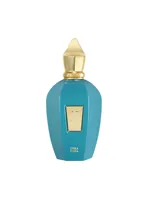
Erba Pura
EDP · 2019
Xerjoff
Statement
Fragrance allergen
Treemoss extract comes from Evernia furfuracea, a lichen that grows on the bark of pine and fir trees, and has a dry, woody, mossy smell. Its main sensitising constituents, atranol and chloroatranol, are prohibited in the EU. The extract itself is a named allergen in the EU and Great Britain.
The SCCS says the lichen grows on the bark of pine and fir trees. Solvent extraction gives a concrete (2 to 5 per cent yield), which is then extracted with warm alcohol and cooled to give an absolute (40 to 60 per cent yield). The Good Scents Company describes the concrete as obtained from the treemoss.
Woody, dry and mossy, with forest, seaweed, herbal and green tones, as The Good Scents Company lists them. IFF describes a warm, mossy, resinous, fir balsam note with an almost mint twist.
The Good Scents Company quotes a supplier describing a straightforward, masculine earthiness and leathery quality that sets treemoss absolute apart from oakmoss absolute. It lists the odour type of the absolute as mossy.
Named on 0% of the 6,994 perfume ingredient lists we hold (29 perfumes).
SCCS/1459/11 (2012) lists Evernia furfuracea extract in its +++ band of established contact allergens in humans (101 to 1000 reported positive test reactions). Oxford Biosciences says atranol and chloroatranol were prohibited by Regulation (EU) 2017/1410, while treemoss extract remains permitted and labelled. IFRA's index lists a Restriction standard for treemoss extracts, published in 2020.
A list that does not name it does not prove it is absent: brands only have to name it above the threshold.
Share of the perfumes we hold a list for, in each concentration.
Share of the lists naming Treemoss that also name each of these.
EDP · 2019
Xerjoff
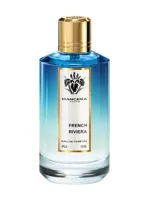
EDP · 2022
Mancera
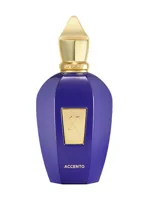
EDP · 2019
Xerjoff
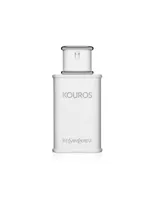
EDT · 1981
Yves Saint Laurent
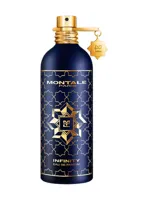
EDP · 2023
Montale
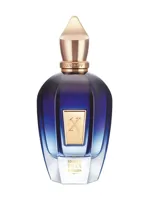
EDP · 2012
Xerjoff
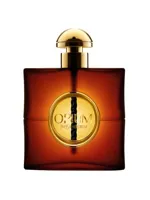
EDP · 2009
Yves Saint Laurent
Also Parfum
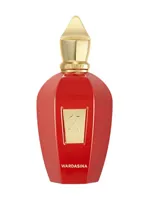
EDP · 2019
Xerjoff
EDT · 1982
Guy Laroche
EDP · 2019
Xerjoff
EDT · 1986
Calvin Klein
EDT · 1980
Avon
Woody, dry and mossy, with forest, seaweed and herbal tones. IFF describes a warm, mossy, resinous, fir balsam note with an almost mint twist.
No. Treemoss comes from Evernia furfuracea, which grows on pine and fir bark, while oakmoss is Evernia prunastri. The Good Scents Company quotes a supplier describing an earthy, leathery quality that distinguishes treemoss absolute from oakmoss absolute.
Treemoss extract is one of the older named fragrance allergens, so it must be listed above 0.001% in leave-on or 0.01% in rinse-off products in the EU, and Great Britain still requires it.
Get the verdict in your inbox
New finds, honest verdicts, and price drops.
No spam. Unsubscribe anytime. See our privacy policy.
Are you sure?