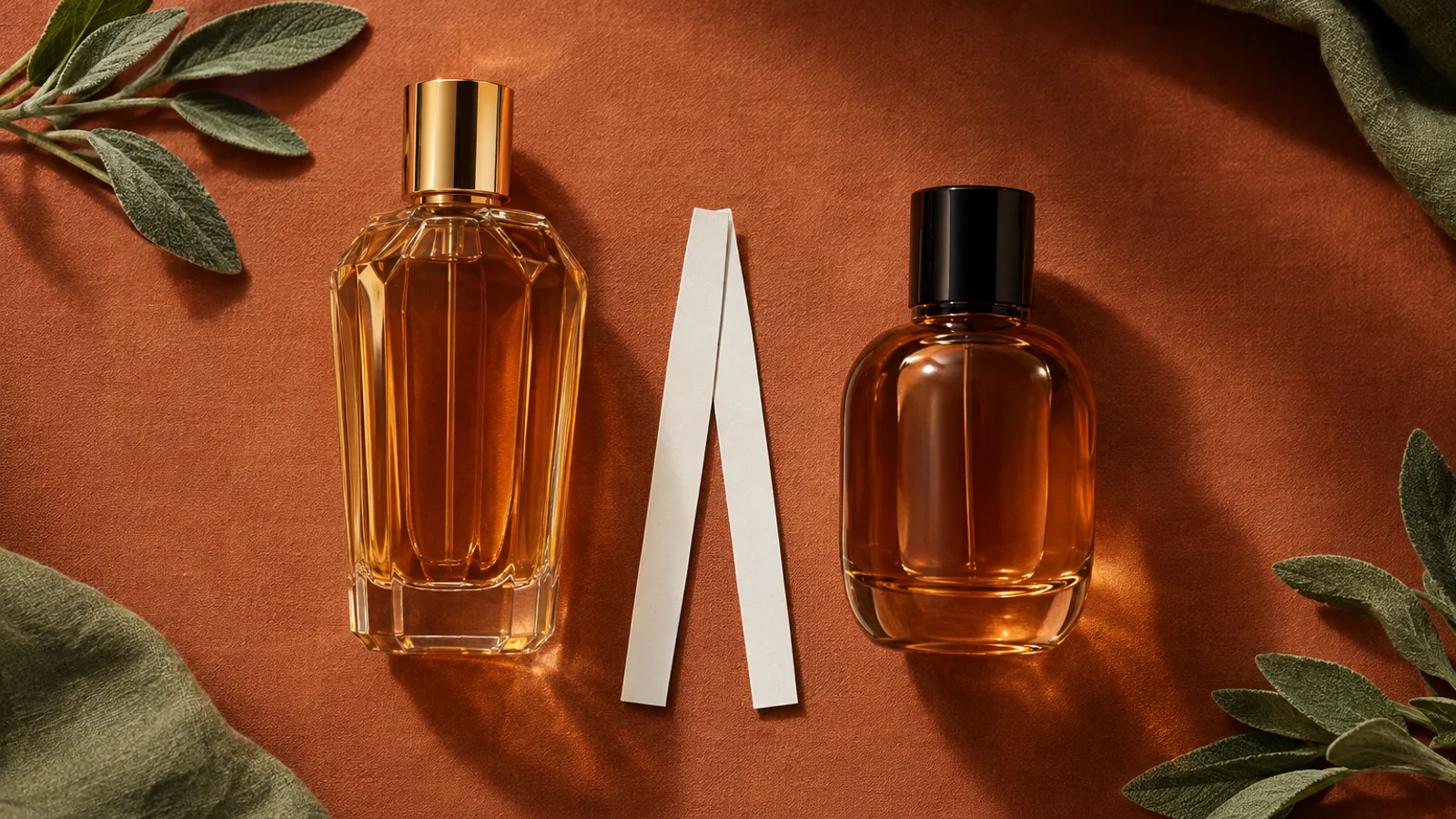
Eau de Parfum (EDP) holds more fragrance oil than Eau de Toilette (EDT), commonly quoted as 15-20% against 5-15%. Among the 317 fragrances we hold in both strengths, the EDP is rated longer-lasting in 42% and no shorter in 94%, so the stronger label helps but does not decide it, and this guide shows where it fails.
The short answer
| Eau de Toilette (EDT) | Eau de Parfum (EDP) | |
|---|---|---|
| Fragrance oil, as commonly quoted | Roughly 5-15% | Roughly 15-20% |
| Feel | Lighter, fresher opening | Richer, rounder, fuller |
| Staying power in our data (317 pairs) | Rated longer than the EDP in 6% of pairs | Rated longer than the EDT in 42% of pairs, equal in 52% |
| Season in our data | The EDT is rated more of a summer scent in 62% of pairs | The EDP is rated more of a winter scent in 68% of pairs |
| Best for | Warm weather and daytime | Cooler weather and long days |
If you want the strength that is rated at least as long-lasting as the EDT in nearly every pair, choose the EDP. If you mostly wear fragrance in warm weather, the EDT is rated the more summery in most pairs.
What our own data shows
How we know. Every figure here was read from our catalogue on 27 October 2026: the concentration recorded for each perfume, the verdict on its page (compiled from wearer reports), the notes and perfumer credits we record, and our scent profiles. The method is on our methodology page. For the oil percentages, we rely on the perfume article on Wikipedia, which cites IFRA and notes that sources differ considerably. If a figure looks wrong, tell us and we will check it.
The split. Of the 47,685 published perfumes we hold, 27,890 (58%) are Eau de Parfum and 11,452 (24%) are Eau de Toilette. Extrait de Parfum is 3,522 (7%), Cologne 1,617 (3%) and Parfum 1,373 (3%). EDP is the most common strength in our catalogue.
Same name, two strengths. We hold 317 fragrances by the same house under the same name as both an EDP and an EDT. In 133 (42%) of those pairs our profiles rate the EDP as longer-lasting, in 166 (52%) as equal and in 18 (6%) as shorter. For reach, the EDP is rated stronger in 99 (31%), equal in 195 (62%) and weaker in 23 (7%). The EDP is rated more of a winter scent in 214 (68%), and the EDT more of a summer scent in 195 (62%). So the EDP is rarely worse, but in half of the pairs it is no different.
The ladder holds on average. Across the catalogue, staying power rises step by step from Cologne through Eau de Toilette, Eau de Parfum and Parfum to Extrait de Parfum, which is rated highest.
The examples below were composed by named perfumers: François Demachy for Dior Sauvage, Jacques Polge and Olivier Polge for Bleu de Chanel, Aurélien Guichard and Olivier Pescheux for Versace Eros, and Alberto Morillas for Giorgio Armani Acqua di Giò.
The full concentration ladder
"Eau de Parfum" and "Eau de Toilette" are two rungs on a ladder that runs from the lightest splash to the most concentrated extract. The percentages are the commonly quoted ranges; they are not fixed by law, they differ by house, and a brand will not always print one on the box. We show how many perfumes we hold at each rung.
- Cologne (Eau de Cologne): around 2-3% oil, 1,617 in our catalogue. The lightest mainstream format. Bright and citrus-led. Not to be confused with "cologne" used loosely to mean any men's fragrance.
- Eau de Toilette (EDT): roughly 5-15% oil, 11,452 in our catalogue. The everyday workhorse. Fresh on application.
- Eau de Parfum (EDP): roughly 15-20% oil, 27,890 in our catalogue. The most common strength for modern designer launches, rich enough to last and wearable for daily use.
- Parfum: 15-30% oil, with about 20% typical, 1,373 in our catalogue. Denser again.
- Extrait de Parfum: 3,522 in our catalogue. Wikipedia gives Parfum and Extrait the same quoted band, and our catalogue keeps the label each house uses. Extrait is rated highest of all for staying power in our profiles.
Two more formats sit outside the alcohol-based ladder:
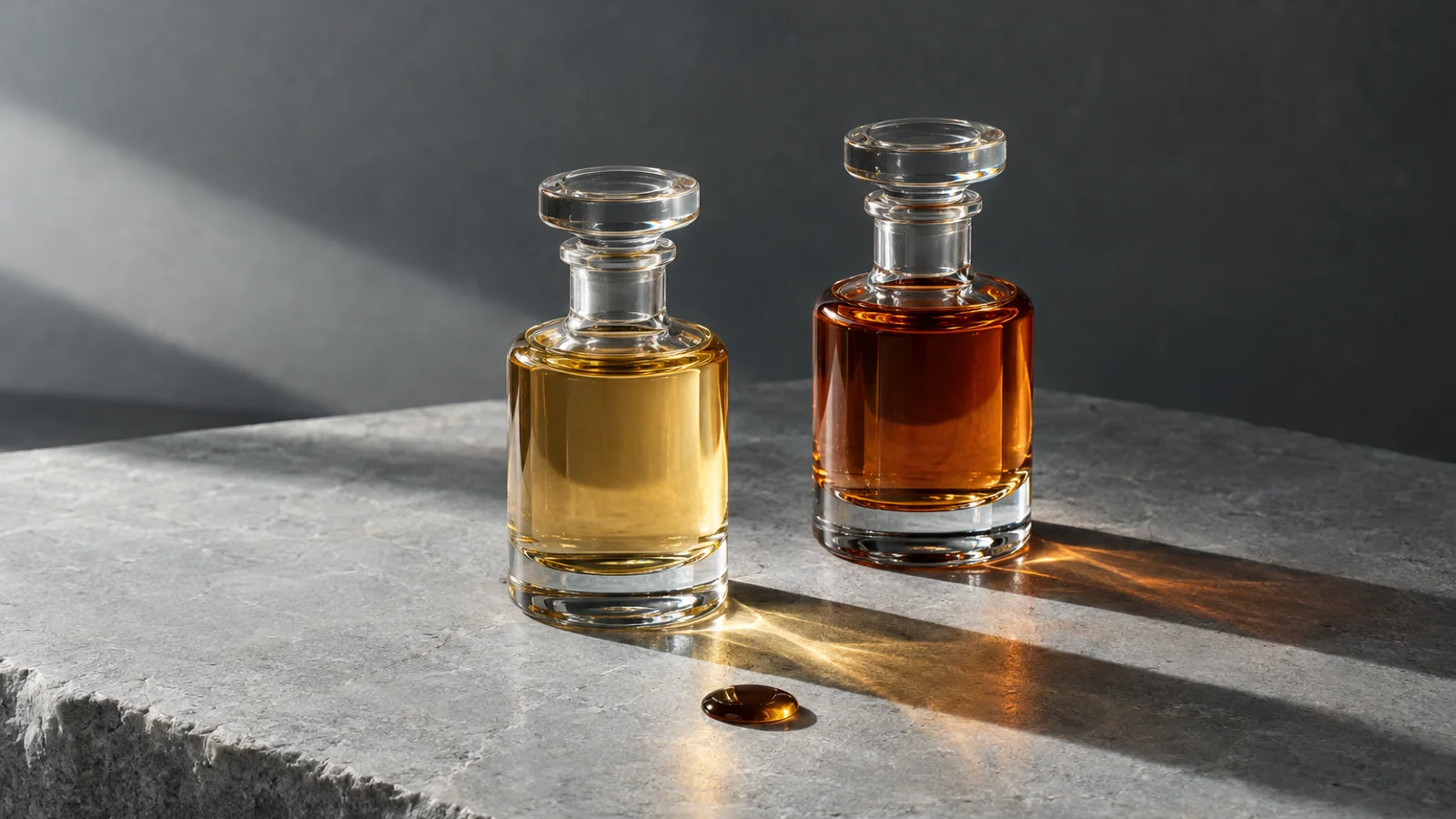
- Perfume oil (attar): oil-based with no alcohol carrier, common in Arabian perfumery, 765 in our catalogue. Intimate, applied sparingly to skin.
- Solid perfume: a wax or balm applied with a fingertip, with no spray and no alcohol.
Same fragrance, two strengths: real examples
The clearest way to understand EDP against EDT is to compare the same fragrance in both. These four are held in more than one strength in our catalogue, so you can read the notes and verdicts on each page. The staying power below is how our profiles rate it.
| Fragrance | Eau de Toilette | Eau de Parfum | Parfum |
|---|---|---|---|
| Dior Sauvage | Long-lasting, long reach, spring and summer | Long-lasting, long reach, spring and autumn | - |
| Bleu de Chanel | Moderate, moderate reach | Long-lasting, moderate reach | Long-lasting, moderate reach |
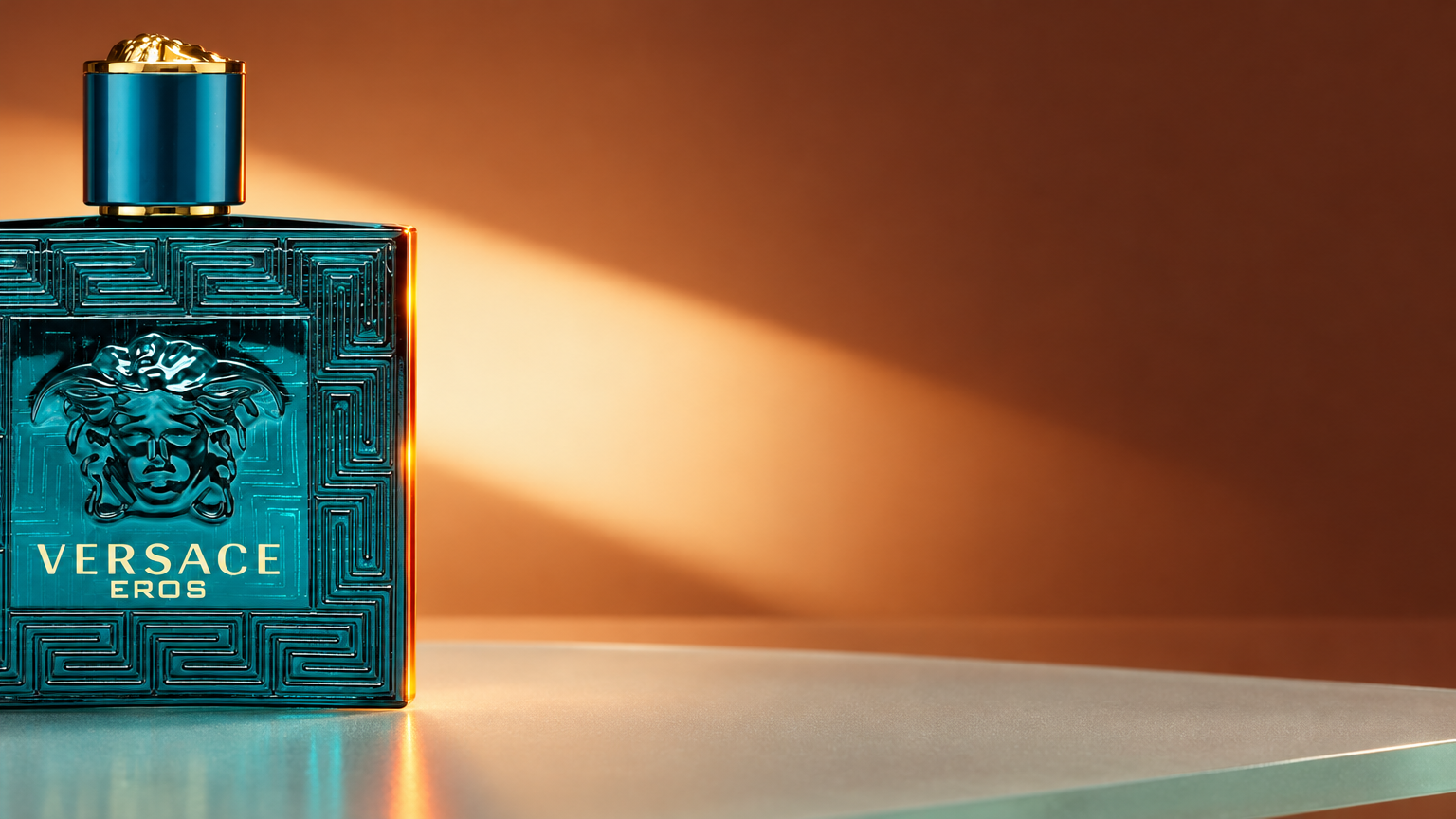
| Versace Eros | Very long-lasting, long reach | Long-lasting, long reach | Very long-lasting, long reach |
| Acqua di Giò | Moderate, short reach | Moderate, moderate reach | - |
Dior Sauvage is the textbook case for a change of mood rather than of power. The EDT opens on bergamot and pepper over ambroxan, cedar and labdanum, and the verdict calls it electrifying, crisp and spicy. The EDP swaps the labdanum and cedar for vanilla, with star anise and nutmeg in the heart, and the verdict says it dials up the freshness with extra warmth and sensuality. Our profile rates both as long-lasting with a long reach, so the EDP is warmer, not stronger.
Bleu de Chanel runs the full ladder. The EDT is the freshest, with lemon, grapefruit and mint, and suits the office and warm weather. The EDP adds amber and amberwood and our profile rates it long-lasting against the EDT's moderate. The Parfum is the most mature, with a creamy sandalwood base per the verdict. Each is voiced a little differently, so stronger does not just mean more of the same.
Versace Eros is where the rule bends. The EDT is rated very long-lasting in our profiles, and the EDP one step lower, at long-lasting, though the EDP adds leather and patchouli and leans to autumn. The Parfum is back at very long-lasting, and the verdict calls it the most mature and polished of the three.
Giorgio Armani Acqua di Giò is the cautionary case. The EDT from 1996 is the breezy, sunlit aquatic that the verdict calls the gold standard, if light for anyone wanting depth. The EDP is not a richer version of it: our profile rates its staying power the same, and its verdict is divisive, with inconsistent performance, so test it before you buy.
Does EDP always last longer and smell stronger?
Often, but not always. In our data the EDP is rated longer-lasting than the EDT in 42% of same-name pairs, equal in 52% and shorter in 6%.
Concentration is a big factor in how long a fragrance lasts, but not the only one. A house often changes the formula when it moves up the ladder, not just the amount of oil, so the EDP can smell different rather than being a louder copy. Notes matter too: a citrus-led EDT will tend to fade faster than a vanilla-and-amber EDP because the raw materials are more volatile.
So within the same fragrance, the EDP is usually at least as long-lasting. Across different fragrances, the notes and quality matter as much as the label.
Which should you buy?
Buy the EDP if you want the strength that is rated at least as long-lasting as the EDT in 94% of our pairs. It also leans to cooler weather.
Buy the EDT if you mostly wear fragrance in warm weather. It is rated the more summery of the two in 62% of our pairs.
A few practical tips:
- Check the page, not just the label. Read the verdict and profile for the exact strength you are buying, as with Acqua di Giò.
- Sample before committing. The wear of a fragrance changes from skin to skin, and the difference is easiest to judge on your own skin over a full day.
- Match the strength to the season. In our data the EDP leans to cooler weather in most pairs, so an EDT is often the more pleasant summer choice.
Eau de Parfum vs Eau de Toilette questions
Which is better, Eau de Toilette or Eau de Parfum?
Neither is better. In our data the EDP is rated at least as long-lasting in 94% of pairs and leans to cooler weather, while the EDT is the more summery in 62%. The right one depends on the weather and on how the particular fragrance wears.
What does EDP stand for and what does it mean?
EDP stands for Eau de Parfum, French for "perfume water". It means a fragrance with a higher concentration of fragrance oil than an Eau de Toilette, commonly quoted as 15-20%.
What does eau de toilette mean?
Eau de Toilette is French for "toilet water", an old word for a light grooming fragrance. It is the lighter strength, commonly quoted at 5-15% oil.
What type of perfume lasts the longest?
In our profiles, Extrait de Parfum is rated highest on average for staying power, then Parfum, Eau de Parfum and Eau de Toilette. A fragrance's notes matter as much as its strength, so rich ambers and woods tend to last longer than citrus at any concentration.
What are the four levels of perfume?
The four mainstream alcohol-based levels are Cologne (Eau de Cologne), Eau de Toilette, Eau de Parfum and Parfum, with Extrait de Parfum in the same quoted band as Parfum.
Where this guide comes from
The concentration ranges are the commonly quoted ones from the Wikipedia perfume article, which cites IFRA. Everything else is read from our own catalogue on 27 October 2026, as explained in our methodology. For more on what drives how a fragrance smells, see Perfume Notes Explained and Understanding Accords.