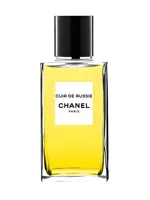
Cuir de Russie
EDP · 2007
Chanel
Statement
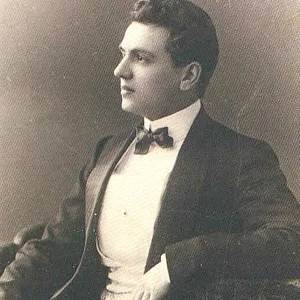
Beaux is closely associated with early creative use of synthetic aldehydes, which he explored from his Rallet years and employed in high dosage to give Chanel No. 5 its abstract, luminous character. His Chanel work often combines complex floral bouquets (notably jasmine, rose and ylang-ylang) with aldehydic lift and refined woody, musky bases, while creations like Cuir de Russie showcase sophisticated leather accords influenced by Russian perfumery traditions.
Ernest Beaux (1881-1961) was a Russian-born French perfumer best known as the creator of Chanel No. 5 (1921) for Gabrielle Chanel, often cited as the world’s most famous perfume. He began his career at Alphonse Rallet & Co. in Moscow, completing an apprenticeship in the soap works before studying perfumery under the technical director A. Lemercier after Rallet was acquired by Chiris in 1898. For Rallet he composed Bouquet de Napoléon (1912) and Bouquet de Catherine (1913), celebratory colognes for major Russian anniversaries that became notable commercial successes. After World War I military service, he relocated to France, where the Wertheimer family engaged him as Chanel’s in-house perfumer. For Chanel he authored No. 5, No. 22 (1926), Bois des Îles (1926), Cuir de Russie (1924) and Gardénia (1925), and for Bourjois he created Soir de Paris (1929) and Kobako (1936). Many of his original perfumes are preserved at the Osmothèque in Versailles.
A. Rallet & Co. / Chiris
EDP · 2007
Chanel
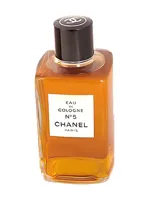
EDC · 1921
Chanel
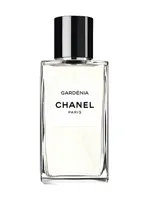
EDP · 1925
Chanel
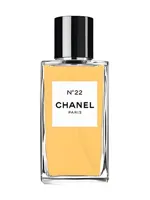
EDP · 1922
Chanel
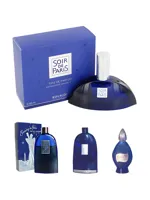
EDP · 1928
Bourjois
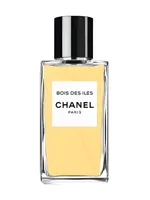
EDP · 2007
Chanel
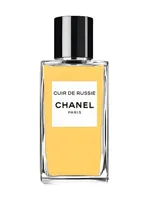
EDT · 2007
Chanel
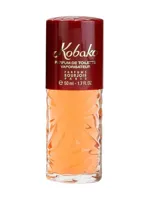
EDP · 1936
Bourjois
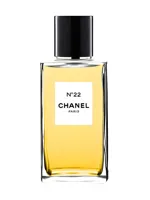
EDP · 2007
Chanel
New finds, honest verdicts, and price drops.
No spam. Unsubscribe anytime. See our privacy policy.