Understanding Accords
In this guide
What is an accord?
When a perfumer blends certain notes together, the combination produces a scent that none of the individual ingredients smell like on their own. That new, fused scent is an accord.
Think of a musical chord. Play C, E, and G separately and you hear three distinct notes. Play them together and you get a C major chord - something your ear perceives as a single entity. Accords work the same way. Your nose perceives the blend as one unified scent, not a list of separate ingredients.
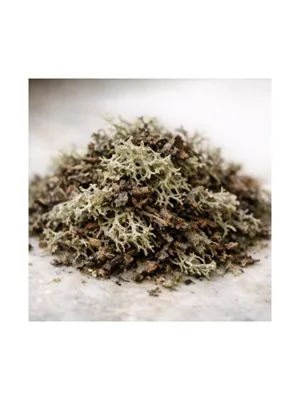
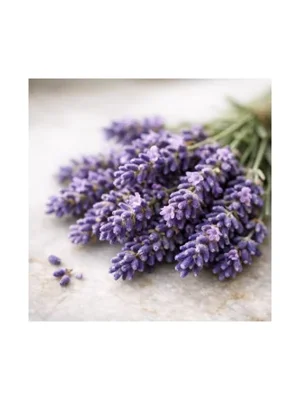
Take the fougere accord above. Lavender smells herbal, oakmoss smells earthy, and coumarin is sweet and hay-like. None of them smells like a "classic barbershop" fragrance. But blend them together and that's exactly what you get. The word "accord" comes from the French for agreement - the notes merge so completely that you stop perceiving them as separate elements.
Common accords explained
There are dozens of recognised accords, but you'll encounter the same handful over and over. Here are the ones worth knowing:
- Fougere - Lavender, oakmoss, and coumarin. Clean, aromatic, slightly sweet. The name means "fern" in French, though it doesn't smell like ferns. Nearly every "fresh" men's aftershave from the last fifty years has fougere DNA. Try YSL Pour Homme or Prada Luna Rossa Carbon.
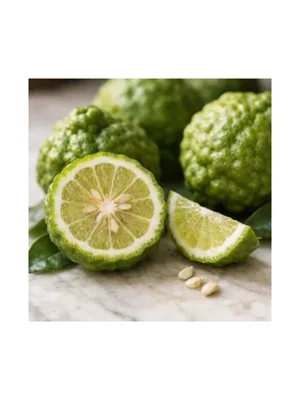
- Chypre - Bergamot on top, labdanum in the heart, oakmoss at the base. Sophisticated, earthy, and mossy. Named after a 1917 Francois Coty perfume. EU regulations on oakmoss mean modern chypres often use synthetic substitutes. Try Tom Ford Moss Breches or Guerlain Mitsouko.
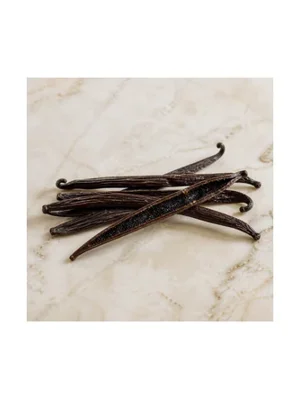
- Gourmand - Fragrances that smell edible - vanilla, caramel, chocolate, coffee. Relatively recent in perfume history. Thierry Mugler's Angel (1992) was the breakthrough that proved a dessert-like perfume could be a bestseller. Try JPG Le Male Le Parfum.
- Aquatic - Fresh, watery, clean - ocean air without the seaweed. Built around a synthetic molecule called calone. Davidoff Cool Water (1988) spawned the genre; Acqua di Gio (1996) perfected it. Modern aquatics often blend the watery element with woods or musk for depth.
- Amber - Not related to amber the gemstone. Built from labdanum, benzoin, and vanilla - warm, resinous, and comforting. The foundation of the "oriental" fragrance family. Think Guerlain Shalimar or the drydown of Dior Homme.
- Oud - Technically a single ingredient (agarwood resin), but in practice shorthand for a whole accord of dark, woody, slightly animalic notes. Real oud is fantastically expensive, so most fragrances use synthetic substitutes. Try Tom Ford Oud Wood.
- Green - Crushed leaves, cut stems, fresh grass. Galbanum is the classic ingredient - a piercing, almost metallic greenness. Often appears as a supporting element, adding crispness to floral or woody compositions. Try Chanel No. 19.
- Powdery - Soft, dry, slightly sweet - like talcum powder. Usually built from iris, heliotrope, violet, or certain musks. Comforting and nostalgic. Dior Homme (the original) built its identity around an iris-based powdery accord. Try Prada L'Homme for a modern take.
"Marine," "aquatic," and "ozonic" are often used interchangeably - they're the same accord family.
How accords shape a fragrance's character
Most perfumes aren't built on a single accord - they layer several. A fougere with an amber base, or a chypre with a gourmand twist. The accords become building blocks that the perfumer stacks and balances.
This is what separates a well-constructed fragrance from a flat one. When people describe "depth" or "good development," they're responding to this layering. As the perfume evolves on your skin, different accords come into focus - a bright citrus-aromatic opening, then a floral heart, then a warm amber drydown. That sense of journey is largely a function of how the accords are stacked.
When you read a review that says a fragrance is "fougere-ish" or "has a gourmand quality," they're describing accords, not individual notes. It's a higher-level description - like saying a dish is "Mediterranean" rather than listing every herb in it.
Why the same note smells different in different perfumes
A note never exists in isolation - it's always part of an accord, and the accord completely transforms how you perceive it. Bergamot in Dior Sauvage sits alongside pepper and ambroxan, pulling it sharp and metallic. Bergamot in Tom Ford Neroli Portofino is surrounded by neroli and amber, making it warm and sun-drenched. Same ingredient, totally different personality.
Proportions matter too. A touch of vanilla in a woody fragrance adds warmth. Increase it to dominate the blend and you've shifted from "warm woody" to "gourmand" territory. The same ingredients at different ratios produce fundamentally different accords.
Reading fragrance descriptions with confidence
Now that you understand accords, fragrance descriptions start making a lot more sense. A few tips for reading them:
- The first accord mentioned is usually the dominant one. "A gourmand with green facets" is primarily sweet; "a green fragrance with gourmand facets" is primarily fresh.
- Community reviews beat brand descriptions. "A citrus-aromatic fougere with an amber drydown" tells you more than "a walk through a Mediterranean garden at sunset."
- Use accords to narrow your search. If you love fougeres, filter for them. If gourmands make you queasy, skip them. It's the difference between wandering a shop hoping for the best and walking in with a shortlist.
You don't need to analyse every fragrance you wear. But if you've wondered why you keep gravitating towards certain perfumes, accords are usually the answer - you're drawn to the way notes combine, not just the notes themselves. See how accords shape a perfume's visual identity with ScentArt - our generative art visualisation driven by real composition data.
Our guide to perfume notes covers how individual ingredients work before they're blended into accords. If you're just starting out, the beginner's guide covers everything from testing to building your first collection.
Why we don't catalogue accords
Everything above is how perfumery works, and we're not arguing with any of it. Accords are how fragrances get built, and a blend really does smell like something its parts don't. If you've read this far you now know more than most people in a shop.
But there's a difference between how a perfume is made and how a database should describe it - and that's where we part company with the rest of the category.
Almost every fragrance site lists accords next to notes, as though they were two separate pieces of evidence. We did too, until we measured ours. Around four fifths of the accord data we held turned out to be the note list counted again, rather than an independent observation. Where an accord is worked out from the notes, listing both doesn't give you a second opinion. It gives you the same opinion twice, and makes a fragrance look better evidenced than it is. We cannot audit anyone else's data, but the accords on most fragrance sites are derived the same way.
There's a second reason, and it's newer. The case for treating an accord as its own irreducible thing rested on the idea that a blend is genuinely unpredictable from its parts - that you simply can't get there from the ingredients. In 2026 researchers at Monell tested that across 432 mixtures with a trained human panel, and found that averaging the components predicted how the blend smelled remarkably well, including for the mixtures previously held up as the clearest examples of emergence. Their conclusion was that the hard part of modelling smell is characterising the individual components, not mapping every interaction between them.
Two honest caveats, because this is a single study and we'd rather you weighed it properly than took our word: it's a preprint that hasn't been peer reviewed, and some of its authors have a commercial interest in that conclusion. It doesn't say a chord sounds the same as its notes. It says you can work out the chord from the notes - which is a different claim, and the only one that ever justified keeping accords as a separate layer of data.
We describe every note on 34 measured facets rather than sorting fragrances into a handful of accord buckets - so "woody" becomes dry wood, creamy wood, earthy, mossy or smoky, each with a strength rather than a yes or no. And because a name on a box isn't an ingredient, we also publish what a note is actually made of: sandalwood resolves to alpha-santalol, bergamot to expressed bergamot oil, and "ice" to nothing at all, because ice has no smell. See how the 34 facets work.
None of which makes the word "accord" wrong. If a brand tells you a fragrance has an amber accord, that's a real and useful thing to say - it's describing an impression the perfumer built, not an ingredient in the bottle. We'd just rather show you the measurements underneath it.
Explore the catalogue
Some of the most-reviewed notes on ScentVerdict: