











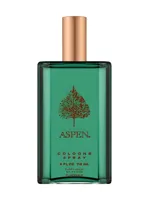
Aspen
EDC
Coty
Statement

Historic French-origin mass market fragrance name now focused on broad, affordable global distribution.
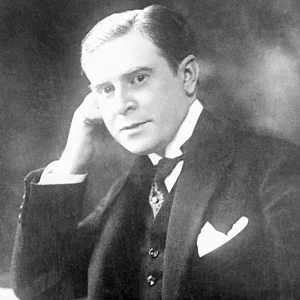
Coty began in 1904, when Corsican-born Joseph Marie François Spoturno, who adopted the name François Coty, founded a fragrance house in Paris, France. That same year he launched La Rose Jacqueminot, using concentrated flower oils and presenting the scent in an elegant Baccarat bottle, a move that tied fragrance closely to luxurious yet accessible packaging. The early success of La Rose Jacqueminot enabled Coty to open a store on Place Vendôme in 1908 and build a factory on the outskirts of Paris, rapidly expanding distribution.
Over the following decades, Coty helped define several major perfume categories. In 1905 it introduced Ambre Antique, and in 1917 the release of Chypre established a template that gave its name to an entire fragrance family. The company diversified into cosmetics, including face powder sold with a puff in a round box, and became known for offering perfumes and beauty products at multiple price levels, from everyday to prestige. By 1922 Coty, Inc. had been formed in New York, and the business later passed through owners such as Chas. Pfizer & Co. and Joh. A. Benckiser.
Today Coty Inc. is a global beauty group headquartered in New York that owns and licenses numerous fragrance brands, selling prestige and mass market products in more than 130 countries. While many original Coty signatures are no longer widely distributed, the company has begun revisiting its archive, for example by reimagining Ambre Antique within the Infiniment Coty Paris collection launched in 2024, reconnecting modern launches with the early innovations that shaped its reputation in perfumery.
A mass market, mid house known for floral compositions.
Coty began as a Parisian fragrance innovator, pairing new synthetic materials with naturals and collaborating with bottle makers to make perfume both visually and olfactorily distinctive. Mid- to late-20th-century ownership changes shifted the focus toward mass-market distribution and celebrity or licensed brands, diluting the visibility of Coty-branded perfumes themselves. In the 1990s and beyond, Coty grew into a holding group for many labels, and its own-name fragrances became more drugstore-oriented. With the launch of Infiniment Coty Paris in 2024 and the revival of early formulas like Ambre Antique, the company is cautiously re-engaging its historical roots while still relying on mainstream volume business.
Coty today is more a global beauty conglomerate than a single coherent perfume line, but its historical impact on modern perfumery is undeniable. For everyday, inexpensive scents and occasional heritage revivals, it remains worth watching, even if many releases are more functional than thrilling.
Favourite - easy to wear anywhere · Statement - bold & distinctive · Acquired - bold, for fewer occasions
EDC
Coty

EDT
Coty
EDT
Coty
EDP
Coty
EDC
Coty
EDT
Coty
EDT
Coty
EDP
Coty
EDP
Coty
EDC
Coty
New finds, honest verdicts, and price drops.
No spam. Unsubscribe anytime. See our privacy policy.