Perfume Samples and Decants
In this guide
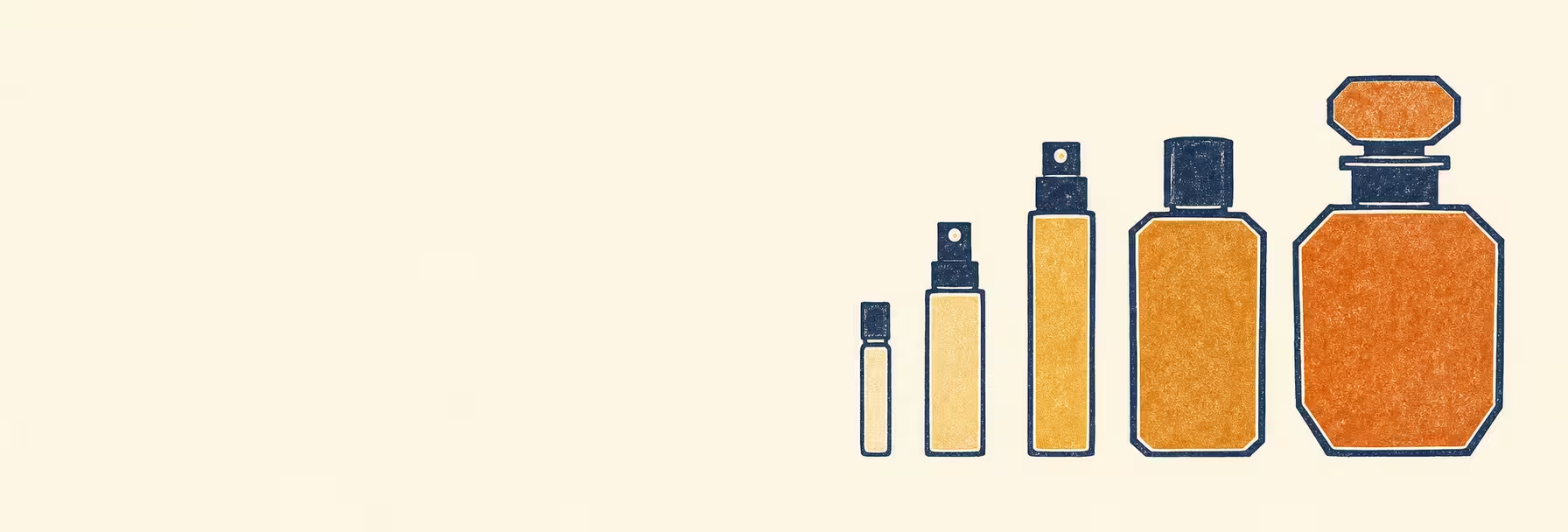
Sample, decant, travel spray, discovery set
Four words get used interchangeably and they are not the same thing. The difference matters because it changes who filled the bottle, what you are paying per ml, and how much you can trust what is inside.
- Sample. A tiny vial, usually 1ml to 2ml, filled and sealed by the fragrance house itself. The ones counters hand over, and the ones brands sell in small quantities. Often a dab vial rather than a spray, which changes how the scent behaves on skin.
- Decant. Fragrance transferred out of a full-size bottle into a smaller atomiser by somebody else - a decant service, a shop, or a hobbyist. Typically 2ml to 30ml. The juice is genuine only if the person who poured it started with a genuine bottle.
- Travel spray. The brand's own small format, usually 10ml or a refillable case with a few cartridges. Officially produced, officially sealed, priced accordingly.
- Discovery set. A boxed run of the house's samples, sold as a set. Many include a voucher worth the price of the set against a full bottle later, which effectively makes the trial free if you buy.
A dab vial and a spray of the same fragrance can smell noticeably different for the first half hour. Spraying atomises the liquid and lets the alcohol flash off across a wider surface, so the top notes arrive brighter and fade faster. Dabbing concentrates the oils on one spot and pushes the scent closer to how it will smell an hour in. If you are judging a fragrance from a dab vial, you are hearing it slightly out of order.
Where decants come from, and the authenticity question
A decant has no factory seal and no batch code of its own. Whatever is in the atomiser is there because somebody poured it in. That is the whole risk, and it is worth being plain about rather than pretending it does not exist.
In practice the risk is manageable, because it sits entirely with the seller rather than with the format. An established decant service with a trading history, a returns policy and public reviews has far more to lose from passing off a fake than it could ever gain. A marketplace listing with no seller history and a price well under the going rate is a different proposition. The questions worth asking are simple: how long have they been trading, do they say where the bottle came from, do they state batch codes, and will they take it back. Treat a batch code as a detail a careful seller bothers with, not as proof: it is printed information, and anyone can print it.
There is also a legitimate grey area that is not fraud but is still worth knowing about. Fragrances get reformulated, sometimes substantially. A decant poured from a ten-year-old bottle is genuine and may smell nothing like what you would buy new today. Sellers who tell you the batch year are doing you a favour, not showing off.
We keep an editorial list of the sample and decant services worth knowing about in our sample services directory, and the monthly subscription boxes alongside it.
What you actually pay per ml
Here is the part that surprises people. A decant almost always costs more per ml than the full bottle it came out of. That is not a rip-off - it is the deal. Somebody bought the bottle, bought the atomiser, filled it, labelled it, packed it and posted it, and their time is in the price.
The maths is straightforward. Divide the price by the volume in both cases and compare the two rates, exactly as you would with unit pricing on a supermarket shelf. A 100ml bottle at £120 is £1.20 per ml. A 10ml decant of it at £18 is £1.80 per ml - half as much again. You are paying that premium for one thing, and it is a genuinely valuable thing: the option to walk away.
The question is never "is the decant cheaper per ml", because it usually is not. It is "what would the wrong full bottle have cost me". Spending £18 to avoid a £120 mistake is excellent value. Spending £18 on a fifth decant of something you already know you love is just an expensive way to buy perfume.
Travel sprays follow the same pattern for the same reason, with the brand taking the margin instead of a decanter. Samples are the odd one out: at 1ml to 2ml the per-ml rate is often absurd, but the absolute cost is a couple of pounds, so nobody sensibly buys them by the rate. They are a question, not a purchase.
How to test a fragrance properly
Most bad fragrance purchases are not bad fragrances. They are good fragrances judged in the first ninety seconds, in a shop, against four others, on a paper strip. A sample or decant exists to fix exactly that, so it is worth using it properly.
- Two at a time, maximum. Your nose adapts fast. By the fourth fragrance you are no longer smelling accurately, which is why everything at the counter starts to blur into the same warm sweetness.
- Skin, not paper. Paper shows you the composition. Skin shows you what you will actually wear - your temperature, your skin's oil content and your own chemistry all move the result.
- Give it four hours. The opening is the part designed to sell you the bottle. The heart and base are the parts you live with. Check at thirty minutes, two hours and four hours before deciding anything.
- Wear it somewhere real. A fragrance that works beautifully in a cool empty flat can be overwhelming on a packed train in July. Test it in the conditions you would actually wear it in.
- Wear it more than once. Mood, weather and what you ate all shift how a scent reads. A 5ml decant gives you a dozen wearings, which is enough to know.
If you want to know what a fragrance is built from before you commit to trying it, every perfume page here carries its notes, and our ScentWheel gives you a ten-axis read on its character.
Why a decant ages faster than a bottle
Fragrance degrades through three things: air, light and heat. A full bottle has very little air in it relative to the liquid, and its glass is usually thick and often tinted. A small atomiser that is half empty is mostly air, and cheap ones are thin glass or plastic. The same juice will turn noticeably faster in the decant.
This is not a reason to avoid decants - it is a reason to buy the size you will actually get through. A 5ml you finish in two months is fine. A 30ml decant of something you wear twice a year is the one at risk, because it spends longest half-empty. Well-sealed glass kept cool and dark holds up far better than a loose plastic atomiser on a windowsill, so the format matters as much as the calendar. The signs to watch for are a scent that has lost its opening and gone flat, a noticeable darkening, or a seal that weeps. Keep them out of the bathroom, out of sunlight, and in glass rather than plastic where you have the choice.
Sample, decant, or dupe - which route when
These are not competing answers to one question. They answer different questions, and the useful skill is knowing which question you are actually asking.
- You have no idea what you like yet. Discovery sets and samples. Cheap, broad, low commitment. Cover a lot of ground before you narrow anything down. The beginner's guide is the right companion to this stage.
- You think you love one specific thing. A decant. Enough wearings to be certain, at a fraction of the cost of being wrong.
- You love it and you are certain. The full bottle. It is the cheapest per ml you will ever get, and the format that keeps best.
- You love it and the price is genuinely out of reach. This is where a dupe earns its place - an independent fragrance built to smell close to something you cannot justify. It is a different bottle that smells similar, not the same thing cheaper, and how close it gets varies enormously from pair to pair.
- You want the scent in your bag, not a decision. A travel spray. Officially produced, sealed, and within the 100ml hand-luggage limit without any argument at security.
Sampling and dupes are often set against each other and they should not be. Testing a fragrance properly is what tells you whether you want it at all. Everything after that - full bottle, decant, or a close alternative - is just how you choose to own it.
If you want to see how close the alternatives get, our dupe index scores every pair we hold against the original it copies, and side-by-side comparison puts any two fragrances against each other on notes, accords and character.