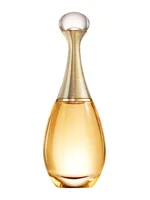
J'adore
EDP · 1999
Dior
Favourite
Catalogue
Every perfume and fragrance marketed to women in our catalogue, each with a verdict on how it smells, how long it lasts and what it costs.
In everyday English, perfume often means any fragrance marketed to women, whatever its strength. On the bottle the words are more precise. Parfum, or extrait, is the most concentrated form and is made to last all day; eau de parfum sits just below it and is the usual format for new launches; eau de toilette is lighter and wears more softly, The New York Times explains.
A lighter version is not always a diluted one. Perfumers can rework the notes between an eau de parfum and an eau de toilette, so the two can smell different, not just stronger or softer. Eau de parfum itself is relatively recent: it appeared in the 1970s and caught on in the 1980s.
Perfume was once worn by everyone. In early 19th-century Europe, as the bourgeoisie replaced the aristocracy, it became something mainly worn by women, sociologist Marcello Aspria says, and fragrances marketed to women went on to dominate most of the 20th century, a study of about 169,000 perfume releases found.
Caron's Tabac Blond gave women a tobacco-leather note in 1919, Nez magazine notes. After Revlon launched Charlie in 1973, it became the first American fragrance to be an international bestseller, and American perfumes grew sportier and more independent in style, the Smithsonian says. Around the same time, women began buying fragrance for themselves all year round instead of mainly receiving it as a Christmas gift.
Gifting is still part of the story: in the US, one in five people chose fragrance as a Mother's Day gift in 2025, Circana found. Mini and travel sizes have been a growing trend in women's fragrance, letting people try more scents before committing to a full bottle, and in a 2023 Circana study seven in ten US fragrance buyers said they would pay more for higher concentrations that last longer.
The share of perfumes in each group that list each note, sorted by women's perfume.
| Note | Women's | Men's | Unisex |
|---|---|---|---|
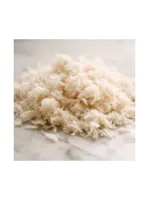 Musk |
51% | 36% | 41% |
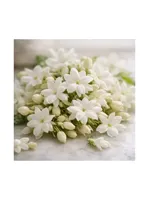 Jasmine |
45% | 16% | 25% |
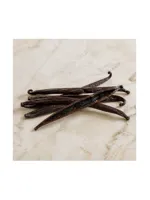 Vanilla |
42% | 23% | 35% |
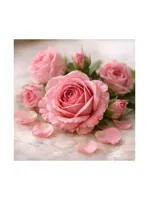 Rose |
39% | 12% | 26% |
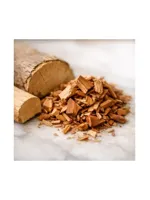 Sandalwood |
32% | 28% | 27% |
 Bergamot |
30% | 45% | 30% |
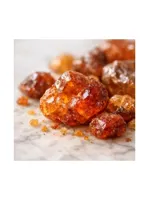 Amber |
29% | 35% | 29% |
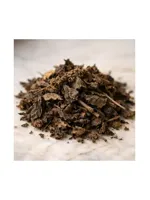 Patchouli |
24% | 38% | 27% |
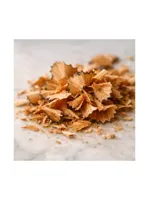 Cedar |
19% | 37% | 25% |
 Mandarin |
18% | 16% | 11% |
Percentage points above or below the average of men's perfume and unisex perfume.
Jasmine
+24 pts
45% women's · 16% men's · 25% unisex
Rose
+20 pts
39% women's · 12% men's · 26% unisex
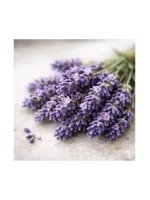 Lavender
-17 pts
3% women's · 32% men's · 9% unisex
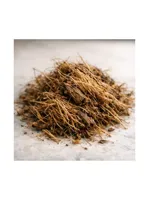 Vetiver
-13 pts
10% women's · 30% men's · 16% unisex
Based on 49,158 perfumes with note lists in our catalogue: 8,419 marketed to men, 17,477 to women and 23,262 to everyone. Note lists do not show amounts or how strong a note smells.
The ones our readers look up most, not the best sellers.
EDP · 1999
Dior
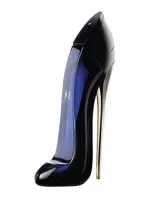
EDP · 2016
Carolina Herrera
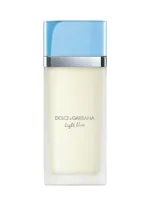
EDT · 2001
Dolce & Gabbana
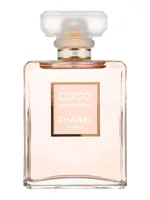
EDP · 2001
Chanel
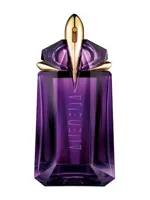
EDP · 2005
Mugler
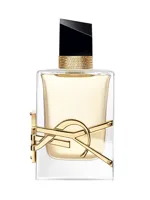
EDP · 2019
Yves Saint Laurent
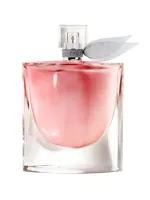
EDP · 2012
Lancôme
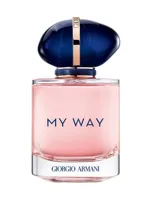
EDP · 2020
Giorgio Armani
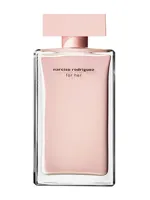
EDP · 2006
Narciso Rodriguez
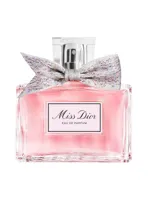
EDP · 2021
Dior
Continue to the rest of women's perfume, with filters
Or by kind of house: Arabic perfume for women
Parfum, sometimes called extrait, is the most concentrated form, typically 15 to 30 per cent perfume oil according to The New York Times, and is made to last all day. Eau de parfum sits just below it, at about 15 to 20 per cent, and is the most common format. In everyday English, perfume is also used for any fragrance marketed to women.
Usually eau de parfum, which carries more perfume oil: typically 15 to 20 per cent, against 5 to 15 per cent for eau de toilette, according to The New York Times. The names are a guide rather than a fixed standard, so one house's eau de toilette can outlast another's eau de parfum.
Yes. A label describes who a perfume was marketed to, not who may wear it. Early perfume catalogues did not say whether a scent was meant for men or for women, Nez magazine notes, and in much of the Middle East people of every gender wear rose and oud.
New finds, honest verdicts, and price drops.
No spam. Unsubscribe anytime. See our privacy policy.