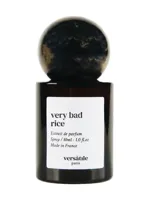
Very Bad Rice
Extrait
Versatile Paris
Statement
Note Profile
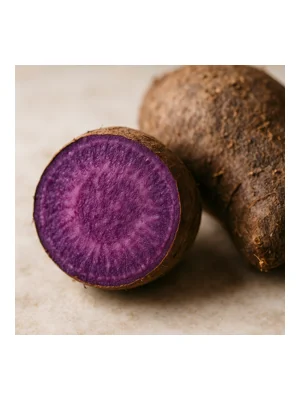
Ube is a fragrance note inspired by the purple yam (Dioscorea alata), a staple in Filipino and Southeast Asian desserts. In perfumery it evokes a creamy, sweet, lightly nutty and gently earthy character, often reminiscent of ube halaya, ice cream, or cakes. The note sits at the intersection of gourmand, milky, and soft floral facets, providing a distinctive purple dessert signature.
Olfactorily, ube combines a mild rooty earthiness with a round, creamy sweetness and soft nutty tones.[1][2] It is often described as having nuances of vanilla and coconut, with a faint floral lift and a buttery, diacetyl-like richness that adds to its dessert-like appeal.[1] In compositions it can read as a pastel, pudding-like gourmand note, smoothing sharp edges and creating a cozy, edible aura rather than a loudly sugary effect.
Ube comes from the tuber of Dioscorea alata, a purple yam widely cultivated in the Philippines and other parts of Southeast Asia. In flavor and aroma contexts, its key odorants include compounds such as diacetyl and certain phenolic and terpene components, which together generate its buttery, sweet, and slightly spicy character.[1] In perfumery, ube is usually represented as an accord or flavor-inspired reconstruction built from lactonic, vanilla-like, coconutty, and creamy notes, sometimes combined with faint earthy and floral materials to mimic the real tuber.[1][2]
Perfumers use ube predominantly in gourmand and edible-themed creations, where it can take the place of or complement vanilla, coconut, and sweet milk notes to give a more novel dessert twist. It typically appears in the heart to base of a composition, lending long-lasting creaminess and a colored, starchy-sweet impression that pairs well with notes like coconut, condensed milk, pandan, rice, tonka, and soft florals. Ube accords can also introduce cultural specificity into modern niche and indie fragrances, referencing Filipino desserts and bakery inspirations while remaining soft enough to blend into broader sweet-oriental structures.
A selection of reviewed perfumes where Ube appears prominently.