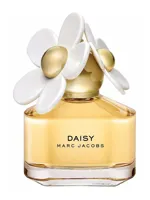
Daisy
EDT · 2007
Marc Jacobs
Favourite

One of the largest fragrance and flavour houses in history, now part of dsm-firmenich
Firmenich was a Swiss fragrance and flavour company founded in Geneva in 1895, and for over a century one of the world's largest privately held players in the industry. With CHF 4.3 billion in revenue and around 10,000 employees before its merger, it ranked second globally in fragrances and flavours. In May 2023 it merged with Dutch life-sciences group DSM to form dsm-firmenich, a publicly listed company with combined revenues of around 12.8 billion euros and roughly 30,000 employees.
The company was established in Geneva in 1895 under the name Chuit & Naef by chemist Philippe Chuit and businessman Martin Naef. Fred Firmenich joined the partnership in 1900 and eventually became the majority partner; the firm was subsequently renamed Firmenich SA. In 1939 the company gained remarkable scientific distinction when its Director of Research and Development, Lavoslav Ruzicka, was awarded the Nobel Prize in Chemistry for his work on polymethylenes and higher terpenes.
From the 1930s onward Firmenich expanded from its fine-fragrance roots into flavours, developing a raspberry substitute in 1938 and building out a full synthetic flavour portfolio for the food industry. The 2007 acquisition of Danisco's flavours division (Noville) for approximately 450 million euros made Firmenich the second-largest flavour house in the world at the time, ahead of IFF. Further acquisitions followed: Agilex Fragrances in North America (2017), Flavourome in South Africa (2017), Campus in Italy and Mexico (2018), and DRT, a world leader in pine-based plant chemistry, in 2020.
In 2022 Firmenich announced a merger with Royal DSM of the Netherlands, described by both parties as a merger of equals. The transaction was completed on 9 May 2023, creating dsm-firmenich - a Swiss-Dutch multinational listed on Euronext Amsterdam. The combined entity operates across three business units: Perfumery & Beauty; Health, Nutrition, and Care; and Taste, Texture & Health, with over 300 locations in more than sixty countries.
Firmenich built its scientific reputation around captive fragrance molecules. Its most celebrated contribution is Hedione (methyl dihydrojasmonate), a jasmine-citrus aroma compound first fully characterised and synthesised between 1957 and 1962 by Firmenich research chemist Edouard Demole. Hedione became one of the most widely used captive materials in fine fragrance history; its first landmark commercial application was Eau Sauvage, created by Edmond Roudnitska for Christian Dior in 1966, which helped define a new direction in transparent, projecting perfumery.
The house maintained a strong research-and-development culture across its history, running six R&D centres and 46 manufacturing plants. Lavoslav Ruzicka's 1939 Nobel Prize in Chemistry - won while he served as the company's Director of Research - anchored Firmenich's identity as a scientifically rigorous house rather than a purely commercial one. The firm invested continuously in synthetic chemistry, terpene research, and later in AI-assisted flavour creation.
Across fine fragrance, Firmenich composed for a wide range of consumer and designer brands, almost always without public credit on the bottle. Its acquisition of Agilex Fragrances in 2017 extended its reach into mid-sized North American customers, broadening a client base that had historically skewed toward large multinational brand owners.
EDT · 2007
Marc Jacobs
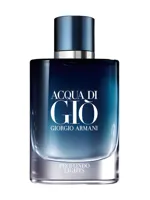
EDP · 2021
Giorgio Armani
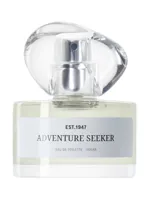
EDP · 2024
H&M
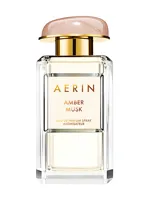
EDP · 2013
AERIN
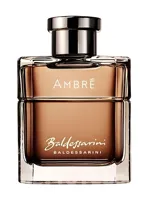
EDT · 2007
Baldessarini
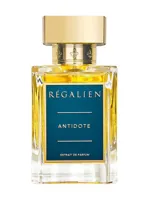
EDP · 2018
Régalien
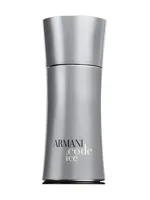
EDT · 2014
Giorgio Armani
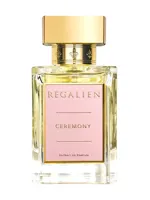
EDP · 2019
Régalien
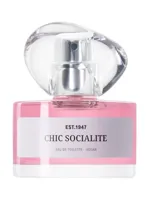
EDP · 2024
H&M
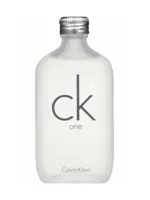
EDT · 1994
Calvin Klein
New finds, honest verdicts, and price drops.
No spam. Unsubscribe anytime. See our privacy policy.