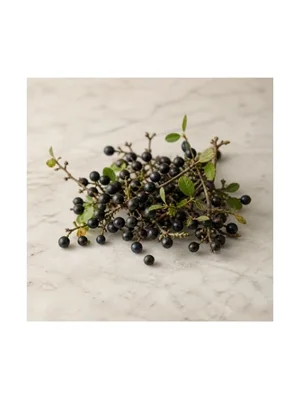
Blackthorn
Note Profile
About
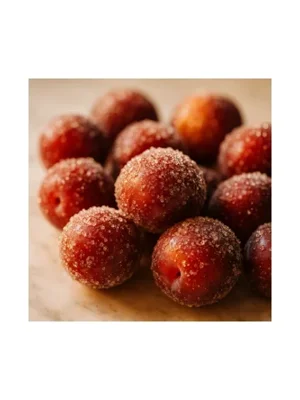
Blackthorn is Prunus spinosa and its fruit is the sloe. The one trade source that describes a blackthorn perfumery oil calls it sweetly fruity with a fig-date character, closer to dried fruit than to fresh green fruit. Nature writing describes the spring blossom instead as a sweet almond perfume. The two readings do not agree. This vector follows the fruit, because Fragrantica files the note under fruits, and it carries the almond as a secondary rather than dropping it.
Scent Profile
Fruity leads on the only source that describes the oil's smell: "a fig-date like aroma. Sweetly fruit aroma." Sweet_vanillic carries the "sweetly" and the dried-fruit weight that fig and date imply, which is a heavier sweetness than fresh fruit. Nutty carries the blossom's "sweet almond perfume", held down rather than dropped because the claim is sourced but describes a different organ of the plant. Floral and sour sit below the naming bar: floral because the blossom reading implies it without any source scoring it, sour because Wild Food UK's astringency line is about mouthfeel, not odour, and mouthfeel is not evidence of smell.
ScentWheel
Read off the wheel, not a label applied to the note.
Origin
Prunus spinosa, native to Europe, western Asia and locally northwest Africa. Sloes are the small blue-black stone fruit, famously astringent to eat. Gemlite sells a "Sloe Blackthorn EO" for soap and candle use, with no CAS number and no extraction method given, so whether a genuine botanical extraction exists is unconfirmed. No perfumery house publishes a blackthorn or sloe material description.
Usage in Perfumery
Fragrantica lists 9 fragrances and Parfumo lists 2 across 2 brands. Used as a dark, dried-fruit accent. Gemlite gives its blending partners as tagetes, tea tree and elemi.
Similar Notes
Perfumes featuring Blackthorn
A selection of reviewed perfumes where Blackthorn appears prominently.
No perfumes featuring this note have been reviewed yet. Check back soon.