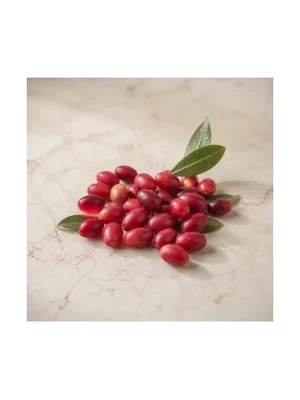
Miracle Berry
Note Profile
About
Miracle berry is the fruit of Synsepalum dulcificum, a shrub from tropical Africa. It is famous for miraculin, a protein that makes sour food taste sweet, and not for how it smells. Britannica's only word for the fruit itself is 'mild'. The perfumery note is a synthetic reconstruction of red fruit, citrus and sugar. It is not an extract of the plant.
Scent Profile
Fruity leads and is the only facet the source states twice, first as 'sweet, fruity, and slightly tangy' and again as 'notes of red fruits'. Sour is the tangy and tart half of that same description, which the source repeats in three separate sentences. Sweet_vanillic is the 'sugar' named in the compound list. Citrus is named twice, once among the synthetics and once among the naturals blended in for depth. Tropical sits just below, from the exotic fruit and coconut claim. That claim is about what the note is paired with rather than about the note itself, so it is held under the others. Green, floral, honeyed and lactonic are traces filling in behind the fruit. Every value carries a spread of 0.18 to 0.20 because one community source sets all of them.
ScentWheel
Read off the wheel, not a label applied to the note.
Origin
Britannica describes the plant: an evergreen shrub of the family Sapotaceae, native to tropical Africa, whose 'small white flowers give rise to red drupe fruits that are about 2-3 cm in length'. It attributes the taste effect to 'a glycoprotein named miraculin, which was first isolated by Japanese researcher Kenzo Kurihara in 1968'. Perfume Stars describes the fragrance note and states plainly that it is built rather than extracted: 'Miracle Berry is not a traditional aromatic plant like lavender or rose, its scent must be carefully recreated for use in perfumery'. Perfumers 'typically use synthetic aroma compounds' that 'mimic the berry's sweet and tangy profile, often blending notes of red fruits, citrus, and sugar', sometimes cut with real raspberry or citrus extract. I found no GC-MS or headspace study of the fruit, so no source states what the real pulp smells like. The referent_type of botanical is a poor fit for what is actually sold.
Usage in Perfumery
A fruity heart note used for novelty. Perfume Stars puts it in tropical compositions alongside exotic fruit, coconut and spice. 3 Fragrantica placements and none on Parfumo, so it is a rare term and the vector will not be corrected by usage.
Similar Notes
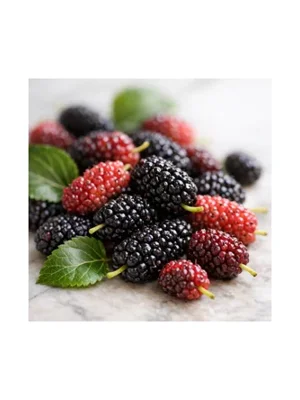
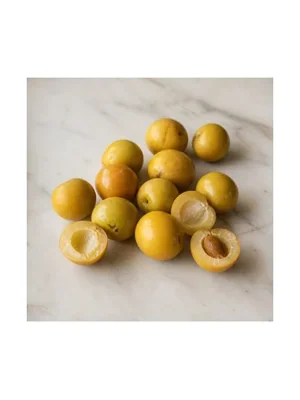
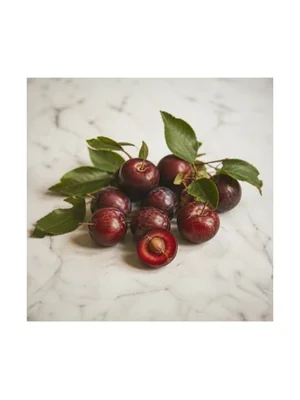
Perfumes featuring Miracle Berry
A selection of reviewed perfumes where Miracle Berry appears prominently.
No perfumes featuring this note have been reviewed yet. Check back soon.