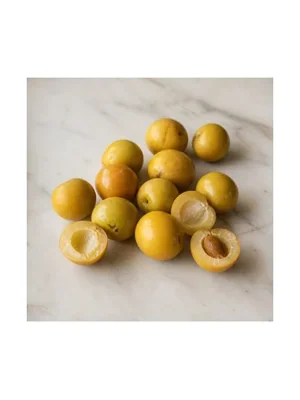
Seriguela
Note Profile
About
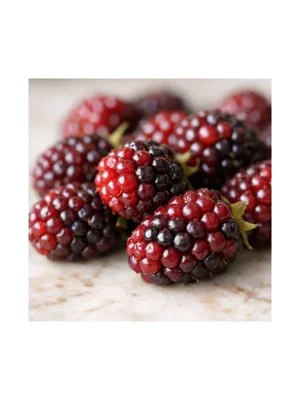
Seriguela is the fruit of Spondias purpurea, a small tree of the cashew family. The fruit is the size and shape of a small plum, and it ripens from green through red to purple. Every source found describes it as plum-like: sweet and juicy, with a tart, slightly bitter edge that stays after the sweetness. One food writer calls the pulp "not-too-sweet but very aromatic" and places it near mango and caja. Underripe fruit is much more tart and can be bitter.
Scent Profile
Fruity leads and it is the only facet all three sources state. Wikipedia calls the flavour "similar to a plum, sweet", Flavors of Brazil calls the pulp "very aromatic" and "very juicy", and CostaRica.com says "sweet and juicy goodness". Sour is the tart edge and it is the second facet every source names: "a bit of an acidic aftertaste", "much more tart and somewhat bitter", "Tart and delicious". It sits high because the tartness is what each writer reaches for to correct the word sweet. Tropical rests on one source and on the plant itself. Flavors of Brazil puts the flavour alongside "mango and caja", and this is a lowland tropical crop, but only that one line supports it, so it carries the widest spread in the vector. Below the line, sweet_vanillic is the ripe sweetness, green is the underripe tart-and-bitter state, and citrus and floral are held just off zero because the acidic finish and the word "aromatic" point at them without naming them. No source asserts their absence, so neither does this vector.
ScentWheel
Read off the wheel, not a label applied to the note.
Origin
Spondias purpurea, native to Mexico and Central America and grown across tropical America. It is called seriguela or ciriguela in Brazil, jocote in Central America, ciruela in parts of Spanish-speaking Latin America, and red mombin or Spanish plum in English. It is not a plum. Prunus and Spondias are different families, so this note has no botanical link to the published `plum`. No supplier sells a seriguela essential oil or absolute, and no trade source describes one, so the perfumery note is a built fruit accord rather than an extract.
Usage in Perfumery
Used as a bright fruit accent in tropical and Latin American themed compositions, attested on three Fragrantica fragrances and none on Parfumo. It sits with mango, passion fruit and other Spondias fruit. The tart half is what it contributes that a straight sweet fruit note does not.
Similar Notes
Perfumes featuring Seriguela
A selection of reviewed perfumes where Seriguela appears prominently.
No perfumes featuring this note have been reviewed yet. Check back soon.