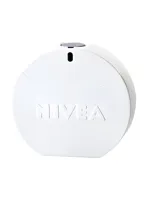

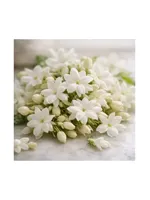



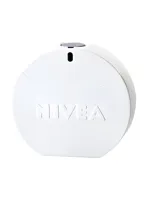
Crème
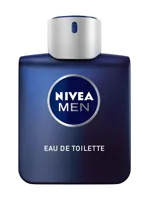
EDT
Nivea
Favourite

German skincare brand whose fragrances mirror its clean, soft Nivea Creme aesthetic.
Nivea traces its roots to 1882, when pharmacist Paul Carl Beiersdorf established his company in Hamburg, Germany. The modern Nivea brand grew out of Beiersdorf’s skincare research and, in particular, the breakthrough development of a stable water-in-oil emulsion using the emulsifier Eucerit. In 1911, Dr Oscar Troplowitz, who had acquired Beiersdorf’s Hamburg laboratory in 1890, worked with dermatologist Paul Gerson Unna and chemist Isaac Lifschütz to launch Nivea Creme, a snow-white cream whose name was taken from the Latin words nix and nivis, meaning snow.
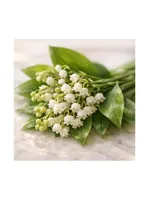
The original Nivea Creme combined Eucerit, glycerin, a little citric acid, and a fragrance built around rose and lily of the valley oils. Its stability meant the cream could be exported widely without losing quality, and by 1914 Nivea Creme was already sold on every continent. Over time, the blue tin and clean blue-and-white visual identity became recognisable markers of the brand. While the overall Nivea portfolio spans many skincare and body care categories, the same soft, soapy-clean Nivea Creme scent has inspired dedicated fragrances and body mists that aim to echo the familiar smell of the cream.
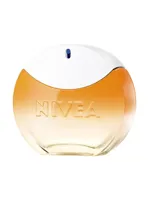
In perfumery databases, Nivea appears as a small fragrance line under the wider Beiersdorf umbrella, with launches beginning in the mid-2010s. These scents typically focus on comfort, cleanliness, and skin-like musk rather than complex, high-concept compositions, reflecting the brand’s roots in everyday skincare rather than luxury perfumery.
A mass market, budget house known for soapy compositions.
Nivea’s fragrance offerings evolved out of its core skincare products rather than from a traditional perfume line. After decades of recognition for the characteristic scent of Nivea Creme and related body products, the company began translating that accord into stand-alone fragrances in the 2010s. The focus has stayed on reinforcing the brand’s skin-care identity rather than branching into experimental or high-luxury perfumery, so changes over time have been incremental, tied to new product formats and line extensions.
Nivea’s perfumes are basically bottled versions of its body-care smell: comforting, clean, and low drama. They work if you value skin-like subtlety and nostalgia over originality or performance.
Favourite - easy to wear anywhere · Statement - bold & distinctive · Acquired - bold, for fewer occasions
New finds, honest verdicts, and price drops.
No spam. Unsubscribe anytime. See our privacy policy.