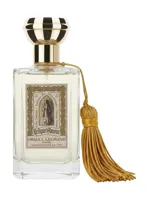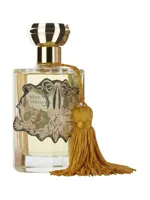


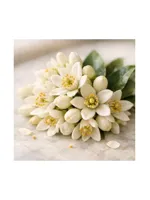
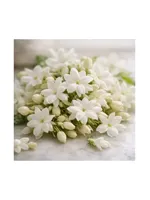
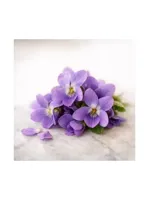
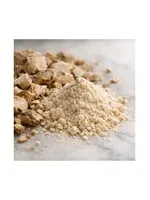

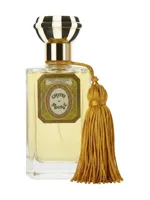
Chypre Mousse
EDP
Oriza L. Legrand
Acquired
Heritage French house revived to recreate archival, vintage-style perfumes from 1720 onward.
Oriza L. Legrand traces its roots to 1720, when Fargeon Aîné, perfumer-distiller to King Louis XV and his court, created the original Oriza house in Paris. The name Oriza comes from Oryza sativa, the Latin term for rice, reflecting the use of rice powder in cosmetics and wigs for the French aristocracy. In 1811, Louis Legrand became sole owner, rebranding the firm as Oriza L. Legrand and establishing the perfumery at 207 rue Saint-Honoré in Paris.
Under Legrand and later his successor Antonin Raynaud, who took over in 1860, the house became an important player in 19th-century French perfumery. The company built one of the first steam-powered perfume factories in Levallois-Perret, supplied several European royal courts, and was among the earliest to develop full fragrance lines with matching soaps, powders and creams. In 1887, Oriza L. Legrand patented what is considered the world's first solid perfume, Essence Oriza Solidifiée, sold in ivory and crystal containers and pencil-shaped formats.
The original company did not survive the upheavals of the 20th century and eventually closed after World War II. In the 2010s, perfume enthusiasts Franck Belaiche and Hugo Lambert revived Oriza L. Legrand, positioning themselves as successors rather than new founders and working from archival formulas. The modern collection focuses on reinterpreting historical compositions from the 19th and early 20th centuries, often with rich floral, resinous and powdery accords that emphasize a distinctly vintage French style.
A niche, luxury house known for powdery florals compositions.
The original Oriza house evolved from a royal supplier in the 18th century into an industrial innovator in the 19th century, pioneering steam-powered production and one of the earliest solid perfumes. After closing in the mid-20th century, the brand lay dormant until its revival by Franck Belaiche and Hugo Lambert, who chose to work from archives and historical references instead of pursuing a modern designer style. Recent releases continue to mine Belle Epoque and pre-war themes, but with contemporary quality control and materials, resulting in perfumes that feel deliberately out of time rather than retro for its own sake.
Oriza L. Legrand is a niche choice for people who genuinely enjoy vintage French perfumery and do not mind compositions that feel old-fashioned. If you want clean, easy, modern crowd-pleasers, look elsewhere; if you want something that smells like it belongs in a 19th-century Parisian salon, this house is worth serious exploration.
Favourite - easy to wear anywhere · Statement - bold & distinctive · Acquired - bold, for fewer occasions
New finds, honest verdicts, and price drops.
No spam. Unsubscribe anytime. See our privacy policy.