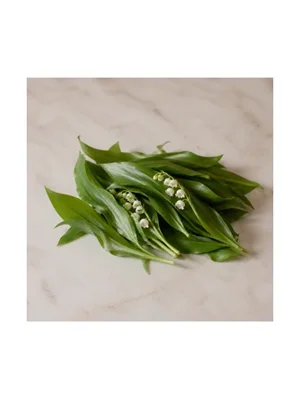
Lily-of-the-Valley Leaf
Note Profile
About
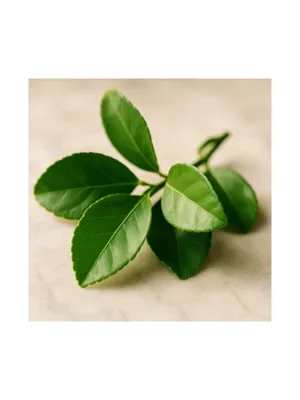
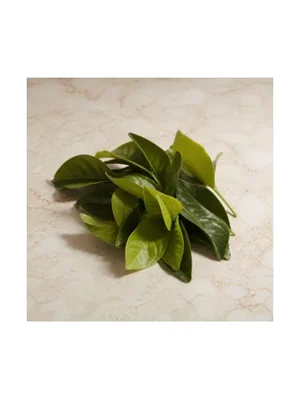
The leaf of muguet rather than the flower. Green, crisp and faintly watery, with none of the sweet soapy floral character the flower note carries. It is the botanical half of the plant, used to give a muguet accord a real stem and leaf under it.
Scent Profile
Green is nearly the whole note. The one source that addresses the leaf directly opens with 'Green, crisp, faintly aquatic' and names cis-3-hexenol, leaf alcohol, as what it is made of. Aquatic_ozonic is the watery edge, which the same source states three separate ways: 'faintly aquatic', 'vegetal freshness with a watery edge', and 'watery-fresh modifiers'. The dossier left the choice between scoring that as water or folding it into green to the scorer. It is scored separately here because the source names it three times and because the word it keeps using, wetter, is about water and not about foliage. The word 'faintly' is why it sits at 0.38 rather than higher. Nothing else reaches. Mineral and white_floral are held low on purpose. The published Lily of the Valley note carries mineral and white_floral, and this source says the leaf is 'greener, wetter, and less sweet than the flower's synthetic reconstruction' and gives 'the plant's actual botanical character rather than the flower's synthetic fantasy'. Those low values are not zero, because no source says the leaf smells of nothing floral.
ScentWheel
Read off the wheel, not a label applied to the note.
Origin
No commercial extraction of Convallaria majalis leaves exists. The plant is toxic - it carries cardiac glycosides - and the flower itself is a mute flower that yields nothing to distillation or extraction. So both halves of this plant are reconstructions. The leaf is built from cis-3-hexenol, which is leaf alcohol, together with green terpenes and watery-fresh modifiers. That is a different toolkit from the flower note, which is built from hydroxycitronellal, Lilial and Lyral.
Usage in Perfumery
A green modifier in spring, garden and naturalistic compositions. Perfumers use it to put the plant back under the flower, so that a muguet accord reads as something growing rather than as a synthetic bouquet. It also works on its own as a clean green top note next to galbanum, violet leaf, cucumber and aquatic materials.
Similar Notes
Perfumes featuring Lily-of-the-Valley Leaf
A selection of reviewed perfumes where Lily-of-the-Valley Leaf appears prominently.
No perfumes featuring this note have been reviewed yet. Check back soon.