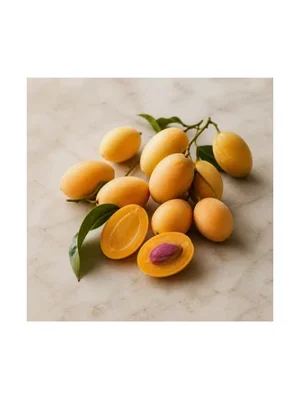
Marian Plum
Note Profile
About
Ripe gandaria fruit: a juicy mango-apricot ester top with a faint turpentine edge.
Scent Profile
Fruity leads. Premiere Peau calls the top a "sharp fruity-ester top - methyl and ethyl butanoate forward" and the accord as a whole "sweet-juicy". Tropical is the botany showing through. The same source says the fruit is "closer to mango than to any temperate plum" and that the note "functions as a regional Southeast Asian alternative to mango". It is held under fruity because the ester top is what the source names first, and under published mango's tropical because marian plum is the smaller, thinner fruit of the two. Floral is the beta-damascenone heart "threading a mango-rose floral angle through the fruity body", with methyl anthranilate under it. Green is the "green-leaf hexanal lift", named once and named as a lift, so it stays a top-note trace rather than a body facet. Below the reporting line: aromatic_herbal carries the turpentine that Wikipedia, Singapore NParks and the Useful Tropical Plants database each report independently. None of the 32 facets is turpentine, so this is a placement decision rather than a reading of the sources. Sweet_vanillic is the "sweet-juicy" half of the accord. Sour is the flavour range from sour to sweet that two botanical sources give, and it is low because they describe taste rather than smell. Amber_resinous is the grey gum that bleeds from cut bark, offered at trace strength by one source with no ranking against the fruit.
ScentWheel
Read off the wheel, not a label applied to the note.
Origin
Marian plum is the fruit of Bouea macrophylla, a Southeast Asian tree also called gandaria, ma-prang or kundang. Despite the English name it is not a Prunus. It sits in the Anacardiaceae, the cashew and mango family, and it smells like its relatives rather than like a temperate plum. There is no commercial extract. Premiere Peau describes the perfumery note as a reconstruction built from the ripe fruit headspace: methyl and ethyl butanoate on top, a hexanal green lift, a beta-damascenone heart and methyl anthranilate for grape-skin depth.
Usage in Perfumery
A heart note used as a regional Southeast Asian alternative to mango. It gives a juicy fruit lift with a floral angle, so it works in tropical fruity-florals and in gourmand accords that want fruit without jam. The note is rare in fine fragrance. Three Fragrantica placements is the whole measured usage.
Similar Notes
Perfumes featuring Marian Plum
A selection of reviewed perfumes where Marian Plum appears prominently.
No perfumes featuring this note have been reviewed yet. Check back soon.