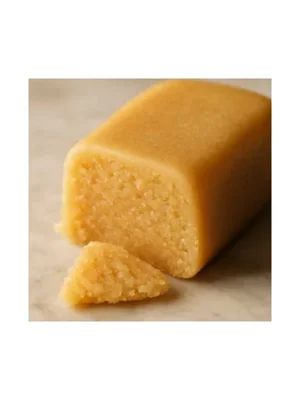
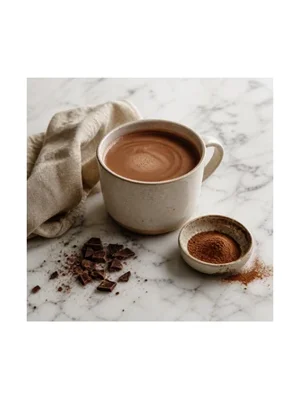
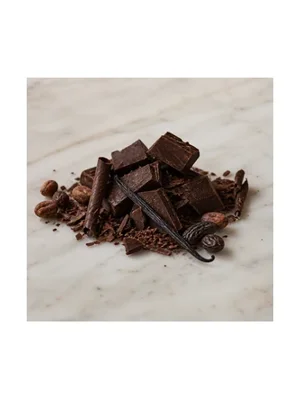
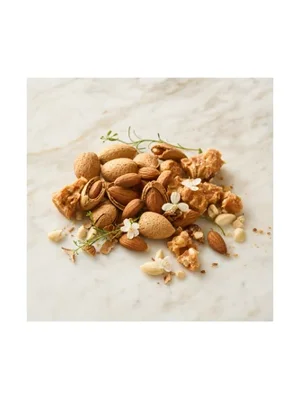
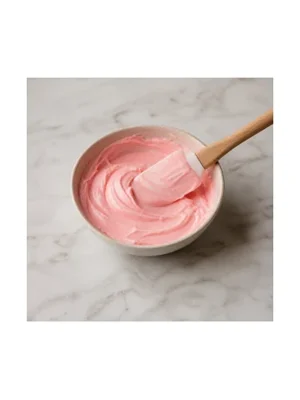
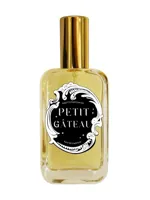
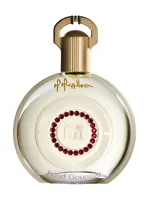
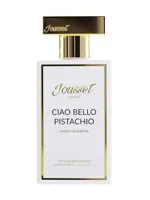
Marzipan in perfumery represents the scent of the classic almond paste confection made from ground almonds and sugar. It is characterized by an intense bitter‑almond facet wrapped in dense sweetness, often with a subtle cherry nuance. Perfumers use it as a gourmand note to evoke pastry shops, cakes, and almond desserts with a creamy, edible impression.
Scent Profile
The marzipan note smells like sweet, sugary almond paste with a strong bitter‑almond core and a faint backdrop of cherry or almond liqueur. It is typically rich, creamy, and slightly powdery rather than fresh, with a dense, almost chewy sweetness akin to cake fillings or icing. In compositions, marzipan often reads as both nutty and dessert‑like, bridging between almond facets, vanilla, and other bakery notes to create a comforting gourmand aura.
Marzipan is almond paste and sugar. Its bitter-almond smell is benzaldehyde. A perfumery glossary says the marzipan note is defined by that single molecule. A flavour trade page says benzaldehyde is the main compound behind the sweet, nutty, marzipan-like aroma. Piperonal adds a powdery vanilla-almond sweetness, but benzaldehyde carries the note.
Declarable allergen
Named in EU Annex III as Benzaldehydeproducts must list this name above a set concentration
Restricted
An IFRA Standard limits how much of this a perfumer can usethe limit applies to the perfumer, not the wearer
These are facts about the substance, not about any perfume with this note.
Why that matters
A perfume that names Marzipan can use a different extract, a
reformulated version, or a synthetic reconstruction. It can also hold less
than the amount that requires a declaration. We cannot tell which applies.
These rows cover only the substances we hold a link for.
Marzipan as a material is a confection traditionally made from finely ground almonds and sugar, originating in European pastry traditions such as those of Germany, Italy, and Spain. In perfumery, the marzipan effect is usually built as an accord using bitter‑almond materials (often benzaldehyde‑rich components), vanillic and sugary notes, and sometimes creamy musks or lactonic molecules to reproduce the texture of almond paste. Some formulas may also incorporate cherry or amaretto‑like nuances to emphasize the characteristic bitter‑almond/cherry facet recognized in marzipan.
Usage in Perfumery
Perfumers employ marzipan mainly in gourmand and oriental‑gourmand fragrances to evoke pastries, cakes, and almond desserts, often in the heart or base where its sweetness and density can give body to the composition. It pairs well with vanilla, tonka bean, heliotrope, cherry, chocolate, and creamy or milky notes, as well as floral notes such as orange blossom or rose that can provide contrast to its richness. In modern niche perfumery, marzipan is frequently used to create nostalgic, patisserie‑inspired accords or to add an edible almond twist to floral, fruity, or amber structures.
We count visits to see which pages help people and to improve the site.
No advertising, and no tracking across other sites.
Read our cookie policy
Cookie Preferences
Analytics is on unless you switch it off here. Essential cookies cannot be
disabled as they're required for the website to function.
Always On
Required for the website to function. Includes session management and security tokens.
Counts visits and which pages people use, so we can improve the site. We use
Google Analytics with its advertising features switched off, plus our own
cookieless visit counter. Switching this off stops both.