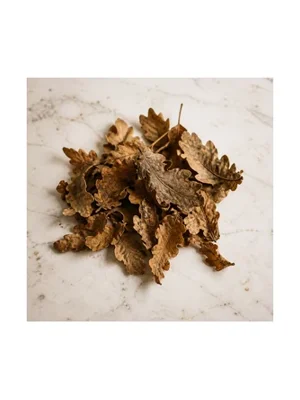
Oak Leaves
Note Profile
About
Tannic, dry, astringent green foliage that turns leathery and earthy as the leaf dries and rots.
Scent Profile
Green leads, and the source leads with it too: a crisp, dry, faintly astringent leaf snap that the writer describes as green turning to brown. Earthy is the decomposing stage, the forest-floor and geosmin character the reconstruction reaches for directly. Leather is the leathery, tea-like quality the leaf takes on while it dries, named as a distinct stage rather than a nuance. Dry_woody is the bark and stem behind the foliage. Tobacco_hay is the dried-leaf register, the same one that makes the drying stage read as tea. Mossy_chypre follows from the stated use in chypre and forest accords and from the mulch character. Under all of it runs a tannin astringency that this vocabulary has no facet for. It is spread thinly across sour and mineral rather than being asserted anywhere.
ScentWheel
Read off the wheel, not a label applied to the note.
Origin
No commercial essential oil or absolute of oak leaves exists. Première Peau states this plainly. The note is a reconstruction, built from green-leaf aldehydes for the fresh stage, methyl salicylate for the tannic astringency, leathery molecules for the drying stage, and geosmin and vetiver for the decomposing stage. So the referent is an accord, not an extract, and the leaf of Quercus is the target rather than the source.
Usage in Perfumery
Perfumers use oak leaves as a deciduous-forest modifier across the heart-to-base transition. It gives a temperate-European forest reference in chypre, forest and autumnal compositions. The tannic thread is what distinguishes it from tropical or coniferous leaf notes, and it is that thread, not the green top, that carries it into the drydown.
Similar Notes
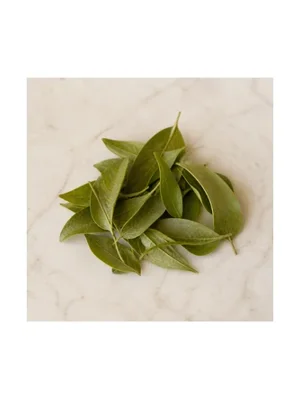
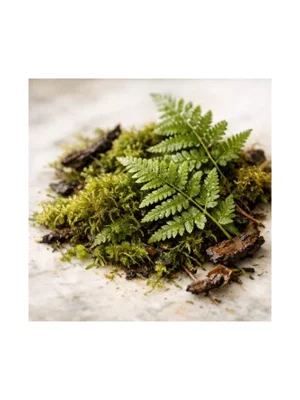
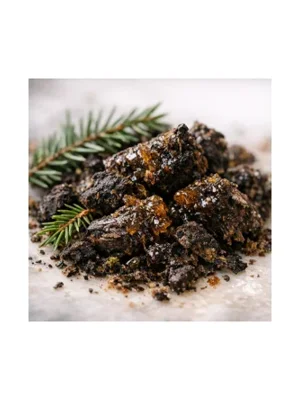
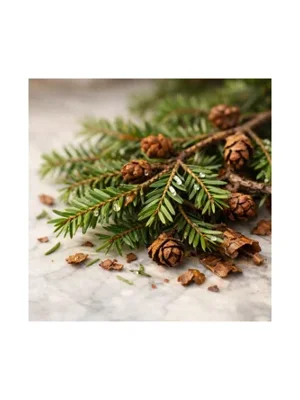
Perfumes featuring Oak Leaves
A selection of reviewed perfumes where Oak Leaves appears prominently.
No perfumes featuring this note have been reviewed yet. Check back soon.