Most of what circulates online about making perfume last longer moves the needle by minutes, not hours. Freezing the bottle, smearing petroleum jelly on your wrists, storing your fragrance in the fridge: these are folklore dressed up as technique. The single biggest factor in how long a fragrance lasts is what is actually in the bottle - its concentration and its note families. A citrus-heavy Eau de Toilette will fade in three or four hours no matter how skilfully you apply it, and a resin-and-musk-heavy Parfum will still be audible on your skin at hour ten even if you do everything "wrong". Technique can add real hours on top of that baseline. It cannot invent hours the composition never had.
Below is what helps, ranked by how much difference it makes, followed by the one thing almost nobody selling a "longevity hack" wants to admit: a lot of "my perfume has disappeared" is not the perfume fading. It is your nose switching off.
What helps, ranked
| Do this | Why it works | Impact |
|---|---|---|
| Moisturise skin before spraying | Fragrance oil binds to moisture and skin lipids - dry skin has nothing to hold onto | High |
| Spray pulse points, clothing and hair, not just wrists | Fabric and hair hold fragrance oil far longer than skin, which turns over and warms scent off | High |
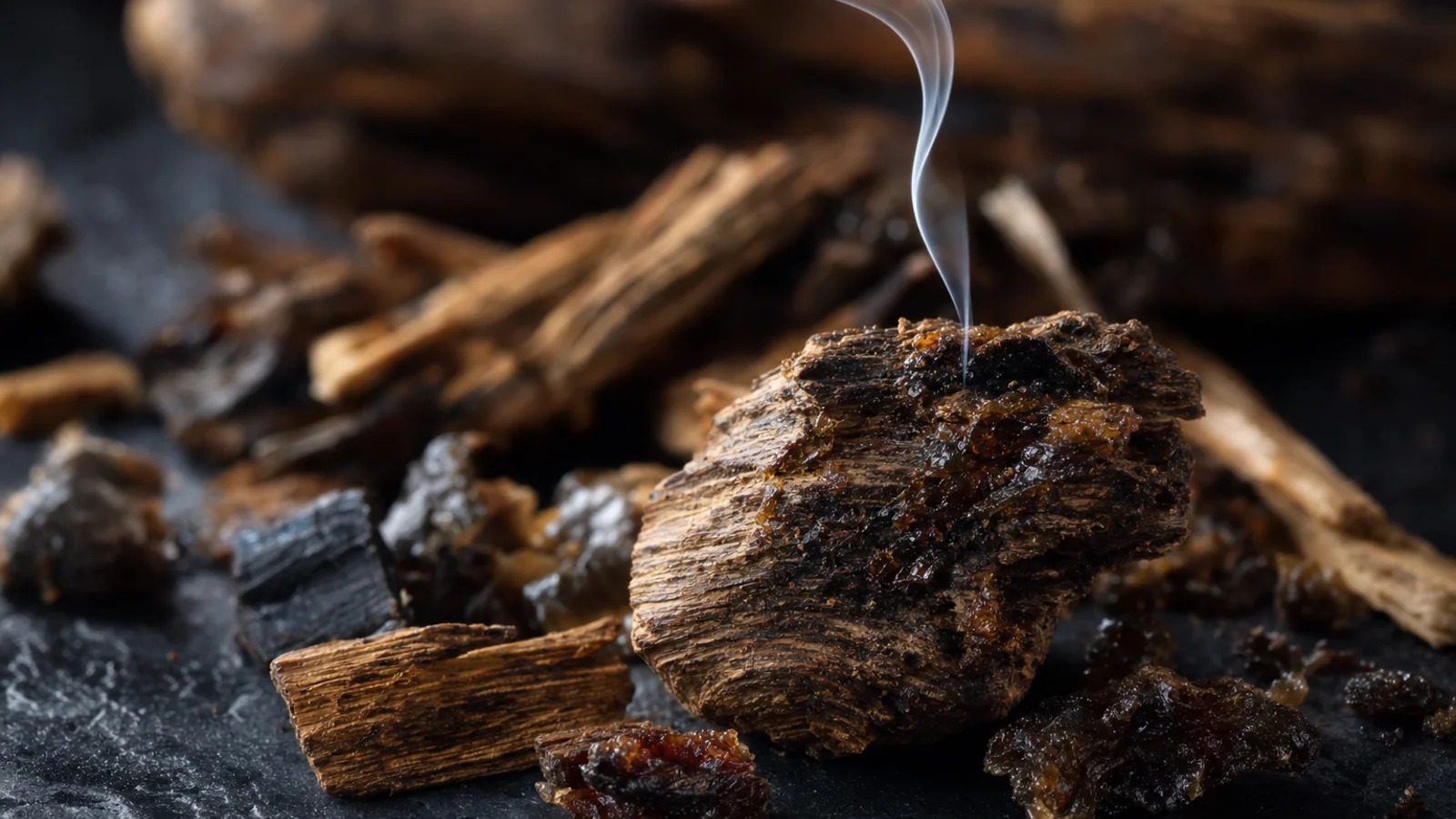
| Buy for concentration and note family, not brand name | Oil percentage and heavier bases (musk, resins, woods) set a ceiling technique cannot raise | Highest |
| Spray before you dress | Fragrance settles into fabric fibres as you move, extending the trail | Medium |
| Layer with a matching body product | Rebuilds the scent layer as skin sheds it through the day | Medium |
| Do not rub your wrists together | Friction breaks down fragile top-note molecules faster | Low-medium |
| Vaseline on pulse points first | An occlusive layer slows evaporation a little - real, but marginal | Low |
| Spray your hairbrush instead of your hair | Avoids alcohol drying your hair; scents it about as well either way | Low (haircare, not longevity) |
The techniques that earn their place
Moisturised skin holds scent, dry skin does not
Fragrance oil needs something to cling to. Dry skin has less surface lipid for the oil molecules to bind with, so they evaporate faster and the fragrance reads thinner within the hour. An unscented moisturiser or plain body oil applied a few minutes before you spray gives the fragrance a base to sit in rather than a bare surface to evaporate off. It is the cheapest, most reliable technique here, and it works on every fragrance, not just heavy ones.
Where you spray matters more than how much
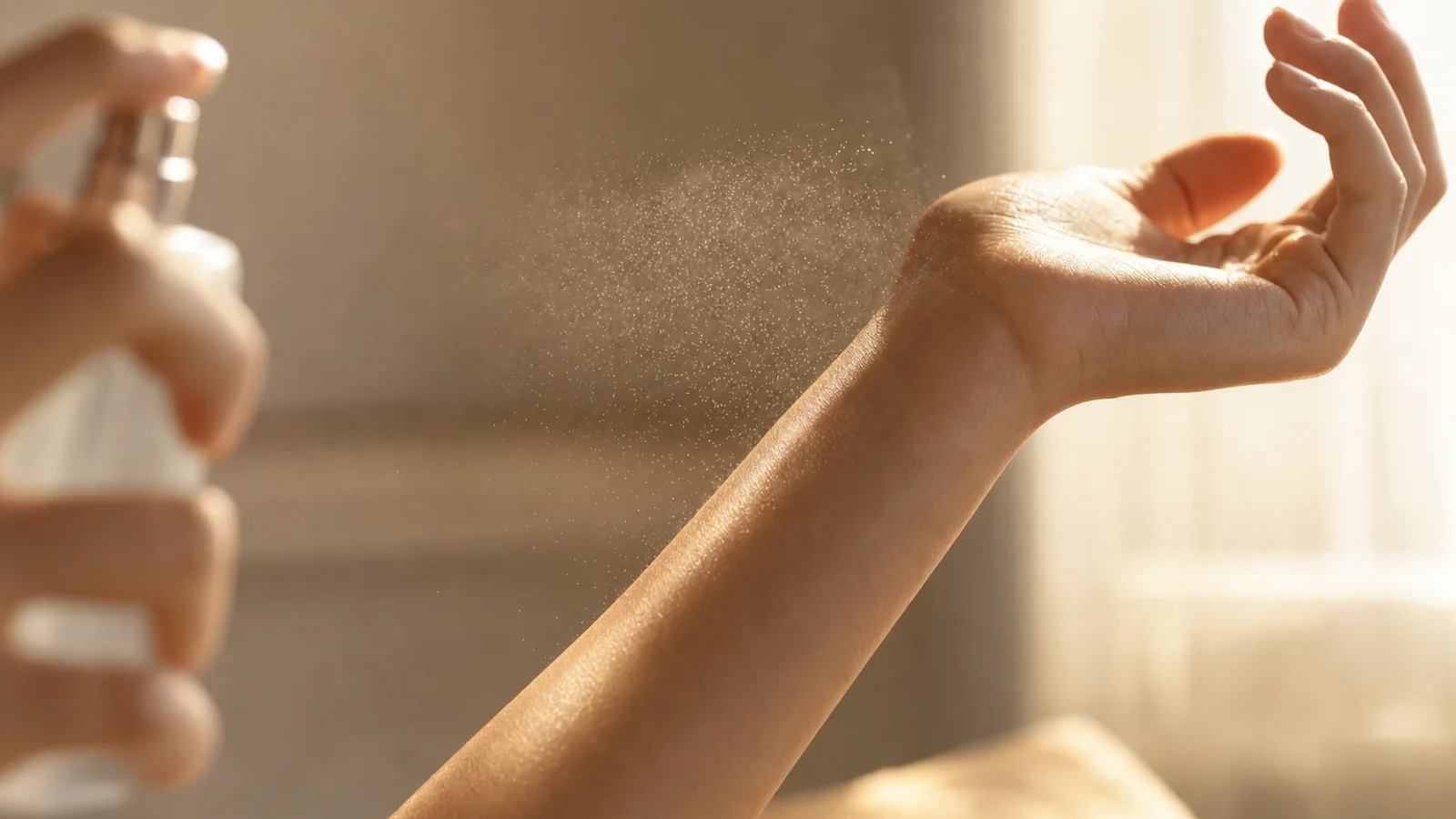
Pulse points (wrists, neck, inside the elbows) are warm and release scent readily, but skin turns over and washes clean far faster than fabric or hair does. Spraying a jumper, scarf or the ends of your hair as well as your skin gives you a slower-releasing second source, still carrying top and heart notes hours after your skin has moved on to base notes alone. Wool and cotton hold fragrance oil well; check the fabric can take it, and avoid silk or anything pale that alcohol could mark.
Do not rub your wrists together
This one is real, if small. Rubbing generates friction and heat, which breaks down the fragile aldehydes and citrus molecules in most top notes before they can develop properly. It will not ruin a fragrance, but letting it dry undisturbed keeps the opening intact a few extra minutes - more noticeable on a bright citrus or green opening than on anything already heavy in the base.
Layer with a matching body product
If a brand sells a shower gel, body lotion or oil in the same fragrance, using it underneath has a genuine mechanism: it is simply more of the same scent molecule, applied across a larger surface than a few sprays alone. It works best with fragrances that already lean on skin-hugging notes such as vanilla or sandalwood, where the body product extends the drydown rather than adding a generic "clean" smell underneath it.
Spray before you dress, not after
Spraying bare skin before you dress lets fragrance settle into fabric as you move, rather than sitting only on exposed skin, and avoids alcohol marks on delicate material. For scent on clothing specifically, a light spray to the inside of a collar or cuff, held a few centimetres away, adds a second release point without soaking the fabric.
The vaseline trick, and other minor hacks worth knowing
Petroleum jelly on pulse points before spraying is a genuine technique, not just internet folklore: it forms an occlusive layer that slows evaporation slightly, on the same principle as moisturising, just more extreme. The effect is real but small, and it can mute a fragrance's sharper top notes, so it suits heavier orientals and amber compositions better than a citrus fragrance you want to smell bright.
Spraying your hairbrush rather than your hair directly is sound advice, but for hair health rather than longevity. Fragrance alcohol is drying, and hair holds scent for a long time either way, so the brush method gives a similar trail with less damage, not a longer-lasting one.
Your fragrance is not the problem, your nose is
This is the part most "make perfume last longer" guides skip, and it explains a huge share of the "my perfume vanished after two hours" complaints online. Your nose adapts to a constant smell within ten to twenty minutes, a process called olfactory fatigue. You are still smelling the same molecules; your brain has stopped flagging them as new information, the same way you stop noticing your own home's smell but a visitor notices it instantly.
The practical effect is that wearers routinely reapply, or write off a fragrance as "weak", when someone standing next to them can smell it clearly. To test it properly, do not trust your own nose mid-wear: step away for fifteen minutes and let your receptors reset, or ask someone else. Thin, alcohol-forward fragrances do fade fast, so not every complaint is imagined. But rule out your own nose before you rule out the bottle.
The real fix: what you bought
Every technique above adds hours at the margin. Concentration and note family set the range those hours come from. The table below uses the longevity scores on our own catalogue pages, drawn from wearer-reported performance, not marketing copy.
| Perfume | Concentration | Longevity (our data) |
|---|---|---|
| Bleu de Chanel | Edt | 3/5 |
| Bleu de Chanel | Edp | 4/5 |
| Bleu de Chanel | Parfum | 4/5 |
| Oud Wood | Edp | 4/5 |
| Aventus | Edp | 4/5 |
| Club de Nuit Intense Man | Edp | 5/5 |
| Baccarat Rouge 540 | Edp | 5/5 |
Two things stand out. First, moving up the concentration ladder helps: Chanel's own Bleu de Chanel gains a full point of longevity from Edt to Edp, the ladder we cover in full in Eau de Parfum vs Eau de Toilette. Second, price is not the variable that matters: Armaf's Club de Nuit Intense Man, a fraction of the price, scores the same 5-out-of-5 as Francis Kurkdjian's Baccarat Rouge 540. What both share is a heavy, woody and musky base built to sit on skin for hours, not a top-note-led composition designed to be bright and then fade. If you keep buying thin, citrus-forward Edts and wondering why no technique makes them last, the fragrance is the thing to change, not the application method. To see that gap for yourself, compare Club de Nuit Intense Man against Baccarat Rouge 540 - both hold their scent all day, at very different prices. Our how long does perfume last guide breaks down realistic wear times by concentration in more detail.
Putting it together
Start with the fragrance, not the ritual. Check the concentration on the bottle and, where you can, the longevity score on the perfume's own page before you buy, especially if all-day wear matters to you. Once you own it: moisturise bare skin first, spray pulse points plus a layer of clothing or hair, let it dry without rubbing, and dress after rather than before. If you want more hours from a fragrance you already love, a matching body product does more good than any single spray-placement trick. And before you decide a fragrance has let you down, step away and come back to it in fifteen minutes. Often it hasn't gone anywhere. Your nose just stopped listening.
Common questions
Where should I spray perfume to make it last longer?
Pulse points (wrists, neck, inside the elbows) for immediate warmth and diffusion, plus a light spray on clothing or hair for a slower-releasing second source. Skin alone fades fastest because it turns over and gets washed; fabric and hair hold fragrance oil for much longer.
How do I test whether my perfume has actually faded, or if it's just my nose?
Step away from the scent for ten to fifteen minutes, then smell your wrist again, or ask someone who has not been near you all day. Your nose adapts to a constant smell within minutes and stops registering it, which is why wearers so often think a fragrance is gone when it is still clearly detectable to everyone else.
Is the vaseline trick actually real?
Yes, in a small way. Petroleum jelly forms an occlusive barrier that slows evaporation, extending wear slightly - the same principle as moisturising, just stronger. It can mute sharp top notes a touch, so it suits heavier, amber or woody fragrances better than light citrus ones.