Hatkora Lemon
Note Profile
About
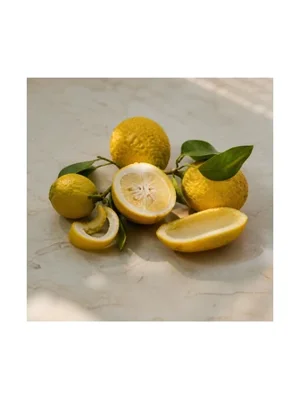
Hatkora lemon is the peel oil of Citrus macroptera, and it is not a lemon. The fruit is a papeda, the same rough thick-skinned branch of Citrus that holds kaffir lime. The oil opens as sharp citrus, then a dry peppery quality comes up under it, and it ends on a warm woody-resinous trace that ordinary citrus oils do not leave. One publisher describes the smell. The chemistry behind that description is corroborated by GC-MS, so the shape of the note is firmer than the wording of it.
Scent Profile
Citrus leads and every source agrees the peel reads as citrus first: 'sharp, zesty peel', and limonene at 55.3% of the oil backs it. It is held below lemon (0.95) and bergamot (0.85) because the same source says this one is 'rougher than lemon' and 'less clean than lemon' - the citrus is present but not pure. Fresh_spice is the peppery quality Premiere Peau attributes to beta-caryophyllene, 'a spiciness absent from bergamot or yuzu', and it scores as fresh_spice rather than warm_spice because this repository already puts black pepper at fresh_spice in the published `pepper` note. Warm_spice sits low for the 'black pepper and dry wood' warmth in the drydown only. Green is 'a green bitterness similar to of unripe grapefruit rind', named once and tied to the fruit being used unripe. Dry_woody is the tail: 'a dry, woody-spicy warmth remains, closer to black pepper and dry wood than to any citrus reference'. Amber_resinous is the 'resinous undertow' and the 'sesquiterpene residue' that persists on the blotter, kept under dry_woody because the source calls it a ghost rather than a body. Aromatic_herbal is geranial reading as 'a lemongrass-like sharpness'. Sour and aldehydic are traces. Everything here rests on one publisher's sensory prose, so the spreads are wide.
ScentWheel
Read off the wheel, not a label applied to the note.
Origin
Citrus macroptera, called Melanesian papeda or wild orange, grown across north-east India, Bangladesh and south-east Asia. The rind is a cooking ingredient before it is a perfume material. Wikipedia notes that 'adding and cooking the rind in the curry gives a unique flavour and aroma', and that the oil of the annamensis cultivar is used in perfumery. Peel oil is dominated by limonene at 55.3%, with beta-caryophyllene at 4.7% and geranial at 3.5% (Njoroge et al., 2012, cited by Premiere Peau). The leaf oil of the same tree is a different material. It runs on beta-pinene, alpha-pinene and p-cymene with almost no limonene, and Premiere Peau calls it 'closer to juniper than to any citrus expression'. This note is the peel oil only.
Usage in Perfumery
A citrus note with 4 Fragrantica placements and no Parfumo attestation. Fragrantica files it under Citrus smells. No Western trade supplier sheet was found for the oil, so most use is likely reconstructed rather than the real distillate. Its job is to give a citrus opening body and a peppery edge that bergamot and yuzu cannot supply.
Similar Notes
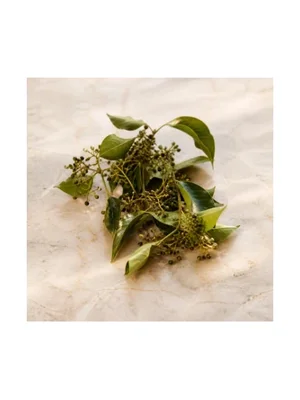
Perfumes featuring Hatkora Lemon
A selection of reviewed perfumes where Hatkora Lemon appears prominently.
No perfumes featuring this note have been reviewed yet. Check back soon.