Himalayan Deer Musk
Note Profile
About
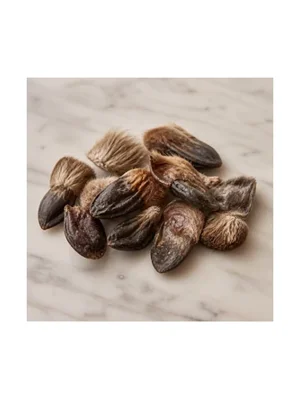
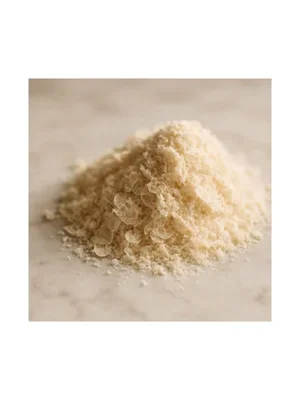
Deer musk from the Himalayan musk deer, Moschus leucogaster. The raw grains are not the soft musk of modern perfumery. Undiluted they are ammoniacal and hard to stand near, and a perfumer who works with pure essences calls the first impact not particularly nice. Three grains of one gram scent a litre of alcohol. At that dilution it turns sweet, warm and close to skin, and it is very hard to wash out of anything.
Scent Profile
Animalic is the note and no source lets go of it. La Via del Profumo calls the raw grains 'extraordinarily powerful, even for a perfumer like me, who is used to working with pure essences', says they smell 'like ammonia' on first impact because the material is fresh and concentrated, and elsewhere describes the smell as 'very much animally and nearly corporal'. The ammoniacal, urinous quality is carried here in animalic, because this vocabulary has no separate facet for it. Clean_musk is the same material once diluted. The whole point of the perfumer's three-grains-to-a-litre figure is that dilution converts the assault into the musk that gets used, so this facet and the one above are the same substance at two concentrations. Sweet_vanillic rests on one direct observation: 'The smell of the Musk Glands (pods) is sweet but when it is opened to extract the grains, their perfume is totally different.' That sweetness is the closed pod, not the opened grain, and it is the clearest thing separating this note from the leathery reading of Siberian musk. Powdery is the soft, worn-in quality reported at wearing strength, and it is the facet held in common with every other deer musk in this data.
ScentWheel
Read off the wheel, not a label applied to the note.
Origin
From a single gland under the belly of the male Himalayan musk deer, which produces small pellets of a black substance. The animal ranges through Bhutan, India, Nepal and a small part of China, above 2,500 m, in alpine meadow, shrubland and sparse fir forest. It is a distinct species from Moschus chrysogaster, told apart mainly by the throat: chrysogaster has clear white stripes or a patch, and in leucogaster the marking is vague if it is there at all. The gland attracts females in the mating season and the deer also marks its territory by dropping pellets of musk. The material is CITES-restricted and is not legally available today as a raw material in most markets, so almost every modern use of the name is a reconstruction.
Usage in Perfumery
A base note and a fixative, used at trace concentration. The material is strong enough that a perfumer's advice for judging it is to smell the outside of the closed container, because it passes through the walls. It carries and holds everything above it, and it puts a warm, bodily undertone under florals and woods. Anything sold under this name now is either an old stock tincture or, far more often, a reconstruction built from synthetic musks.
Similar Notes
Perfumes featuring Himalayan Deer Musk
A selection of reviewed perfumes where Himalayan Deer Musk appears prominently.
No perfumes featuring this note have been reviewed yet. Check back soon.