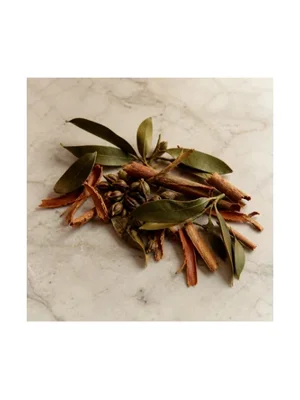
Ishpink, Ocotea Quixos
Note Profile
About
Ishpink is the dried flower calyx of Ocotea quixos, an Amazonian tree in the laurel family. Its oil is 50-70% trans-cinnamaldehyde, so it smells of cinnamon. It is not cinnamon. Methyl cinnamate and 1,8-cineole sit alongside the cinnamaldehyde and add a floral sweetness and a faint eucalyptus coolness that Cinnamomum bark does not carry.
Scent Profile
Warm spice leads and every source agrees on it. Premiere Peau puts the trans-cinnamaldehyde at 50-70% and calls the smell "warm, cinnamon-spicy"; Silky Scents reaches for "sweet-spicy"; Wikipedia calls the tree cinnamon-like. Floral is the facet that gives the material its own identity. Premiere Peau attributes it to methyl cinnamate and states the point outright: "The floral dimension gives it a dual identity - spice and flower in one material." No published cinnamon or cassia note carries floral at all. Sweet vanillic covers the sweetness both trade sources name, below cinnamon's 0.40 because neither source calls it sugary. Cooling mentholic is the 1,8-cineole: "slightly camphoraceous" and "a faint eucalyptus freshness that true cinnamon bark lacks". Amber resinous is the "woody-balsamic" undertone, and Premiere Peau's own evolution note says balsamic-cinnamon is what dominates after a few hours. Dry woody comes from Silky Scents, "slightly woody with an under tone of warmwood", and is held below cinnamon-leaf's 0.42 because Premiere Peau says this material is "less purely woody than cinnamon bark". Aromatic herbal rests on one word from one supplier, "herbaceous", which is why its spread is 0.20.
ScentWheel
Origin
The tree grows wild in the Amazon of Ecuador and Colombia. Kichwa communities in Napo province have used the dried calyces, the cups the flower sits in, as a cinnamon-like spice for centuries. Wikipedia records the Quechua name ispinku and the Hispanicised spellings ishpingo and eshpingo. The perfumery material is the essential oil steam-distilled from those calyces, not from bark and not from leaf. No fragrance house publishes a descriptor sheet for it. It reaches perfumers through small Amazonian and niche essential-oil suppliers, and Silky Scents sells it as an organic oil.
Usage in Perfumery
Fragrantica prints it in 11 perfumes. Parfumo records none. Silky Scents files it as a middle note and lists clove bud, frankincense, ginger, lavender, sweet orange and thyme as blending partners, which is a spice-and-resin brief rather than a floral one. Use it where cinnamon would sit but a flat bark note would be too blunt.
Similar Notes
Perfumes featuring Ishpink, Ocotea Quixos
A selection of reviewed perfumes where Ishpink, Ocotea Quixos appears prominently.
No perfumes featuring this note have been reviewed yet. Check back soon.