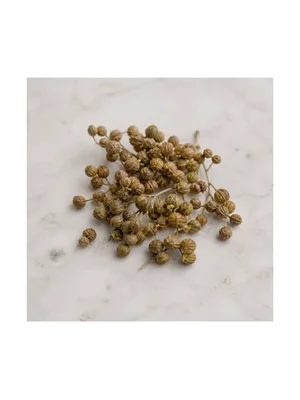
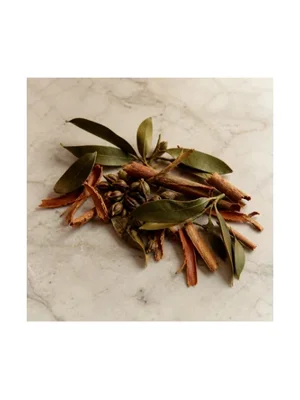
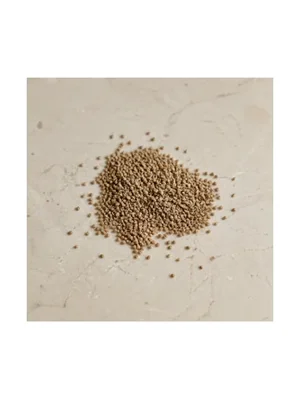
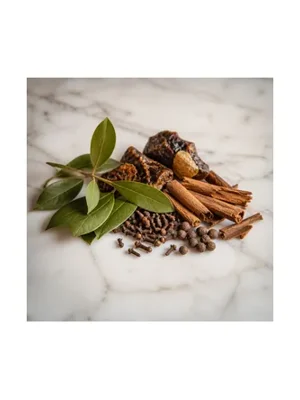
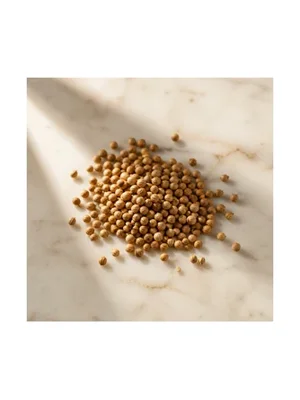
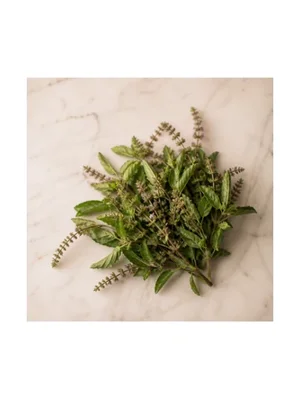
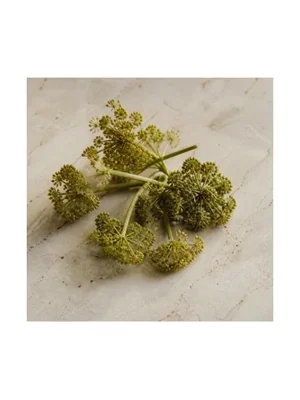
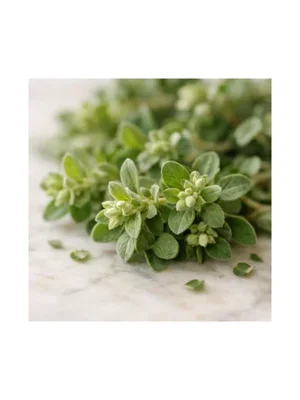
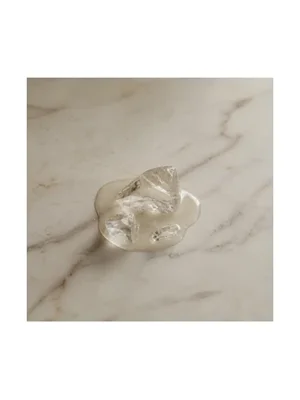
Angelica seed is the bright half of the plant. It is steam distilled from the ripe seed of Angelica archangelica, and it smells peppery, green and terpenic. A sweet, anisic thread runs under that, and the material closes soapy and powdery with a clean musk finish. It carries none of the skin-like animal depth that makes angelica root behave like a musk. One source states that negative outright: the seed oil has "no animalic depth".
Scent Profile
Fresh spice first and hardest. All three sources lead with a peppery, bracing burst, and one calls it almost too much at full strength. A bright aromatic herbal body sits under it, sweet rather than bitter. Green runs through both and is dry and celery-like rather than leafy. A sweet vanillic thread reads as anise, and it is the part two sources call the signature that makes the material recognisable. The finish is soapy and powdery, with a clean musk closing it. There is no animalic depth and no earth, which is the whole difference from the root.
Read off the wheel, not a label applied to the note.
What this is made of
Angelica seed oil
A natural extract
CAS 8015-64-3
Angelica archangelica seed oil (IFRA NCS H2.12, seed). The note calls itself 'the bright half of the plant' against angelica-root, and the two edges now carry different NCS part letters, H against A, which is the distinction the note is making.
Restricted
An IFRA Standard limits how much of this a perfumer can usethe limit applies to the perfumer, not the wearer
These are facts about the substance, not about any perfume with this note.
Why that matters
A perfume that names Angelica Seed can use a different extract, a
reformulated version, or a synthetic reconstruction. It can also hold less
than the amount that requires a declaration. We cannot tell which applies.
These rows cover only the substances we hold a link for.
The ripe seed of Angelica archangelica, steam distilled. The oil is very pale yellow. Beta-phellandrene is the main component at 33 to 63 per cent, with alpha-pinene at 4 to 13 per cent. The root oil of the same plant has a different composition: alpha-pinene, delta-3-carene, limonene and the musk lactone pentadecanolide. Pentadecanolide appears on the published root list and not on the seed one, which is the chemical reason the seed does not read musky the way the root does. Seed oil is also less photosensitising than root oil.
Usage in Perfumery
Used at the top of a composition to lift it. Suppliers name three uses and all three are about freshness: gin accords, modernising white florals, and adding diffusive lift to citrus. It is the standard angelica for gin. It does not fix a blend. Fixing is the root's job, and the same supplier that sells both says so plainly - the seed lifts, the root anchors.
A selection of reviewed perfumes where Angelica Seed appears prominently.
No perfumes featuring this note have been reviewed yet. Check back soon.
We use cookies to improve your experience and understand how you use our site.
Read our cookie policy
Cookie Preferences
Choose which cookies you'd like to accept. Essential cookies cannot be disabled
as they're required for the website to function.
Always On
Required for the website to function. Includes session management and security tokens.
Help us understand how visitors use the site. We use Umami (privacy-focused,
cookieless) and Google Analytics to measure usage without tracking you across websites.