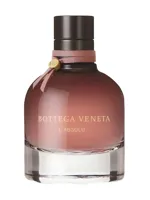
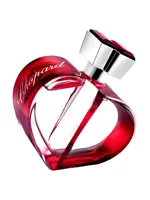
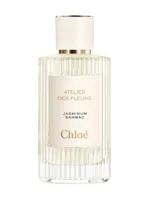
Indian Jasmine Sambac, Jasmine Sambac, Sambac Jasmine
About
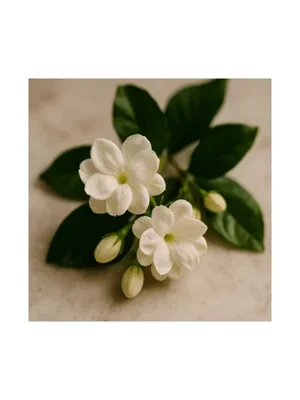
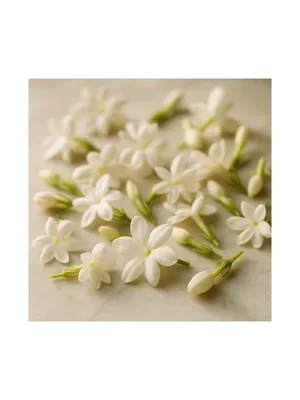
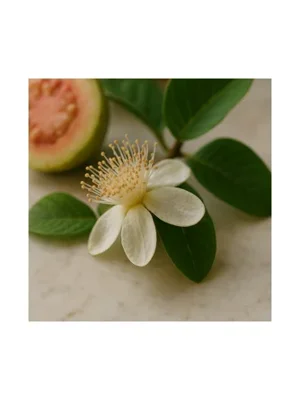
Jasmin Sambac, also known as Arabian jasmine (Jasminum sambac), is a lush white floral note prized for its sweet, musky and slightly green character. It combines narcotic floral richness with fruity, tea‑like and orange‑blossom nuances, often with subtle animalic undertones. In perfumery it is typically used as a heart note to add radiance, sensuality and an exotic, solar facet to floral and oriental compositions.
Scent Profile
Jasmin Sambac smells intensely sweet and white floral, with a greener, fresher edge than classic jasmine. It opens bitter-green and fruity, sometimes recalling grape or fresh tea leaves, before settling into a narcotic, honeyed floral heart with orange blossom and a soft animal warmth underneath.
Deliberately below the threshold. Jasminum sambac is a DIFFERENT SPECIES from J. grandiflorum, which is what unqualified jasmine absolute normally means, and they smell different - sambac is greener and more indolic. Our row does not state a species.
Declarable allergen
Named in EU Annex III as Jasminum Grandiflorum Flower Extractproducts must list this name above a set concentration
Restricted
An IFRA Standard limits how much of this a perfumer can usethe limit applies to the perfumer, not the wearer
These are facts about the substance, not about any perfume with this note.
Why that matters
A perfume that names Jasmin Sambac can use a different extract, a
reformulated version, or a synthetic reconstruction. It can also hold less
than the amount that requires a declaration. We cannot tell which applies.
These rows cover only the substances we hold a link for.
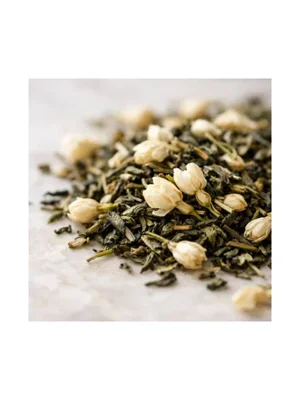
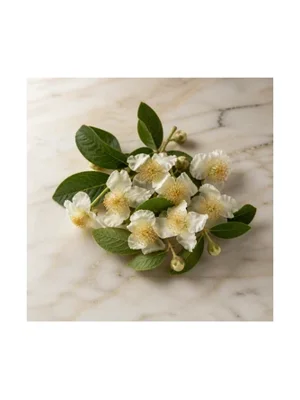
Jasmin Sambac is derived from the blossoms of Jasminum sambac, a species native to South and Southeast Asia and widely cultivated in India, China and throughout tropical regions. The flowers are hand‑picked, often at dawn, and processed by solvent extraction to produce a concrete and then an absolute used in fine perfumery. Beyond perfumery, the blossoms are traditionally used to scent teas (notably Chinese and jasmine green teas), in garlands and in religious or ceremonial contexts in South Asia and the Middle East.
Usage in Perfumery
Perfumers typically use Jasmin Sambac as a **heart note** where its moderate volatility lets its bright white‑floral, green and musky facets form the core of a composition. It is dosed cautiously, often around 0.2-1% of the formula for the absolute in fine fragrance, because of its power and potential to dominate blends. Jasmin Sambac pairs particularly well with citrus notes, other white florals such as orange blossom and ylang‑ylang, solar accords, fruity facets and woods or ambers, where it can create either luminous floral bouquets or sensual oriental and woody florals.
We count visits to see which pages help people and to improve the site.
No advertising, and no tracking across other sites.
Read our cookie policy
Cookie Preferences
Analytics is on unless you switch it off here. Essential cookies cannot be
disabled as they're required for the website to function.
Always On
Required for the website to function. Includes session management and security tokens.
Counts visits and which pages people use, so we can improve the site. We use
Google Analytics with its advertising features switched off, plus our own
cookieless visit counter. Switching this off stops both.