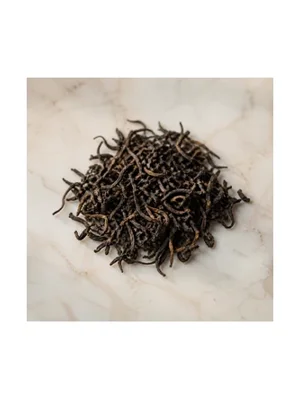
Keemun Tea
Note Profile
About
Keemun is a Chinese black tea from Qimen county, Anhui. It is the only black tea whose aroma has its own name in the literature: a peer-reviewed study calls the honey-like, flowery, fruity signature 'Keemun aroma' because it is specific to this origin. Every source found adds cocoa. No other published tea note here leads on cocoa, and that plus a rose-and-orchid floral is what makes this note its own row.
Scent Profile
Floral leads. The study names 'high honey-like, flowery and fruity aroma' as the defining Keemun character and specifies 'rose-like scent'; an Italian retailer independently reaches 'elegant floral aroma reminiscent of rose and orchid'. Coffee_cacao is the word that separates this note from every other black tea published here. Four independent trade pages and Wikipedia all say cocoa or chocolate without prompting each other: 'aromatic cocoa notes', 'chocolate hints', 'strong notes of cocoa', 'dark cocoa flavors', 'unsweetened cocoa'. Tobacco_hay is the brewed black-tea leaf itself, set under `black-tea` at 0.60 and `ceylon-tea` at 0.65 because two sources call Keemun 'a light black tea' with low astringency. Fruity is stone fruit, named as apricot by Harney and as a 'distinctive fruity hint' by La Via del Te. Smoky is real but always qualified: 'slightly smoky', 'smoky undertones'. That is a third of `lapsang-souchong-tea` at 0.95, and the ranking is the useful part. Honeyed is the study's 'honey-like', repeated three times there and nowhere else, which is why it sits under the floral rather than beside it. Dry_woody is Wikipedia's 'wooden notes'. Leather is a single retailer's two-word tasting note, uncorroborated, and carries the widest spread in the vector at 0.25.
ScentWheel
Read off the wheel, not a label applied to the note.
Origin
Camellia sinensis grown in Qimen (Keemun) county, Anhui province, China, and made as a congou black tea. The style dates from the 1870s. The aroma comes from the withering and fermentation steps rather than from the cultivar alone, which is what the manufacturing study set out to show.
Usage in Perfumery
Used as a tea note in the heart or base of oriental, amber and tea-themed compositions. Attested once each on Fragrantica and Parfumo, across one brand. No fragrance manufacturer sells a Keemun material, so a perfumer builds it rather than buys it.
Similar Notes
Perfumes featuring Keemun Tea
A selection of reviewed perfumes where Keemun Tea appears prominently.
No perfumes featuring this note have been reviewed yet. Check back soon.