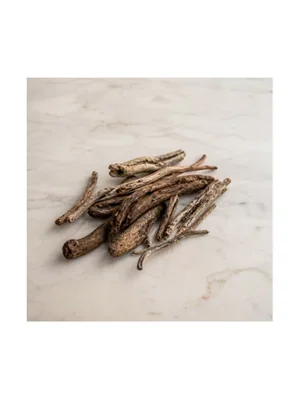
Mangrove Wood
Note Profile
About
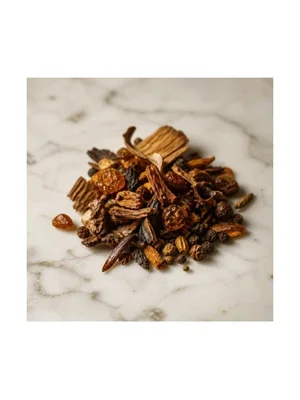
A dark, salt-soaked wood note. It reads as tannic timber standing in brackish water rather than as clean dried lumber.
Scent Profile
Dry_woody leads and is the one thing every source agrees on: dark, tannic timber, described as "saline, tannic, dark-woody" and set explicitly apart from driftwood as "more alive and tannic". Mineral and aquatic_ozonic carry the salt together, because in this vocabulary a salt impression splits across both - the published salt note is aquatic_ozonic and mineral. Aquatic_ozonic takes the lower of the two here because the water in question is brackish and still, tidal mud rather than open sea. Earthy is the "brackish-organic undertone" and the swamp floor. Smoky comes from one specific and narrow claim, the "particular salt-smoke character used in tropical fish curing" - mangrove is the wood tropical smokehouses burn - so it is real but it is not the note's centre. Leather is scored low against its evidence on purpose. Three sources reach for leather, but the 100BON leather is a separate base material listed alongside mangrove wood rather than a claim about how the wood smells, and Le Sourceur's "soft leather... new shoe store" describes the decomposed Borneo material that may not even be the same genus. What survives as the wood's own is tannin, and tannin is what leather is made with. Tobacco_hay is the "astringent, tea-like edge" - dry, tannic, unsweetened, the same place the published blackberry-leaf note puts its "unrefined green tea". Under those, green for "more alive and organic than driftwood", mossy_chypre for the damp organic mat, and a trace of animalic and sulphurous that no source states outright but that a tidal mudflat implies. Both are held at 0.12 and below with wide spreads rather than asserted.
ScentWheel
Read off the wheel, not a label applied to the note.
Origin
Mangrove wood is the timber of the salt-tolerant trees that grow on tropical and subtropical tidal coasts, the Rhizophora genus being the one the perfumery glossaries imply. There is no distilled or extracted mangrove wood oil. Premiere Peau frames the note outright as "a conceptual base note used in marine-woody and coastal compositions", "built from tannic-woody materials, salt accords, and brackish-organic modifiers". 100BON built a whole fragrance called Bois de Mangrove on it and their perfumer Margaux Le Paih Guerin describes working from the tree's physical character - "ses racines seches" and "la qualite de sa chair qui semble avoir ete imbibee d'eau", dry roots and flesh that seems to have been soaked in water - not from a single named odour profile. A separate and possibly different material exists: Borneo dead mangrove wood left to decompose on the ground, sold as gaharu buaya or "Black Oud", which reads leathery, smoky and animalic. This vector scores the intact-timber reading, because that is the register both glossary and brand copy share.
Usage in Perfumery
A base material in marine-woody and coastal compositions, used where driftwood would be too clean. It sits against seaweed, salt, driftwood and dark woods in fragrances that work the land-sea boundary. 100BON place it in a base of cade, Atlas and Virginia cedar, saffron, leather and white musks.
Similar Notes
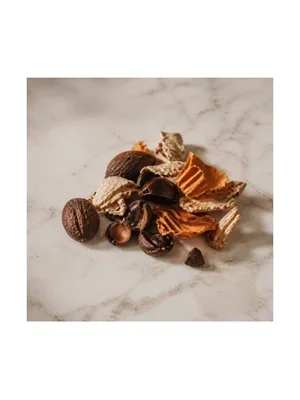
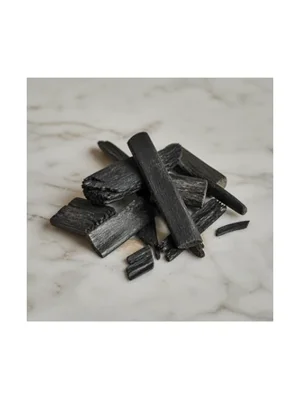
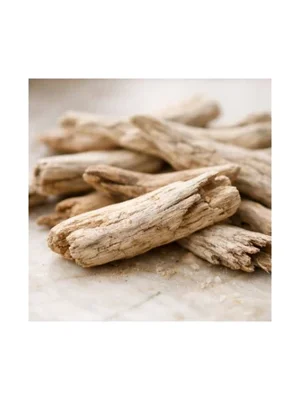
Perfumes featuring Mangrove Wood
A selection of reviewed perfumes where Mangrove Wood appears prominently.
No perfumes featuring this note have been reviewed yet. Check back soon.