Yaken
EDP · 2015
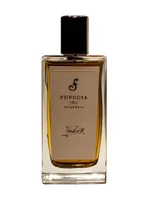
Fueguia 1833
Acquired
Note Profile
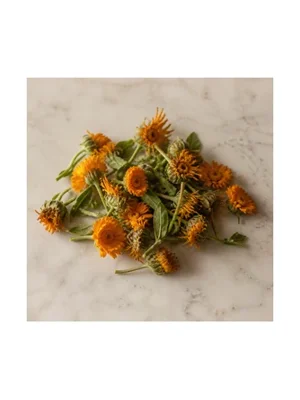
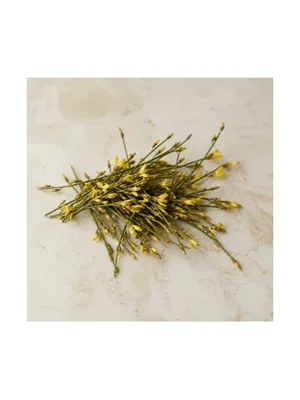
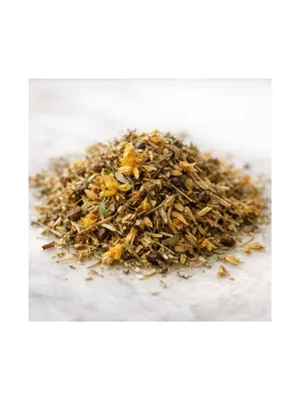
St. John's Wort is the flowering tops of Hypericum perforatum, a perennial herb native to Europe and parts of Asia. The tops are steam distilled into a pale essential oil. It smells herbal, warm and balsamic, with hay and a soft floral sweetness. Some oils have a faint marine note.
St. John's Wort smells herbal and warm, like sun-dried meadow herbs and hay, with a balsamic, lightly honeyed sweetness. A soft floral, slightly powdery side runs through it, and some oils read as a sweet, candy-like floral. A mild earthy base and a faint marine note sit underneath. It is gentle, less sharp than thyme and less camphoraceous than rosemary. It carries a green, leafy, stem-like note.
Read off the wheel, not a label applied to the note.
Tap a perfume to see where St. John's Wort sits in it. The rest of the picture goes grey
Perfumers can make St. John's Wort from this natural extract.
Smell words come from published sources.
A given perfume with this note may use this material, or something else.
St. John's Wort oil is steam distilled from Hypericum perforatum, a perennial herb native to Europe and parts of Asia. Some producers distil the flowers only, and others the whole flowering top. The two oils differ. Flower oil is mostly monoterpenes, and leaf oil is mostly sesquiterpenes such as germacrene D. So the smell varies by batch and origin. The red infused oil and the CO2 extract are skin-care materials, not fragrance materials.
Perfumers use St. John's Wort in the heart of herbal, meadow and fougère-style compositions, for a warm, natural herbal note. It works with other herbs, honey, beeswax and warm woody bases. Suppliers also pair the oil with citrus, ginger and Peru balsam.
A selection of reviewed perfumes where St. John's Wort appears prominently.
New finds, honest verdicts, and price drops.
No spam. Unsubscribe anytime. See our privacy policy.