American cedarwood, Virginia Cedar, Virginian Cedar
About
Virginia Cedarwood is the essential oil obtained from the wood of Juniperus virginiana, often called Eastern red cedar. In perfumery it offers a dry, clean, pencil-shaving woodiness with subtle balsamic and smoky nuances, making it a versatile and widely used woody base note. Its structure is generally cooler and more austere than Atlas or Himalayan cedar, lending clarity and backbone to compositions.
Scent Profile
Virginia Cedarwood has a distinctly dry, woody character reminiscent of freshly sharpened pencils and cedar chests. It often shows slightly smoky, resinous and gently balsamic undertones, with some materials displaying a faint camphoraceous or mineral edge. Compared to other cedarwoods it tends to be cleaner and more linear, contributing structure and a crisp woody frame rather than creamy sweetness.
Juniperus virginiana, which the description states outright. Named rather than left on the CAS because Virginian, Chinese and Texas cedarwoods are different materials.
Declarable allergen
Named in EU Annex III as Juniperus Virginiana Oilproducts must list this name above a set concentration
These are facts about the substance, not about any perfume with this note.
Why that matters
A perfume that names Virginia Cedarwood can use a different extract, a
reformulated version, or a synthetic reconstruction. It can also hold less
than the amount that requires a declaration. We cannot tell which applies.
These rows cover only the substances we hold a link for.
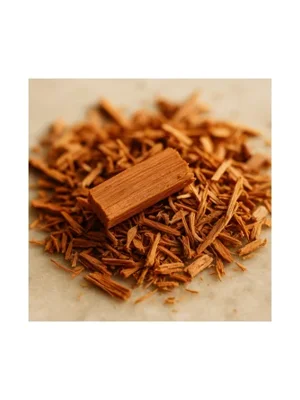
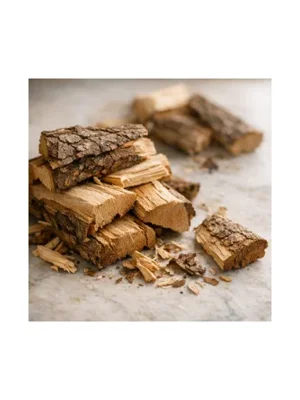
This material is an essential oil distilled from the heartwood and sawdust of Juniperus virginiana, a juniper species native to North America commonly known as Eastern red cedar. Steam distillation of the wood produces an oil rich in sesquiterpenes and cedrol-type alcohols responsible for its characteristic dry, woody odor. The wood is often a by-product of the lumber and pencil industries, with oil production concentrated in the United States, especially in the eastern and central regions where the tree is abundant.
Usage in Perfumery
Perfumers primarily use Virginia Cedarwood as a base note to provide structure, diffusion, and persistence in woody, aromatic, and masculine-leaning compositions. It blends well with citrus, florals, incense, vetiver, patchouli, musks, and ambery or resinous notes, helping to dry down and refine sweeter or more diffuse accords. Its clean, pencil-like profile is also employed in soaps, household products, and functional fragrances where a stable, recognizable wood note is required.
We count visits to see which pages help people and to improve the site.
No advertising, and no tracking across other sites.
Read our cookie policy
Cookie Preferences
Analytics is on unless you switch it off here. Essential cookies cannot be
disabled as they're required for the website to function.
Always On
Required for the website to function. Includes session management and security tokens.
Counts visits and which pages people use, so we can improve the site. We use
Google Analytics with its advertising features switched off, plus our own
cookieless visit counter. Switching this off stops both.