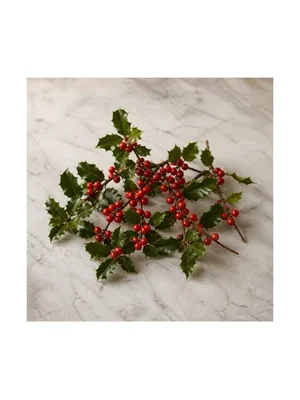
Winterberry
Note Profile
About
Winterberry is a fantasy note. Ilex verticillata yields no essential oil, no absolute and no extractable aromatic material, so every use of the name is a built accord. It reads tart, bright and slightly waxy. The source that describes it places it closer to cranberry than to strawberry, sharper than raspberry, and less sweet than cherry. A cool green edge keeps it out of gourmand territory. Under that, damascones give a jammy, concentrated red fruit and a faint cinnamic warmth, so the fruit reads as frosted rather than freshly picked.
Scent Profile
Fruity leads and is the whole point of the accord: red berry, tart and jammy at once, built from esters over damascones. Sour is the second character and the source names it three times - tart, bright, sharper than raspberry - so it is not a trace. Green is the cis-3-hexenol leaf edge that the source says keeps the accord from reading as gourmand, and it is described as fading first. Below those, lactonic and aldehydic are my split of the single word 'waxy', which the source uses twice but never resolves; warm_spice is the faint cinnamic warmth that arrives in the drydown; floral is the rose side of the damascones, which the source implies by naming them but never states; sweet_vanillic is the 'faint waxy sweetness', held low because the source says less sweet than cherry.
ScentWheel
Read off the wheel, not a label applied to the note.
Origin
Ilex verticillata, a deciduous holly of eastern North America grown for red berries that hold on bare branches through winter. One of its folk names is black alder. That name is not a link to Alnus, the true alder this repo publishes as a dry-woody timber note, and the two are in different families. The plant makes no aromatic material. The one published formula for the accord combines ethyl 2-methylbutyrate for tart berry sharpness, alpha- and beta-damascone for the jammy red-fruit body, cis-3-hexenol for green leaf, and sometimes berryflor or phenylethyl isobutyrate for generic berry.
Usage in Perfumery
8 Fragrantica placements, none on Parfumo. Fragrantica files it under fruits, vegetables and nuts. It is a seasonal note, used in winter and Christmas releases where a tart red berry is wanted without sugar. It works in the top and heart, and the green ester part fades first while the damascone body stays.
Similar Notes
Perfumes featuring Winterberry
A selection of reviewed perfumes where Winterberry appears prominently.
No perfumes featuring this note have been reviewed yet. Check back soon.