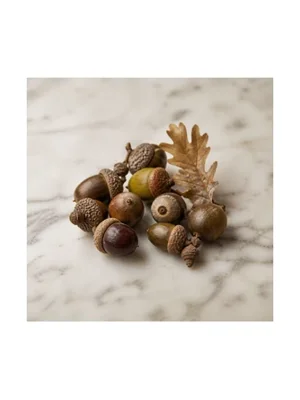
Acorn
Note Profile
About
Acorn is an autumn note built from an idea rather than an extract. Nobody distils acorns. Every source that describes it is selling a candle, a flavour oil or a blend built around the picture of an oak wood in October. What they agree on is earth, wood and a small nuttiness, in that order.
Scent Profile
Earthy leads: damp soil, fallen leaves and the slow decay of a forest floor. A dry woody warmth sits almost level with it and is what makes the note read as autumnal rather than merely wet. Nutty follows, clearly third. Two of the four sources call it subtle, and the one that leads with it is a culinary flavour oil rather than a perfume material. A faint sweet vanillic edge is scored at trace only, because the single source claiming it is a blended oil finished with vanilla, and the vanilla is the likelier owner of that facet. No mossy facet is scored. That belongs to oakmoss, which is a different material from the same tree.
ScentWheel
Read off the wheel, not a label applied to the note.
Origin
There is no acorn extraction. No supplier sells an acorn absolute, CO2 or essential oil, and no GC-MS study of acorn odour was found. A fragrance blog on the term states plainly that acorns are not commonly used in perfumery and that, because they lack a distinctive smell, nobody synthesises them either. The material that does reach perfumery from the same tree is oakmoss, a lichen, which is a separate note. Acorn is therefore a fantasy accord, reconstructed from woody, earthy and nutty materials.
Usage in Perfumery
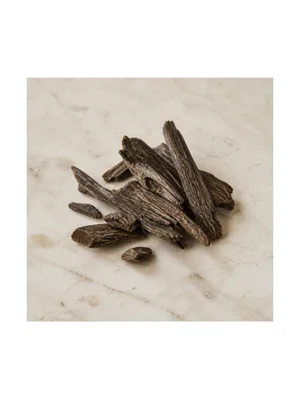
It appears in autumn and harvest compositions, almost always beside maple, plum, sandalwood or patchouli rather than on its own. Fragrantica records eight placements. Parfumo records none. Perfumers use it as a base accent that grounds a composition in damp forest floor and gives an autumnal frame a name.
Similar Notes
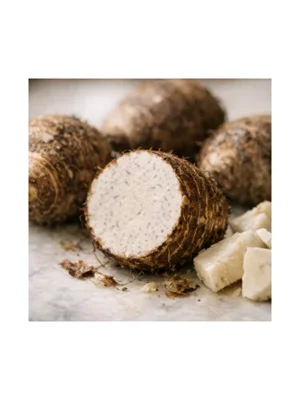
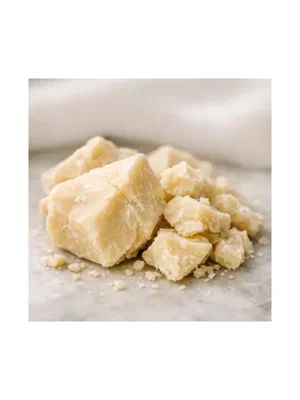
Perfumes featuring Acorn
A selection of reviewed perfumes where Acorn appears prominently.
No perfumes featuring this note have been reviewed yet. Check back soon.