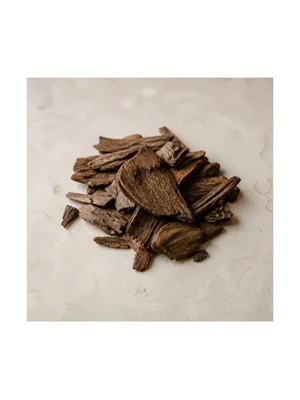
Borneo Oud
Note Profile
About
Resinous oud, green not barnyard
Scent Profile
Dry_woody throughout, which every source agrees on, carrying a heavy amber_resinous body that one distiller calls pure smouldering resin and another calls earthy-balsamic. The character that separates it from other regional ouds is green: a leafy, sappy sweetness that trade sources reach for independently, running alongside an aromatic_herbal edge rather than under it. There is an earthy depth, though the sources argue about it. A quiet smoky thread comes from the resin rather than from fire. Behind those sit a soft apple fruitiness, a suede leather touch, a sandalwood-adjacent creaminess and some animalic weight, all of them claimed by one batch and denied by another.
ScentWheel
Read off the wheel, not a label applied to the note.
Origin
Agarwood from Borneo, the island split between Indonesian Kalimantan, Malaysian Sabah and Sarawak, and Brunei. Oil sold as Borneo oud can come from any of the three, and distillers also sell it under district names such as Malinau in North Kalimantan or Darussalam for Brunei. Producers treat it as a separate origin from Hindi, Cambodian and Papuan material and price it accordingly. Small artisan distillers dominate the trade, so batch identity matters more than it does for a house material.
Usage in Perfumery
A base note, used neat by artisan houses and as a small percentage in Western compositions. It is chosen where a formula needs oud weight without the barnyard opening that makes Hindi oud hard to wear, so it appears in woody-resinous and amber structures rather than in leather ones. Distillers market it as the approachable oud.
Similar Notes
Perfumes featuring Borneo Oud
A selection of reviewed perfumes where Borneo Oud appears prominently.
No perfumes featuring this note have been reviewed yet. Check back soon.