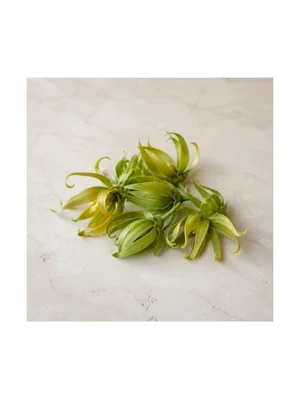
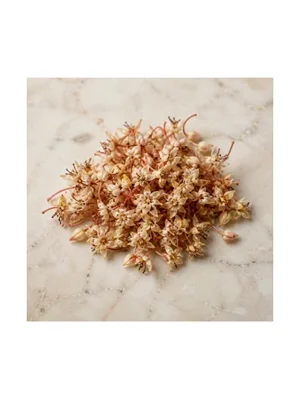
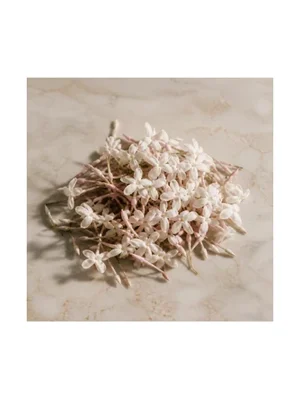
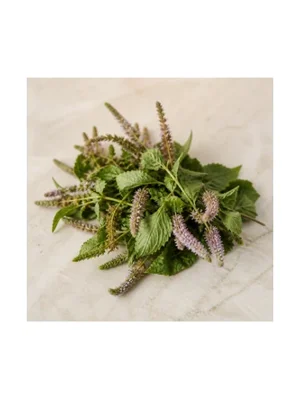
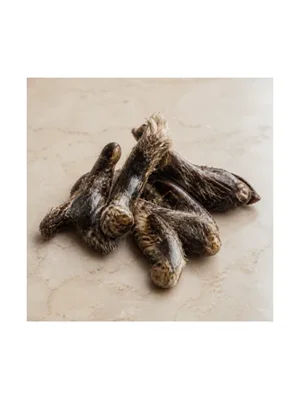
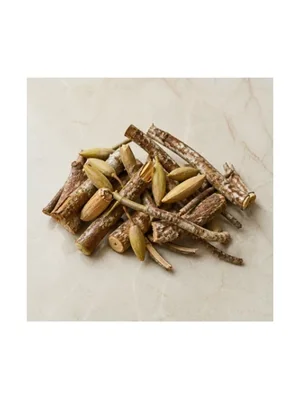
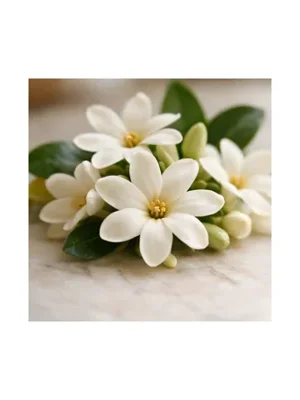
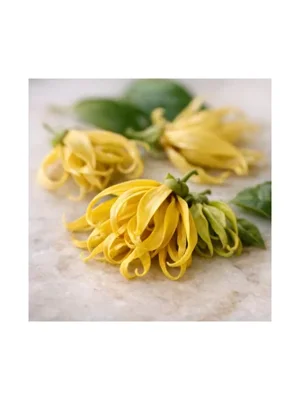
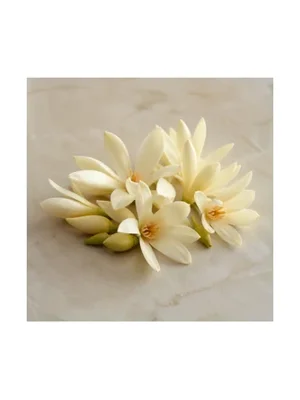
The single-pass distillate of the ylang tree. Softer, woodier and greener than ylang-ylang, with milky sour off notes fractionation removes.
Scent Profile
White_floral leads but at well under ylang-ylang's level, because every source says cananga is the less floral of the two. Dry_woody is the facet that makes this note itself: the germacrene D and caryophyllene give a grounded, woody body that ylang-ylang does not have. Floral fills in the general blossom underneath. Green is the leafy, stemmy edge two sources name. Earthy is the grounded sweetness the trade description keeps calling deeper and more settled than ylang's. Amber_resinous carries the balsamic depth. Lactonic is the milky note the supplier source names as characteristic of the unfractionated oil. Sour is the other half of that same claim, and it is scored as a real facet rather than a defect because it is what the material actually smells of. Below, fruity is the faint banana-custard shared with ylang, animalic a trace, and warm_spice the soft spice of the flower.
Read off the wheel, not a label applied to the note.
What this is made of
Cananga oil
A natural extract
CAS 68606-83-7
Cananga odorata oil (IFRA NCS F2.12, flower). The note is 'the single-pass distillate of the ylang tree', which is what cananga oil is. Held as a SEPARATE note from ylang-ylang deliberately: cosine 0.61 between the two vectors, and the note's own copy says softer, woodier and greener with milky sour off notes that fractionation removes.
Declarable allergen
Named in EU Annex III as Cananga Odorata Flower Extractproducts must list this name above a set concentration
Restricted
An IFRA Standard limits how much of this a perfumer can usethe limit applies to the perfumer, not the wearer
These are facts about the substance, not about any perfume with this note.
Why that matters
A perfume that names Cananga can use a different extract, a
reformulated version, or a synthetic reconstruction. It can also hold less
than the amount that requires a declaration. We cannot tell which applies.
These rows cover only the substances we hold a link for.
Cananga oil is steam-distilled from the flowers of Cananga odorata forma macrophylla, the same species as ylang-ylang but a different cultivar form. The processing is the real difference. Ylang-ylang is fractionally distilled, the run stopped and restarted to give Extra, First, Second and Third grades, with the initial off-smelling fraction set aside. Cananga runs continuously and is traded as one complete oil. A supplier source states plainly that the 'milky, sour, off notes you smell in Cananga essential oil' are exactly what fractionation exists to remove. The oil is high in sesquiterpenes: germacrene D at 20-35 per cent and beta-caryophyllene at 10-20 per cent, with benzyl benzoate as a natural fixative.
Usage in Perfumery
Used where a ylang character is wanted at lower cost and lower volume, in soap, functional fragrance and as a floral extender in fine fragrance bases. It sits back in a formula where ylang-ylang pushes forward.
A selection of reviewed perfumes where Cananga appears prominently.
No perfumes featuring this note have been reviewed yet. Check back soon.
We use cookies to improve your experience and understand how you use our site.
Read our cookie policy
Cookie Preferences
Choose which cookies you'd like to accept. Essential cookies cannot be disabled
as they're required for the website to function.
Always On
Required for the website to function. Includes session management and security tokens.
Help us understand how visitors use the site. We use Umami (privacy-focused,
cookieless) and Google Analytics to measure usage without tracking you across websites.