Celery
Note Profile
About
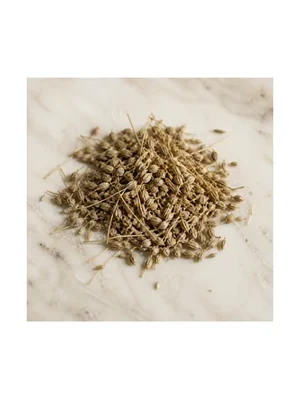
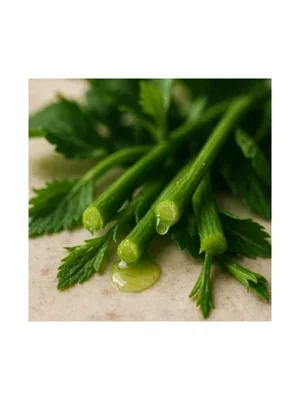
Celery is the fresh green stalk of Apium graveolens read as a perfumery note, not the seed. It smells watery-green, angular and unmistakably vegetal, with a faint bitterness and a clean mineral edge. A small warm-spicy tail sits underneath, carried by the phthalide lactones that give celery its identity at very low concentrations.
Scent Profile
Angular, watery green dominates - the smell of a cold celery stalk snapped at the base - with a herbal, aromatic Apiaceae character behind it and a clean mineral edge that stops it reading as wet or aquatic. A brief limonene-citrus flash opens it. Underneath sits a quiet warm-spicy, faintly earthy depth from the phthalides, closer to lovage root than to any culinary herb. It is bitter in a way the 32 facets cannot record.
ScentWheel
Read off the wheel, not a label applied to the note.
Origin
Apium graveolens, family Apiaceae, the same family as lovage and angelica. The note names the stalk and leaf rather than the seed. The character-impact compounds are phthalide lactones - 3-n-butylphthalide, sedanolide and sedanenolide - which carry the celery identity at 1.5 to 11 per cent of the oil, while limonene and beta-selinene make up most of its bulk. Raw celery adds (Z)-3-hexenal and (Z)-3-hexenol, the C6 green fraction that boiling destroys. India supplies most of the world's celery material; France is the secondary origin.
Usage in Perfumery
A green modifier used in traces. It gives an angular, savoury lift to floral hearts, to lavender bouquets and to aldehydic compositions, and it adds a naturalistic vegetal edge where galbanum would be too resinous and cis-3-hexenol too generic. It is diffusive out of proportion to its lightness and will take over a blend if dosed carelessly.
Similar Notes
Perfumes featuring Celery
A selection of reviewed perfumes where Celery appears prominently.
No perfumes featuring this note have been reviewed yet. Check back soon.