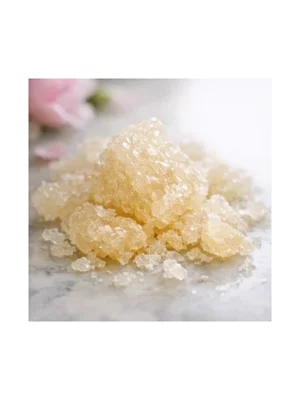
Geraniol has a fresh, sweet, rosy-floral scent with mild hints of citrus and green nuances. It is a central ingredient in the aroma of rose oil and is also present in palmarosa and citronella oils. In perfumery, it imparts a clean, lively, and uplifting floral tone, often enhancing blends with its pure and radiant quality.
Scent Profile
Geraniol presents a sweet, rosy floral aroma with subtle hints of citrus and green freshness. Its scent is reminiscent of freshly cut roses and geranium leaves, with a light, airy quality that can evolve to reveal gentle fruity undertones. The note is smooth and transparent, contributing a naturalistic floral brightness.
Read off the wheel, not a label applied to the note.
What this is made of
geraniol
Names this molecule
CAS 106-24-1
The note name IS the molecule - geraniol, CAS 106-24-1.
Declarable allergen
Named in EU Annex III as Geraniolproducts must list this name above a set concentration
Restricted
An IFRA Standard limits how much of this a perfumer can usethe limit applies to the perfumer, not the wearer
These are facts about the substance, not about any perfume with this note.
Why that matters
A perfume that names Geraniol can use a different extract, a
reformulated version, or a synthetic reconstruction. It can also hold less
than the amount that requires a declaration. We cannot tell which applies.
These rows cover only the substances we hold a link for.
Geraniol is a naturally occurring monoterpenoid alcohol found in essential oils of plants such as rose, geranium, palmarosa, and citronella. It is typically obtained through steam distillation of these botanical sources or produced synthetically for use in perfumery. The compound is widely available due to its abundance in several aromatic plants.
Usage in Perfumery
Perfumers use geraniol primarily as a heart note to impart a fresh, rosy character and to round out floral accords, especially in rose and peony compositions. It blends well with other floral, citrus, and green notes, and is also used to soften or enhance fruity and aldehydic fragrances. Geraniol serves both as a key building block in floral bouquets and as a modifier in a variety of fragrance families.
We count visits to see which pages help people and to improve the site.
No advertising, and no tracking across other sites.
Read our cookie policy
Cookie Preferences
Analytics is on unless you switch it off here. Essential cookies cannot be
disabled as they're required for the website to function.
Always On
Required for the website to function. Includes session management and security tokens.
Counts visits and which pages people use, so we can improve the site. We use
Google Analytics with its advertising features switched off, plus our own
cookieless visit counter. Switching this off stops both.