Kumbaru
Note Profile
About
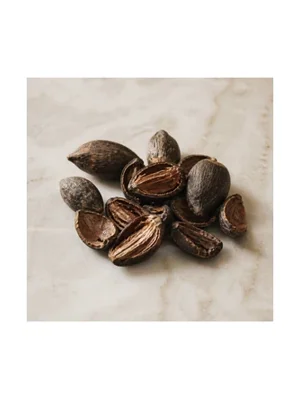
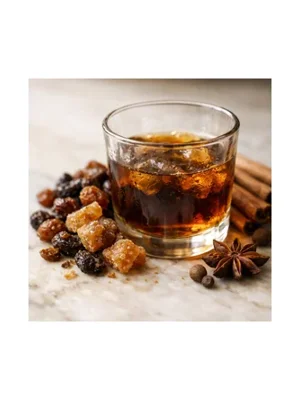
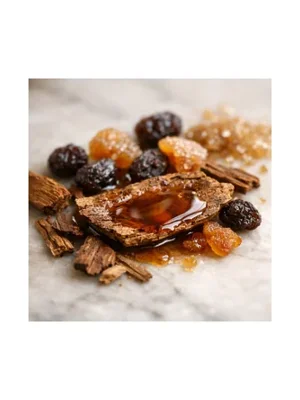
The fruit of the chanar tree. Burnt caramel and date molasses, thick and dark, with wet grass underneath and scorched wood as it dries.
Scent Profile
Sweet_vanillic leads. The source opens on "burnt caramel and date molasses - dense, dark-sweet" and returns to "dark caramel sweetness", "molasses-like intensity" and "syrupy" in every later passage. It is held under the published molasses note at 0.92 because this fruit is described as carrying other things alongside the sugar, where molasses is almost only sugar. Fruity is the dried-fruit half, which the source names three times: "dried fruit compote", "date molasses" and "dried fig". Fragrantica filing the term under Fruits, vegetables and nuts supports it from a second direction. Smoky is "scorched wood", "smoky-herbal undertone" and the word "burnt" in the leading descriptor. It is scored above caramel's 0.25 and molasses's 0.28 because the source treats smoke as part of this note's identity rather than an edge. Green is the strangest claim here and it is kept because the source insists on it twice: "an undertow of wet grass" and "A wet-grass freshness sits underneath, oddly green against the syrupy sweetness". The source also says it fades on drying, hence 0.25 and not higher, with a spread. Honeyed, dry_woody and earthy carry the arrope syrup, the scorched wood and the "earthier than caramel" comparison. Aromatic_herbal and cooling_mentholic split the "slightly medicinal edge similar to of herbal cough lozenges", with the mentholic share small because no source names menthol, camphor or eucalyptus. Powdery is a near-zero on purpose: the source says "less powdery than tonka bean", which is a comparison and not a denial. Tobacco_hay is zero for the same reason read the other way, because the source says explicitly that it "lacks the hay-like airiness of coumarin". Lactonic and boozy are inferred from the caramel and molasses register, not stated.
ScentWheel
Read off the wheel, not a label applied to the note.
Origin
Geoffroea decorticans, the chanar tree of the arid forests of Argentina and Chile. Fragrantica's own entry for this note lists its synonyms as Chilean palo verde, Green wood and Chanar, which settles the referent. The fruit is cooked into arrope, a traditional syrup. No commercial essential oil or absolute of the fruit exists, so what a perfumer calls kumbaru is a reconstructed accord built from coumarin, vanillin, dried-fruit bases and smoky materials. The tree's flower is a separate material: it yields a steam-distilled oil dominated by p-anisaldehyde, farnesyl acetate and eugenol, with local Argentine use and no international supply. That flower oil is not this note.
Usage in Perfumery
Three Fragrantica perfumes, filed under Fruits, vegetables and nuts, and no Parfumo attestation. A base note used as a gourmand accent. The one source that describes it places it by contrast with its neighbours: heavier than vanilla, less powdery than tonka bean, earthier than caramel. Do not confuse it with kumaru, which is the Tupi name for the tonka bean tree and is already an alias of tonka in this vocabulary. Different genus, different continent, different smell.
Similar Notes
Perfumes featuring Kumbaru
A selection of reviewed perfumes where Kumbaru appears prominently.
No perfumes featuring this note have been reviewed yet. Check back soon.