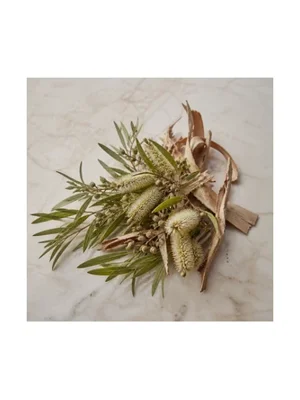
Paperbark
Note Profile
About
Paperbark is the common name for the whole Melaleuca genus, named for bark that peels off in papery strips. It is not one species and not one oil. As a note it is a camphoraceous, herbal woodiness with a soft floral lift, the shared cineole core of the genus rather than any single distillation.
Scent Profile
Cooling_mentholic leads. That is the cineole every paperbark shares, camphoraceous and clearing, though softer here than in tea tree. Aromatic_herbal is next and holds most of the body, a dry leaf-crush warmth. Green follows as fresh foliage rather than cut grass. Dry_woody is real and comes from two places: the trade copy for swamp paperbark opens on 'pleasant woody', and Fragrantica groups the note with woods. Floral is the fourth named facet and is the one that separates paperbark from tea tree, a rosy back note in one species and sweetly scented bottle-brush flowers in another. Below the threshold sit a thin citrus sharpness and a dusty earthiness, both reported for niaouli but not for the genus as a whole.
ScentWheel
Read off the wheel, not a label applied to the note.
Origin
Melaleuca, family Myrtaceae, mostly Australian. The genus includes tea tree (M. alternifolia), niaouli or broad-leaved paperbark (M. quinquenervia), cajeput, rosalina or swamp paperbark (M. ericifolia) and scented paperbark (M. squarrosa). Oil is steam-distilled from the leaves, not the bark. The bark itself is not a fragrance material; it was used to wrap baked food and line ground ovens.
Usage in Perfumery
Fragrantica files it under Woods and mosses and glosses it as the tree with 'fresh smelling, aromatic foliage'. Attested 8 times on Fragrantica and not at all on Parfumo. It works as a fresh-woody accent, an Australian-botanical signal that carries more weight and less medicinal bite than tea tree.
Similar Notes
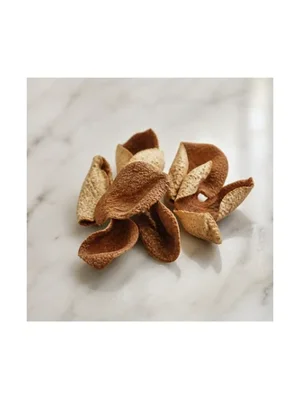
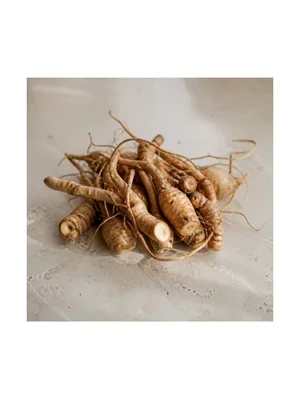
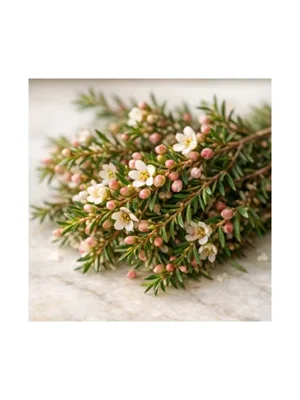
Perfumes featuring Paperbark
A selection of reviewed perfumes where Paperbark appears prominently.
No perfumes featuring this note have been reviewed yet. Check back soon.