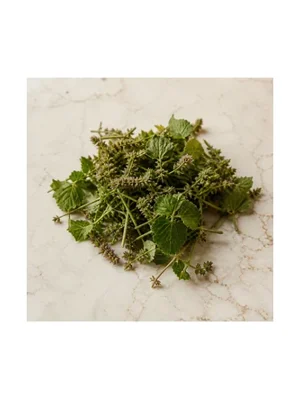
Patchouli (Green)
Note Profile
About
Green patchouli is Pogostemon cablin taken without the fermentation step. Conventional patchouli oil gets its dark, sweet-musty depth from enzymes working on the leaf while it dries. Skip or shorten that and the same plant gives a brighter, camphoraceous, leafy oil. The published patchouli note is the fermented material. This is the other end of the same leaf.
Scent Profile
Green leads. Première Peau states it three separate ways - 'bright, camphoraceous, and leafy', 'the snap of green plant matter', 'greener... than traditional patchouli' - and it is the one facet that plain patchouli does not carry at all. Earthy is the part that survives the change of process: 'damp earth' in the opening, 'earthy but clean' after hours, 'a subtle, earthy-woody residue' after days, and Eden Botanicals' 'rich, earthy' on its own light grade. It is held below the 0.92 of published patchouli because every source calls this material lighter and more transparent, not because anyone claims the earth is gone. Cooling_mentholic is the camphor, named in every one of the three descriptive passes and called 'a rush'. This is the facet that most separates the note from its parent, where camphor sits. Dry_woody is the 'cooler, woody-green quality' the source reports after the camphor fades, and Scentspiracy's 'clean woody-earthy character'. Aromatic_herbal is the 'herbaceous green' of the opening and the 'sweet-herbaceous' both suppliers use. Below the naming line, mossy_chypre and amber_resinous are carried down from the parent at reduced weight, sweet_vanillic is deliberately cut because the source's central claim is 'less sweet than traditional patchouli' and 'none of the sweet-musty depth of aged oil', and fruity is Scentspiracy's 'subtle fruity-wine nuances' in the dry-down.
ScentWheel
Read off the wheel, not a label applied to the note.
Origin
Pogostemon cablin, Lamiaceae. The published patchouli note is the standard article: leaves stacked and part-fermented during drying, then steam-distilled, giving the dark oil with high patchoulol and the sweet-musty depth. Green patchouli is made by cutting that step out. Première Peau's glossary entry, the only source found that uses the exact term, says producers reach it by molecular distillation or CO2 extraction of fresh undried leaves, or by light fractionation of a conventional oil to strip the heavy dark fractions. The same source states that the camphor and eucalyptol content rises relative to patchoulol, which is the chemical reason it reads brighter and more transparent, though it attributes that to no analytical study and it is recorded here as trade description, not lab data. A separate commercial grade called Patchouli Light (Eden Botanicals, Scentspiracy) reaches a paler oil by a different route - fermented leaves distilled in stainless steel rather than iron - and the suppliers say that removes camphoraceous sharpness rather than adding it. That is the opposite direction, so it is used here only as a boundary, not as evidence.
Usage in Perfumery
Fragrantica records 4 placements under 'Patchouli (Green)'. Parfumo records none. Première Peau states its function directly: it gives 'earthy-green grounding without the heavy, hippy-incense associations', which is why a modern composition reaches for it where the dark oil would drag the whole formula backwards. It is also shorter-lived than the aged oil, so it does not fix a base the way ordinary patchouli does.
Similar Notes
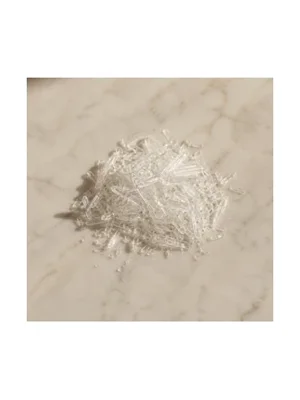
Perfumes featuring Patchouli (Green)
A selection of reviewed perfumes where Patchouli (Green) appears prominently.
No perfumes featuring this note have been reviewed yet. Check back soon.