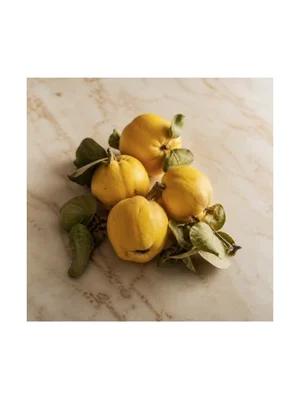
Quince Flower
Note Profile
About
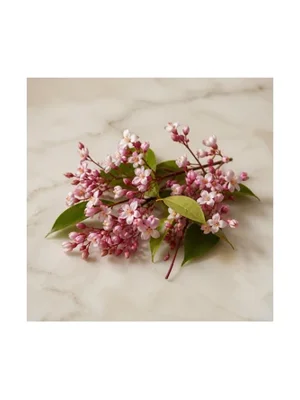
Quince flower is the spring blossom of the quince, not the autumn fruit. Every source calls it delicate. It is a light Rosaceae floral with a fruity undertone that recalls apple and pear blossom, and one source says it is "often blended with other stronger floral or citrus scents" because it cannot carry a composition alone. It has a real history as a perfumery material in its own right: Greek and Roman perfumers made a flower perfume from it called Melinum. Modern perfumery has no quince blossom extract, so the note is built.
Scent Profile
Floral leads and it is the word every source uses first: "the predominant scent is floral". It stops well short of the a heady white floral gets, because the same source calls the flower delicate, subtle and too faint to stand alone. Fruity is the second half of the note and the thing that separates it from a plain garden floral. The blossom is described as "akin to that of apples or pears" with "subtle fruity notes... a sweet and slightly tangy aroma, reminiscent of the fruit that follows the bloom". White_floral is the least secure of the four leads. One source likens the aroma to jasmine, and Gardenia.net records the petals as pinkish-white, but nothing in the evidence is indolic or narcotic, so this is the clean petal-white register rather than the animalic one. Green is the maturing flower: "a slight green or earthy undertone" as the bloom ages. Below those, honeyed sweetness, a faint herbaceous lift, a soft powderiness, a light vanillic sweetness, a trace of earth from the same maturing-flower claim, and small citrus, warm_spice and sour touches from "hints of citrus and spice" and "slightly tangy". Those three come from one templated blog paragraph and are scored as traces on purpose.
ScentWheel
Origin
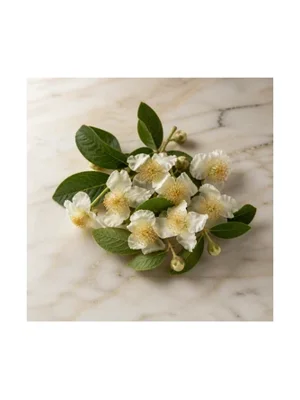
Flowers of Cydonia oblonga, a small deciduous tree of the rose family. Gardenia.net records "fragrant pinkish-white spring flowers" before the pale-yellow autumn fruit. The Perfume Society records the ancient use directly: early Arab, Greek and Roman perfumers "steeped the fruit in oil, and made a perfume from its flowers that was called 'Melinum'". A second plant carries the same common name. Chaenomeles, the flowering quince, is a separate ornamental genus, and Gardenia.net warns against confusing the two.
Usage in Perfumery
Attested 7 times on Parfumo across 6 brands, and absent from Fragrantica. Six separate brands is shared vocabulary, so the term earns a row even though what each brand means by it is not recorded anywhere reachable.
Similar Notes
Perfumes featuring Quince Flower
A selection of reviewed perfumes where Quince Flower appears prominently.
No perfumes featuring this note have been reviewed yet. Check back soon.