safranal
Names this moleculeCAS 116-26-7
The note name IS the molecule - safranal, CAS 116-26-7.
- Restricted
- An IFRA Standard limits how much of this a perfumer can use the limit applies to the perfumer, not the wearer
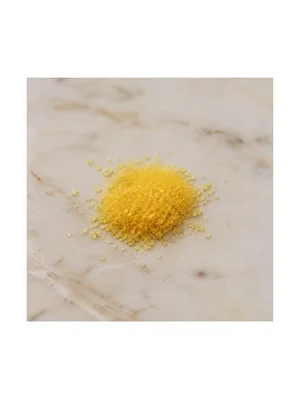
Note Profile
Safranal is a powerful synthetic aroma chemical that replicates the characteristic scent of saffron, the spice obtained from Crocus sativus stigmas. It presents a vivid saffron-like, spicy-herbal aroma with green, leathery and tobacco nuances, and extremely high odor impact even at trace levels. Perfumers use it to create or enhance saffron, leather, tobacco and oriental effects in compositions.
Olfactorily, safranal has a strong saffron-like character: dried hay under a sharp medicinal-iodine bite, like antiseptic on cotton gauze. Suppliers describe it as spicy, herbaceous, phenolic and leathery, with metallic and green nuances. It often displays warm leathery, woody, hay and light tobacco facets that lend depth and complexity to accords. On a blotter, it opens with a sharp, fresh saffron impression and rosemary-like edge, then settles into a warm, slightly sweet, leathery-tobacco heart that can persist into the base.
Read off the wheel, not a label applied to the note.
CAS 116-26-7
The note name IS the molecule - safranal, CAS 116-26-7.
These are facts about the substance, not about any perfume with this note.
A perfume that names Safranal can use a different extract, a reformulated version, or a synthetic reconstruction. It can also hold less than the amount that requires a declaration. We cannot tell which applies. These rows cover only the substances we hold a link for.
Safranal is a small aroma molecule that occurs naturally in saffron, where it forms during drying and storage via degradation of the precursor picrocrocin; it can represent 60-70% of saffron essential oil. For perfumery, most safranal is produced by chemical synthesis to provide a consistent, cost-effective source of the pure compound, though it can also be captured as a byproduct of saffron processing. Chemically it is known as 2,6,6-trimethylcyclohexa-1,3-dien-1-carbaldehyde (also written as 2,6,6-trimethylcyclohexa-1,3-dienyl methanal) and is supplied as a yellow, clear liquid with high odor strength.
In perfumery, safranal is classified in the spicy family and used primarily as a heart note that can extend into the base, where tiny amounts strongly modify the character of a composition. Typical dosages range from trace levels up to about 0.5-1% of the concentrate, as its power and IFRA restrictions require careful handling. Perfumers employ it to build realistic saffron accords and to add warm, leathery, herbaceous and tobacco nuances to leather, oud, amber, oriental, tobacco and sometimes fruity or floral creations.
A selection of reviewed perfumes where Safranal appears prominently.
No perfumes featuring this note have been reviewed yet. Check back soon.
New finds, honest verdicts, and price drops.
No spam. Unsubscribe anytime. See our privacy policy.