Can you actually describe a smell in words?
Everything on this site is words. Note names, verdicts, descriptions, the sentence that tells you what a perfume is like. All of it rests on the assumption that a smell can be put into language at all, and there is a well-known body of research saying humans are terrible at exactly that. Asifa Majid's work complicates the picture in a way that lets us off one hook and puts us firmly on another.
On this page
The problem with our premise
Ask an English speaker to name a smell with their eyes closed and they will struggle, even with something completely familiar like coffee or petrol. They will know they know it. The word will not come. This is one of the most reproduced findings in the study of smell, and it has been used for decades to argue that human olfaction is a poor relation of sight and hearing.
If that were the whole story, a site like this one would be in trouble. Our entire catalogue is an attempt to tell you what something smells like using nothing but language and pictures.
What the research says
Asifa Majid, now at Oxford, has spent years pointing out a hole in that consensus. In Human Olfaction at the Intersection of Language, Culture, and Biology she makes the case plainly: nearly all of the evidence that people cannot name smells comes from studying English speakers, and English is not representative.
Other languages handle this differently. Some carry large sets of dedicated smell words that are not borrowed from objects, and in some communities people find the naming task easy. Her work with Jahai speakers in Malaysia found smell naming as consistent as colour naming, which in English is nowhere close to true.
The obvious conclusion is that it comes down to vocabulary. It does not, quite. The sharpest test is a pair of closely related languages. Majid and Nicole Kruspe compared Semaq Beri and Semelai speakers, neighbours on the Malay Peninsula speaking two languages from the same family. The Semaq Beri, who hunt and gather, named odours about as consistently as they named colours. The Semelai, who farm and trade, patterned much more like English speakers. Later work found that both languages hold large sets of basic smell words, so the words alone do not account for the gap.
- English speakers Fail to name familiar smells, including coffee
- Jahai, Semaq Beri Name smells as consistently as colours
- Semelai Related language, big smell lexicon, English-like results
So the famous finding is real but badly labelled. It is not "humans cannot name smells". It is closer to "English speakers, with this vocabulary and this little practice, cannot". How much of that is the language and how much is a life spent paying attention to smell is not settled. Either way it is a fact about the circumstances, not about the nose.
Two kinds of smell word
The distinction that matters for us is between words that name the source and words that name the quality. English overwhelmingly does the first. We say something smells "of lemon", "like roses", "a bit petrol-y" - we point at the object and let you do the rest.
Majid points out how few genuine quality words English has. Her candidates for basic smell terms are "stinky", "fragrant" and "musty", and the list does not run much longer. Our note list shows the same shortage. Lemon and Rose name a source, and so do most of the others, including the ones that sound technical - Oud is agarwood, Musk was a deer before it was a synthetic, and Aldehydes names a chemical class rather than a smell. The handful that name only a quality, like Powdery or Ozonic, are the exception.
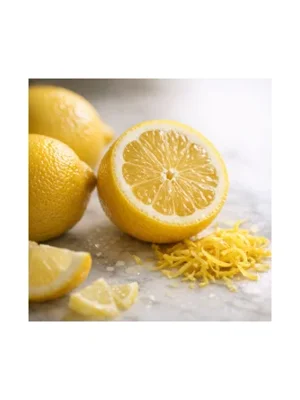
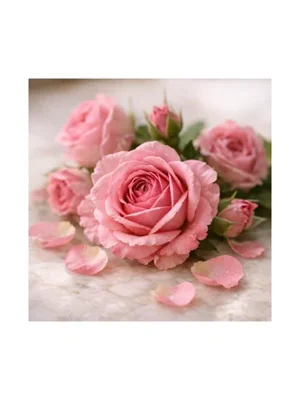
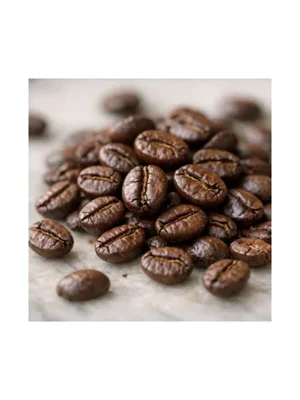
The word names a quality Works across different sources, and English has few
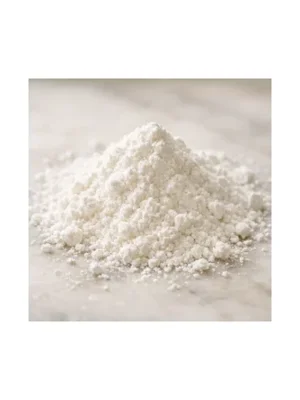
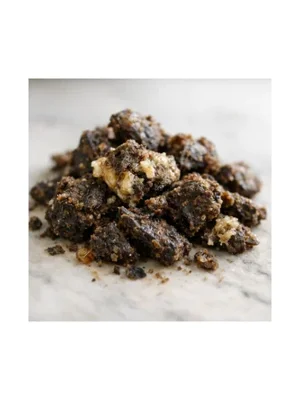
This is why our note pages carry a picture of the ingredient. If your language handles smell by pointing at objects, then showing you the object works with the grain of how you already talk. That is the same conclusion our page on ingredient pictures reaches from the marketing side. A perfume page is a different problem, and the next section is about that.
The finding we act on
Majid reports a comparison that separates two things which usually get muddled. Jahai and Dutch speakers, whose naming strategies differ sharply, had the same initial affective response to the same odours, read from their faces during the naming task itself, whatever words they went on to use. Two groups is not the world, but it separates the part of smelling that did not depend on the words from the part that did.
Read that as an instruction for how to describe a perfume and it is fairly clear. Whether something is lovely or harsh or comforting is the part that did not depend on having the words. Which specific note is doing it is the hard, learned, unreliable part.
On a perfume page, lead with what it is like rather than with what is in it. The verdict, the mood and the occasion come first, and the note list follows for people who want it. That is our design choice rather than a law from the study. What the research does say is that a beginner is not failing when a list of thirteen ingredients tells them nothing, and designing as though they were is the mistake.
What this does not excuse
Two things, both of which cut against us.
The first is that we are an English-language site. Majid's point is that richer smell languages exist, not that ours is secretly fine. We are working in one of the weaker vocabularies for the job, and no amount of careful writing changes that. It is a real ceiling on how well any of this can work.
The second is a caution about our own note vocabulary. Because English names smells by pointing at objects, our note list is a list of things rather than of smell qualities. That is the right call for being understood, but it is not a neutral description of a smell - it is a description of where the smell came from. Two ingredients from different sources that smell nearly identical will sit in our note list looking unrelated. The facet scores behind each note, which our similarity page describes, are what pull them back together; the names never will. We know that is a limitation of the vocabulary and we have not solved it there.
Every note we hold has a page, with its own picture and description - browse them in the note catalogue.