
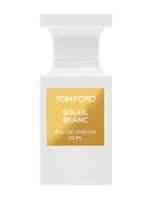
Soleil Blanc
EDP · 2016
Tom Ford
Statement
Fragrance allergen
Methyl salicylate is the wintergreen-scented ester that makes up almost all of wintergreen oil. It is used in perfumes, flavourings, toothpastes and liniments. EU rules name it on labels and set detailed limits by product type.
ScenTree says methyl salicylate is the main component of wintergreen oil, at 98 to 100 per cent, and is also found in tuberose absolute, ylang-ylang and birch oils. HSDB describes wintergreen oil being distilled from the leaves and methyl salicylate being prepared by reacting salicylic acid with methanol.
The characteristic smell of wintergreen. HSDB records a liquid having the characteristic odour of wintergreen. ScenTree adds that it is a very powerful compound, with a detection threshold of a few tens of parts per billion.
ScenTree lists its use in tuberose and orange blossom notes, where it brings a fruity nuance. HSDB lists the oil in fern and cypress type perfumes and in toothpaste, and a reference lists use as a flavour and as an odorant.
Named on 1% of the 6,851 perfume ingredient lists we hold (48 perfumes).
SCCS/1459/11 (2012) lists methyl salicylate among established contact allergens in humans, in its lowest band (up to 10 reported positive test reactions). ScenTree says Regulation (EU) 2023/1545 classes it as an allergen to be named above 0.001% in leave-on or 0.01% in rinse-off products. Oxford Biosciences notes detailed per-product-type limits for it.
A list that does not name it does not prove it is absent: brands only have to name it above the threshold.
Share of the perfumes we hold a list for, in each concentration.
Share of the lists naming Methyl Salicylate that also name each of these.
EDP · 2016
Tom Ford
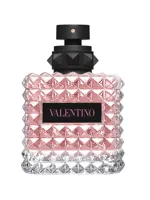
EDP · 2019
Valentino
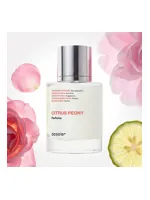
EDP · 2020
Dossier
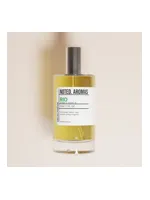
EDP
Noted Aromas
EDP
Noted Aromas
EDP · 1971
Clinique
EDT · 2018
Tom Ford
EDP · 2017
Tom Ford
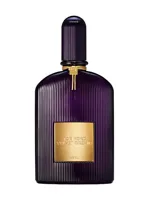
EDP · 2014
Tom Ford
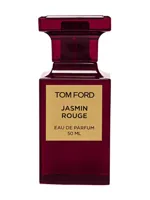
EDP · 2011
Tom Ford
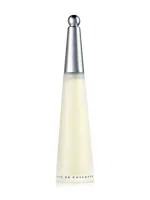
EDT · 1992
Issey Miyake
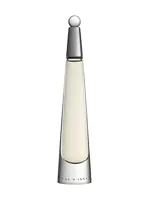
Parfum
Issey Miyake
Wintergreen. HSDB records the characteristic odour of wintergreen, and ScenTree describes it as a very powerful compound with a detection threshold of a few tens of parts per billion.
Both. ScenTree says it is the main component of wintergreen oil and is also found in tuberose absolute and birch oil. It can also be made synthetically by reacting salicylic acid with methanol.
ScenTree says it is classed as an allergen under Regulation (EU) 2023/1545, so it must be named above 0.001% in leave-on or 0.01% in rinse-off products. Oxford Biosciences notes separate per-product-type limits.
New finds, honest verdicts, and price drops.
No spam. Unsubscribe anytime. See our privacy policy.