










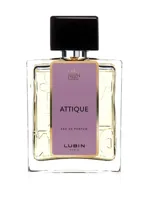
Attique
EDP
Lubin
Favourite
French heritage house revived as an independent niche brand blending archival themes with modern perfumery.
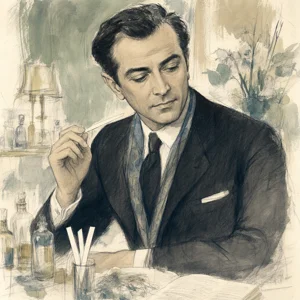
Lubin is a historic French perfume house founded in 1798 by Pierre François Lubin in Paris. According to the brand’s official history and contemporary articles, Lubin learned perfumery under Jean-Louis Fargeon, supplier to Queen Marie Antoinette, before opening his own boutique "Au Bouquet de Roses" on rue Sainte-Anne. Early on he became known for perfumed ribbons, powders, and masks created for the Incroyables and Merveilleuses of post-Revolutionary Paris, and for his "Eau Vivifiante," later known as Eau de Lubin.
By the early 19th century, Lubin had secured clients in the highest circles of power. His fragrances were worn by Empress Joséphine and Pauline Bonaparte, and he later dedicated creations to Queen Marie-Amélie after the Bourbon restoration. In 1821 he composed Eau de Chypre for Tsar Alexander I of Russia, a composition cited in historical sources as an important early example of chypre perfumery. Over time, Lubin became a supplier to several European royal courts and began exporting to the United States by around 1830.
The house changed hands in 1844 when Félix Prot, a perfumer trained by Lubin, took over and built a modern factory in Cannes that opened in 1873, using steam power for production and essential oil extraction. The Prot family guided Lubin through the 19th and much of the 20th century, launching successes like L’Eau Neuve in 1968 before selling the company in 1969. Ownership subsequently passed through Roger & Gallet and Mülhens. After a period of decline, former Guerlain creative director Gilles Thévenin revived Lubin in 2004, repositioning it as an independent, heritage-focused perfume house that reworks archival ideas alongside new compositions.
A niche, luxury house known for woody compositions.
Lubin began as a court-associated Parisian perfumer supplying powdered products and early eaux to fashionable elites around 1800. Under the Prot family, it industrialized production in Cannes and expanded internationally, staying relevant through the mid 20th century with launches like L’Eau Neuve. After passing through corporate owners and fading from the spotlight, the house was revived in 2004 by Gilles Thévenin, who shifted it toward the modern niche segment while drawing heavily on its archives and historic stories. The current catalog reflects this blend of past and present, with collections that reinterpret older themes using contemporary perfumery practices.
Lubin is a serious heritage name that has transitioned successfully into the niche era without feeling dusty or gimmicky. It suits wearers who appreciate classical French style with personality, rather than trend-driven blockbusters or extreme experimentalism.
Favourite - easy to wear anywhere · Statement - bold & distinctive · Acquired - bold, for fewer occasions
EDP
Lubin
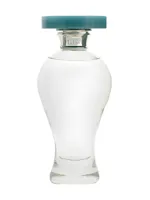
EDP
Lubin
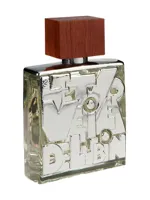
EDP
Lubin
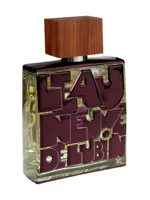
EDP
Lubin
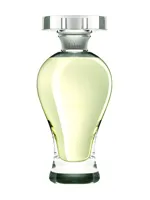
EDT
Lubin
EDP
Lubin
EDP
Lubin
EDP
Lubin
EDT
Lubin
EDT
Lubin
New finds, honest verdicts, and price drops.
No spam. Unsubscribe anytime. See our privacy policy.