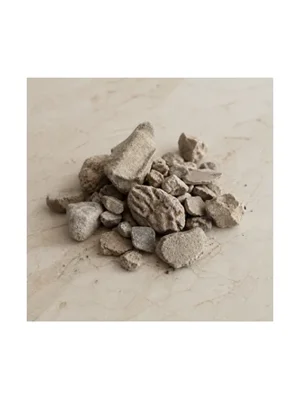
Concrete
Note Profile
About
Concrete here is the building material, not the waxy flower extract that shares the word. It is the alkaline, chalky, dusty smell of Portland cement hydrating: calcium silicates react with water to give calcium hydroxide at pH 12-13 plus heat, and the smell is sharpest while the pour is wet and fades as it hardens. The two sources that describe it agree it is mineral and disagree about whether it is also earthy.
Scent Profile
Mineral dominates and it is the alkaline, high-pH kind rather than the metallic kind - lime and cement dust. Powdery sits under it, meaning chalk and construction dust rather than talc. Then earthy, which is the contested part: one source likens the wet-pour smell to rain on dry soil and the other insists it is cold and inorganic, so it is scored low with a wide error bar. A light aquatic-ozonic facet for the wet-pavement moment, and a faint sulphurous edge attributed to the calcium sulfate.
ScentWheel
Origin
No extraction and no natural source. Portland cement, aggregate and water. The odour chemistry named in the sources is the hydration reaction - calcium hydroxide and calcium sulfate released as the cement cures - and the note is composed from alkaline-mineral synthetics, chalky-dusty materials and faint sulphurous modifiers.
Usage in Perfumery
A background atmospheric note for urban, architectural and brutalist compositions, pairing with asphalt, metal and rain. All three measured uses of the bare note put it in the opening of a city or building scent: two open 'Concrete, Air accord, Moss, Trees' over paper, rubber and pencil shavings, and the third opens it beside ginger, mushrooms and rice steam.
Similar Notes
Perfumes featuring Concrete
A selection of reviewed perfumes where Concrete appears prominently.
No perfumes featuring this note have been reviewed yet. Check back soon.