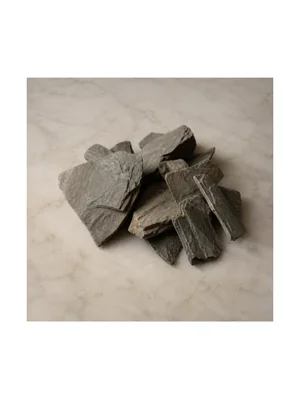
Slate
Note Profile
About
Slate is a fantasy mineral note. It stands for cold wet rock rather than for any distillable material. Fragrantica files it under 'Natural and synthetic, popular and weird' and calls it dry and modern. Perfumers build it the way they build the rest of the mineral family, from ozonic and woody-amber synthetics rather than from stone.
Scent Profile
Mineral is the whole note, and every source reaches for the same handful of words: stone, flint, wet rock, chalk, granite after rain, the cold clean smell of inorganic matter. Aquatic_ozonic is the wet half of that. Premium Beauty News names Calone directly and calls the effect aqueous and marine, suggestive of rocks and iodised air, and Carrement Belle calls minerality a sensation of freshness that is both wet and salty. Dry_woody is the other half and it is the part that is specifically slate rather than generic stone. Fragrantica's own tag is 'dry and modern', and the one named material sold for this exact combination, Ambrostar, is described as a dry woody note with a contrasting mineral facet. Earthy comes from Jean-Claude Ellena's flint accord, quoted twice in the sources as 'earthy, powerful, moist and mineral'. It is held well under mineral because the same glossary insists mineral notes are geological and not biological, so this is damp ground and not soil. Below the naming line, clean_musk carries the crystalline musk materials the glossary names, powdery carries a little dust, and a small smoky facet is the struck-rock edge that flint has more of. All of these are thin and the spreads say so.
ScentWheel
Read off the wheel, not a label applied to the note.
Origin
There is no slate raw material. No supplier or manufacturer sells an olfactive-description sheet for anything called slate, and none was found for this note. The mineral effect is compounded. Premium Beauty News names the working materials: Calone-type ozonics for the wet, iodised, seaside-rock impression, Symrise's Symmarine for wet cold metallic facets, and Symrise's Ambrostar for a dry woody note with a contrasting mineral facet. Premiere Peau adds Ambroxan at threshold and crystalline musks as the materials the brain reads as stone. Atelier Materi's Rose Ardoise, the one commercial fragrance that puts the French word for slate in its name, reaches the effect through sage and a concrete-ground framing, not through any slate ingredient.
Usage in Perfumery
Slate is used to make a composition read cold and modern rather than warm. It sits under a floral or a woody accord and takes the sweetness out of it. Premium Beauty News notes that mineral notes last, extending their freshness into the heart and the drydown, which is why the effect is normally built on woody-amber and musk materials rather than on citrus. Expect it in minimalist and avant-garde briefs.
Similar Notes
Perfumes featuring Slate
A selection of reviewed perfumes where Slate appears prominently.
No perfumes featuring this note have been reviewed yet. Check back soon.