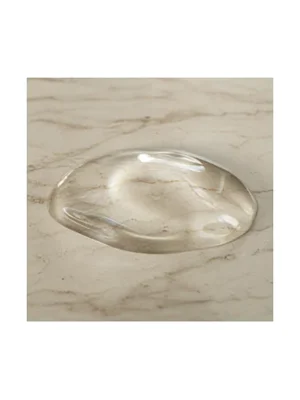
Isobutyl Quinoline
Note Profile
About
A very powerful synthetic leather material. Dry tanned hide over a mossy, rooty base, with an ink-like edge and a sharp green top.
Scent Profile
Isobutyl quinoline smells of dry, tanned leather, powerful and unmistakable. An earthy, rooty smell runs underneath, close to oakmoss and vetiver. A sharp green edge sits on top, close to galbanum. A dry, woody body lasts throughout, with a nutty touch. A warm, tobacco-like note develops with an animalic, ink-like touch. A faint smoky, phenolic trace closes it out. Early perfumers read it as mossy. Today it reads as leather. The 2-isomer is softer: leather and wood, with no green.
ScentWheel
Read off the wheel, not a label applied to the note.
ScentArt
Materials That Can Make This Note
Perfumers can build Isobutyl Quinoline from materials such as:
-
6-sec-butylquinoline chalky · mossy · oakmoss
-
6-isobutylquinoline oakmoss · vetiver · rooty
-
2-isobutylquinoline leathery · mossy · oakmoss
Smell words come from published sources.
A given perfume with this note may use some of these, or something else.
Origin
A synthetic quinoline, made by Skraup synthesis. It does not occur in nature. The name covers two materials. The classic one is 6(or 8)-sec-butylquinoline, so the 'isobutyl' in the trade name is wrong. Symrise sells it under CAS 68198-80-1, IFF and Fraterworks under 65442-31-1, and Givaudan as Butyl Quinoline Secondary. It is also sold as Pyralone. The second material is 2-isobutylquinoline, CAS 93-19-6, which Givaudan sells as Isobutyl Quinoline-2. It is softer and less common. ScenTree dates the classic material to 1908. It is the material behind the historic Mousse de Saxe base.
Usage in Perfumery
Used at a fraction of a percent. Symrise recommends 0.01 to 1 percent. Fraterworks gives an average of 0.2 percent in a perfume compound. Givaudan places it in chypre, leather and woody accords for masculine work. Scentspiracy names birch tar, castoreum, vetiver, patchouli and oakmoss as its usual partners. The Perfumer's Apprentice adds tobacco accords. Caron first used it in Nuit de Noël in 1922. Attested in 8 Fragrantica entries and 1 Parfumo entry.
Similar Notes
Perfumes featuring Isobutyl Quinoline
A selection of reviewed perfumes where Isobutyl Quinoline appears prominently.
No perfumes featuring this note have been reviewed yet. Check back soon.