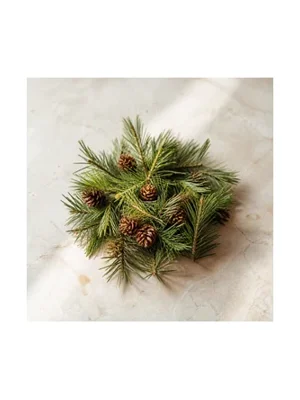
Pine Balsam
Note Profile
About
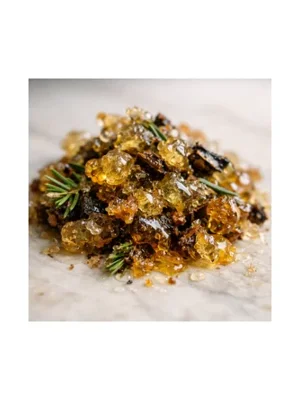
Pine balsam is the sticky oleoresin of a pine, or an extract carrying that character, used as a resinous ground rather than a fresh needle top. No source found describes a material under this exact name. What every source does agree on is the lead facet: resin. The rest of this vector is read across from the closest documented pine extract and the confidence is held at 0.30 to say so.
Scent Profile
Amber_resinous leads and it is the only facet every source states. Hermitage's own copy opens with 'balsamic', a buyer calls it 'a strong pine resin effect', another describes 'cones exuding the resin', and Wikipedia's chemical data sheet for turpentine gives the odour field one word: 'Resinous'. Green is the needle and the fresh sap, from 'a rich deep green scent' and 'green needles'. It sits well below the of published pine-needle because the balsam is the sticky part, not the leaf. Dry_woody is Hermitage's 'woody' and the 'warm bark' in the same review. Fruity is the 'sweet fruity' the supplier names in its lead sentence and the 'dark sweet berries' a buyer independently reaches for, which is the facet that most separates this from a plain conifer resin. Sweet_vanillic is the 'sweet' those same two passages both carry and the 'smooth and sweet' of the sauna comparison. Below the naming line, smoky is the 'slightly soft and smoky undertones' one review names, cooling_mentholic is the terpene lift any tapped pine resin carries, boozy is 'syrupy, alcoholic', leather and nutty are the 'nutty, leathery background' the supplier states directly, and fresh_spice is 'slightly spicy'.
ScentWheel
Read off the wheel, not a label applied to the note.
Origin
Two readings of the term exist and this dossier could not settle between them. The first is the trunk exudate: tap a pine and it bleeds oleoresin, which Wikipedia's 'Gum turpentine' entry calls 'oleoresin of the pine tree, also known as crude turpentine'. That is the ordinary meaning of a tree balsam and it puts the material next to the raw resin, before any distillation splits it into volatile turpentine and solid rosin. The second is a solvent extract, which is what the one real attestation names: Untamed's 'Salish Sea' lists 'Pine balsam absolute'. The closest documented material to that is Hermitage Oils' Pine Absolute, solvent-extracted from needles, which the supplier calls 'at once fresh, balsamic, woody, sweet fruity and slightly spicy, with a nutty, leathery background', and which buyers on the same page describe as 'a strong pine resin effect. Syrupy, alcoholic', 'a rich deep green scent with slightly soft and smoky undertones', and 'warm bark, green needles, cones exuding the resin, dark sweet berries'. No source states that either reading is the material a perfumer means by pine balsam.
Usage in Perfumery
Parfumo records 4 placements across 2 brands. Fragrantica records none. The one ingredient list found is instructive about function: Untamed's 'Salish Sea' puts 'Pine balsam absolute' in the base alongside oakmoss, ambergris and beachgrass, inside a composition Parfumo files as aquatic-fresh. So it is doing the work of a resinous anchor under a coastal accord, not supplying a forest-pine top. That is why this note is scored as a base and why amber_resinous outweighs green by nearly two to one, which is the reverse of the published pine-needle vector.
Similar Notes
Perfumes featuring Pine Balsam
A selection of reviewed perfumes where Pine Balsam appears prominently.
No perfumes featuring this note have been reviewed yet. Check back soon.